Towards a more sustainable material use with brewers’ spent grain
Not everything bio-based is sustainable. Biocomposites are often assumed to be sustainable simply because their constituent materials are derived from biological sources. However, as earlier debates around materials such as mycelium have shown, the picture becomes more nuanced when we consider materials as part of a wider system and examine their entire life cycle – from sourcing and production through their entire life-cycle to what happens to them after. In her material research, guided by the principles of the circular economy, Orsolya Gerencsér investigates the properties and potential uses of brewers’ spent grain, a by-product of the brewing process, within a bio-based composite system. Rather than seeking a direct replacement for fossil-based materials, her aim is to explore an alternative way of thinking about how materials are used.
Around 59 million tonnes of food waste are generated each year across the European Union at different stages of food production and processing. According to European Commission data, the food and beverage manufacturing sector accounts for nearly 19% of all food waste [1]. This prompted me to explore how waste streams could be harnessed for material development in line with circular economy principles. When choosing the raw material, I wanted something that was readily available across both Northern and Central Europe and could be sourced locally or regionally. That led me to brewers’ spent grain, the grain-based by-product left over from the brewing process.
Brewers’ spent grain accounts for around 85% of the waste generated in brewing [2]. An estimated 36–39 million tonnes are produced globally each year, several million tonnes of them in Europe [3].
It is also consistently available in almost every European country, making it a promising resource for local material development systems [4]. Yet its current uses tend to be relatively low-value: around 70% is used as animal feed, 10% for energy recovery, and the remaining 20% ends up in landfill, with a significant environmental impact [5]. From a circular economy perspective, this makes brewers’ spent grain a compelling material for further research.
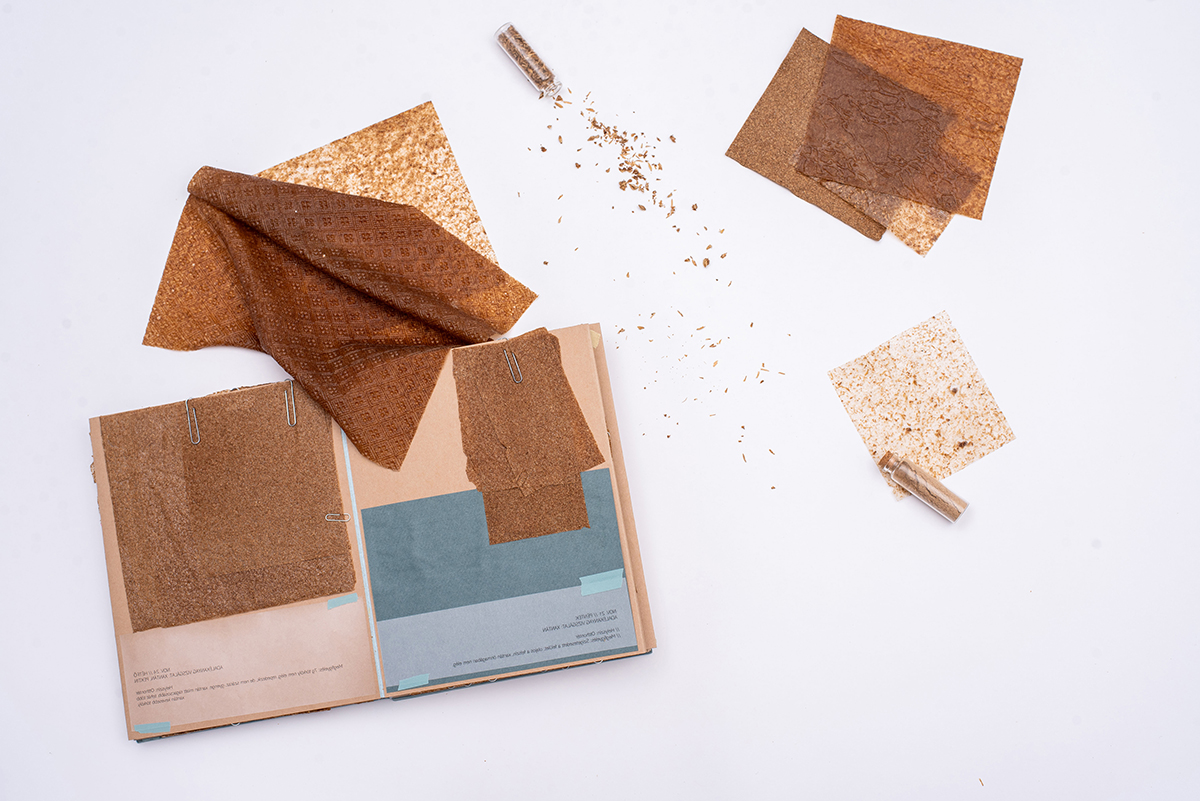
To document the development of the recipes and the examination of the patterns, I created an album in which I collected the patterns alongside my observations on them.
Developing the recipes
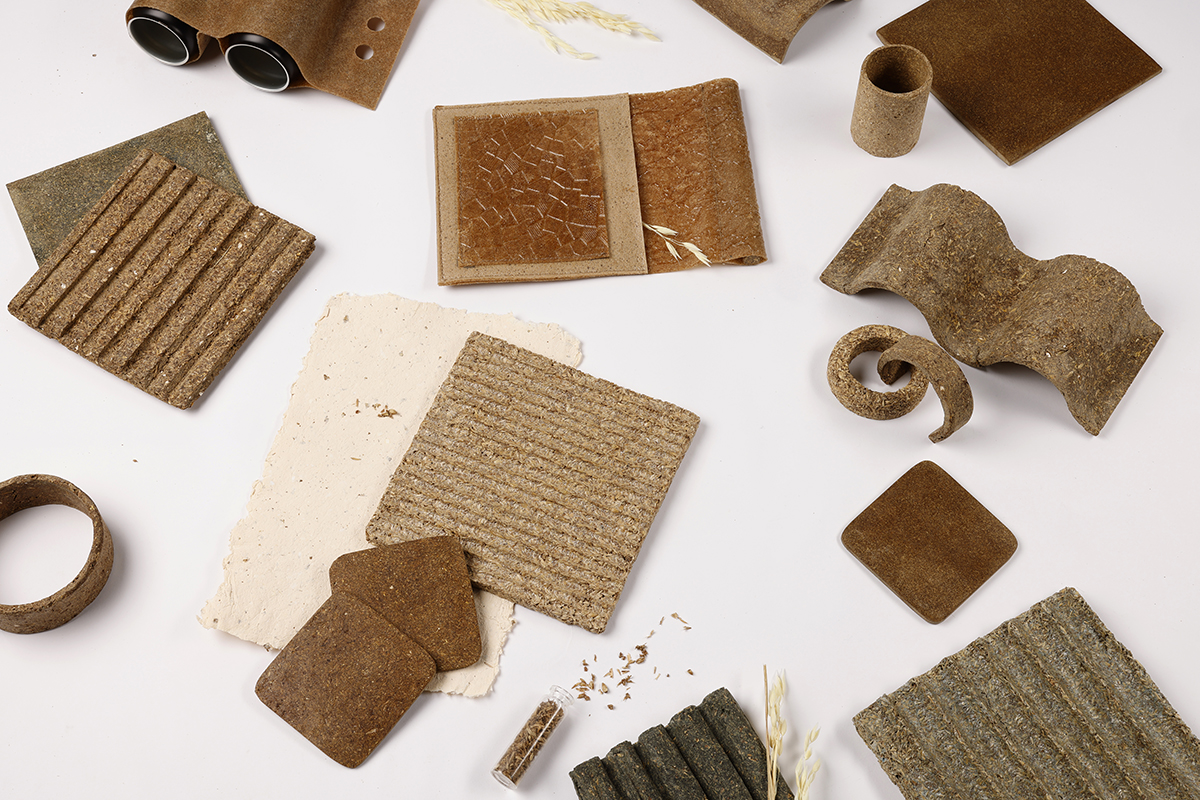
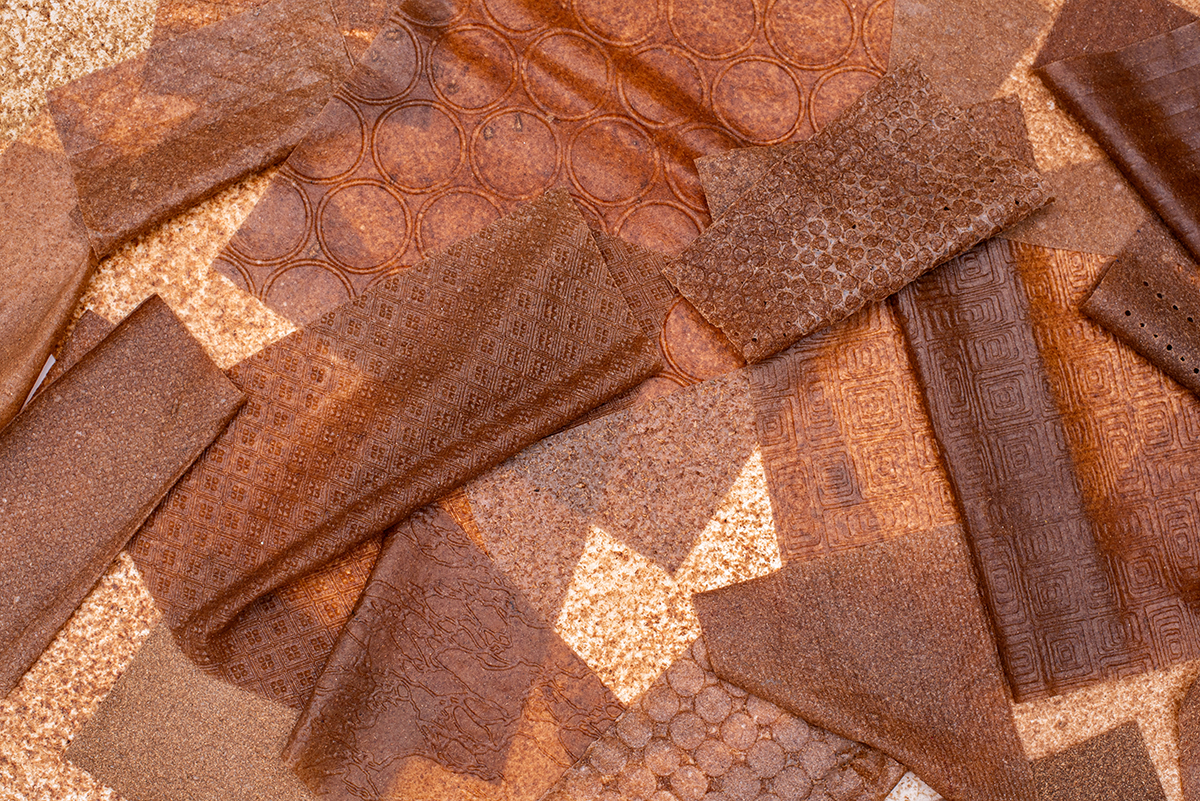
I began by experimenting with biofilms, using them to observe how the material behaved. These tests led to a formulation based on carboxymethyl cellulose (CMC), xanthan gum, glycerol, and gelatine. The CMC helped the material interact with the fibres and improved cohesion; glycerol primarily acted as a plasticiser; xanthan gum stabilised the system; and gelatine further strengthened cohesion and contributed to greater mechanical stability. The resulting thin, flexible biofilm, made predominantly from brewers’ spent grain, can be cast onto different supporting surfaces, taking on their geometry and surface characteristics while still functioning as a self-supporting structural layer.
At the same time, I began developing a rigid composite that could hold its own shape, drawing on the high cellulose and protein content of brewers’ spent grain. For this, I started working with casein glue, made from milk’s main protein and used for centuries as a natural adhesive. Around the turn of the 20th century, casein-based adhesives were still widely used in woodworking and furniture production, but their use gradually declined with the introduction of synthetic resin adhesives [6]. Today, as sustainable material development and circular economy models gain ground, interest in casein-based systems has picked up.
After preparing the casein glue, I gradually added the other additives, followed by the brewers’ spent grain. By adjusting the proportions of the different ingredients, I developed a malleable, clay-like composite, which I then placed into a variety of different press moulds. Depending on thickness, the samples were then dried in a drying cabinet for 3–8 hours, followed by further drying at room temperature.
The mechanical properties of the resulting biofilm and three rigid biocomposites – made from unground spent grain, ground spent grain, and a 50:50 mixture of the two – were tested in collaboration with the Department of Polymer Engineering at the Budapest University of Technology and Economics. The tests included tensile testing, three-point bending, and drop-dart impact testing. The results showed that the composite made from unground spent grain had the poorest mechanical properties, while the fully ground version demonstrated high stiffness and impact resistance. The 50:50 blend delivered the most consistently strong and balanced performance across the majority of tests.
Overall, the biofilm and rigid composites lend themselves to different applications. The former is primarily suited to flexible surfaces and lightweight packaging, while the latter could also be used for smaller-scale applications in furniture and product design.
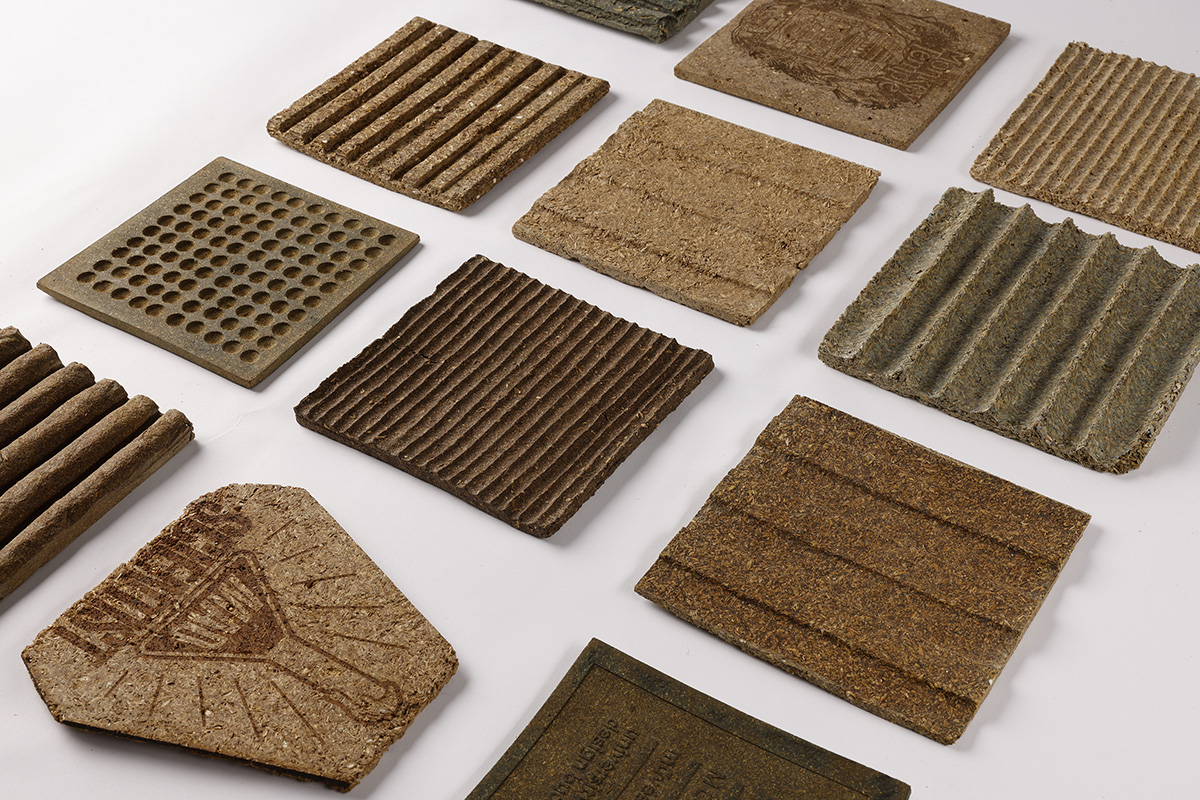
The biofilm material and rigid composites.
Experiments with manufacturing technologies
I tested the workability of the biofilm using a range of leatherworking techniques, including punching, eyeleting, snap fastening, and different types of stitching. The material performed very well in these tests and did not tear along the stitching. I also explored ways of joining the material to itself during forming, with heat treatment proving the most effective. Heating it with a radiant heater softened the upper layer, allowing two surfaces to be joined without either adhesive or stitching.
For the rigid biocomposites, I first tested different ratios of ground and unground brewers’ spent grain. Experiments with simple geometric compression moulds showed that, although the composite was easy to shape, the binders reacted quickly, limiting the working time to around 10–15 minutes. While this makes it more difficult to shape larger objects by hand, it could prove advantageous for serial production. Next, I tested the material’s workability using a range of woodworking techniques. Both the ground composite and the 50:50 mixture performed well when sawn, milled, engraved, screwed, joined using traditional woodworking joints, and laser-cut.
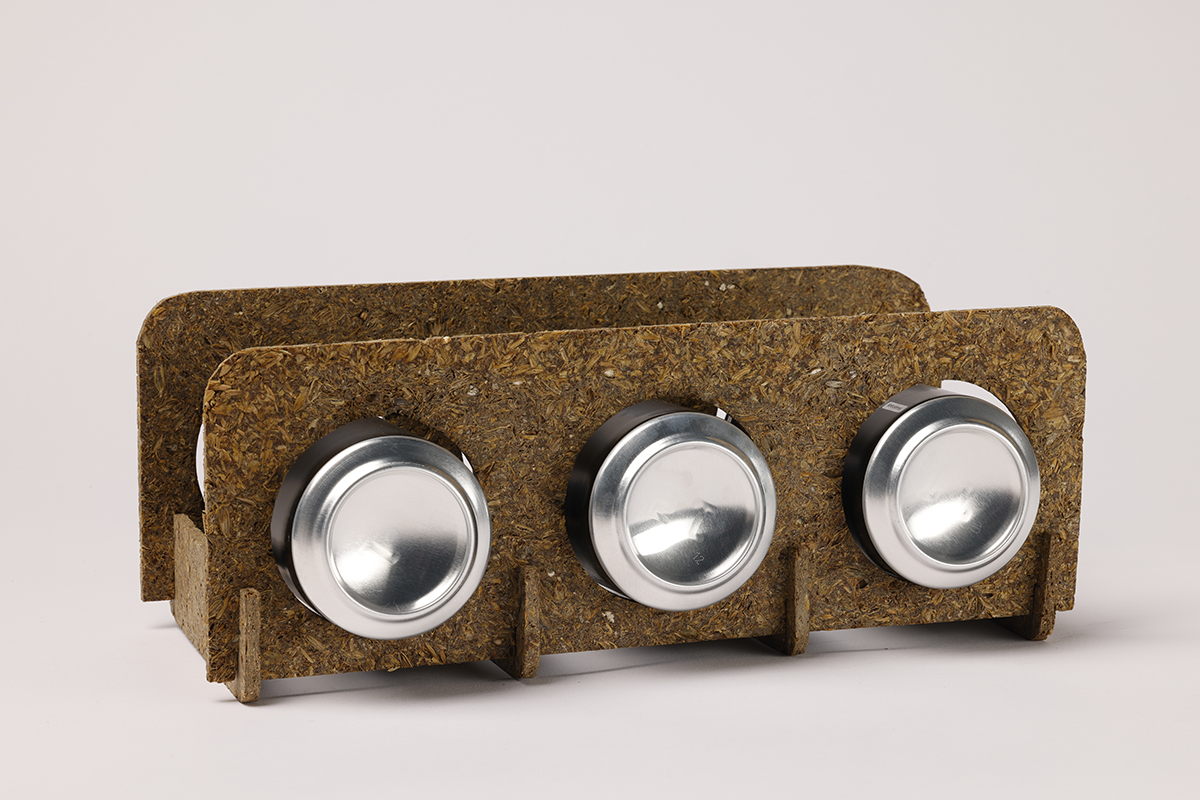
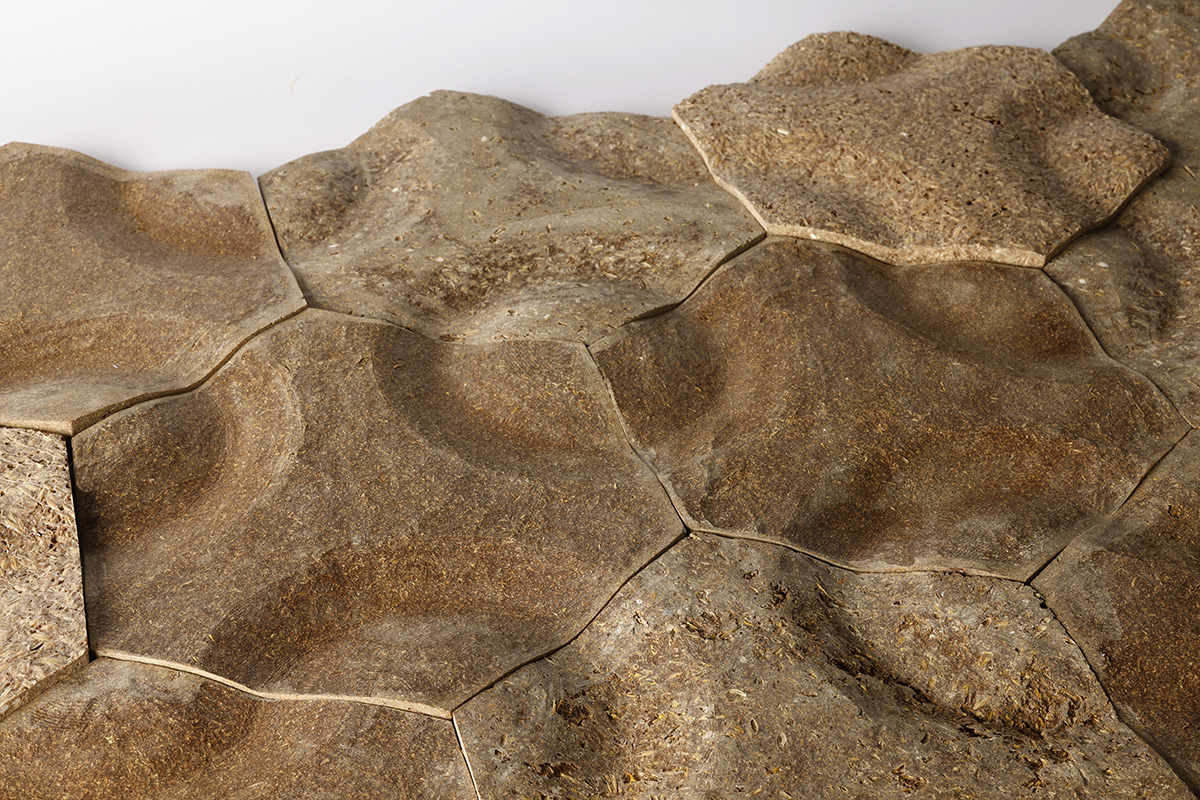
One of the forms created during the experiment, suitable for storing beer, and a detail of the modular panel series.
To investigate structural solutions and carry out mechanical tests, I created a series of experimental objects related to beer culture, including forms for storing beer and simple structures cut from sheet material. Focusing on four key aspects – load-bearing capacity, formability, tensile strength, and material combinations – I found that both the biofilm and the rigid composites I developed were compatible with a wide range of conventional design and manufacturing processes. The different formulations also offer distinct forming and processing properties, allowing the materials to be adapted to different product categories and manufacturing processes in the future.
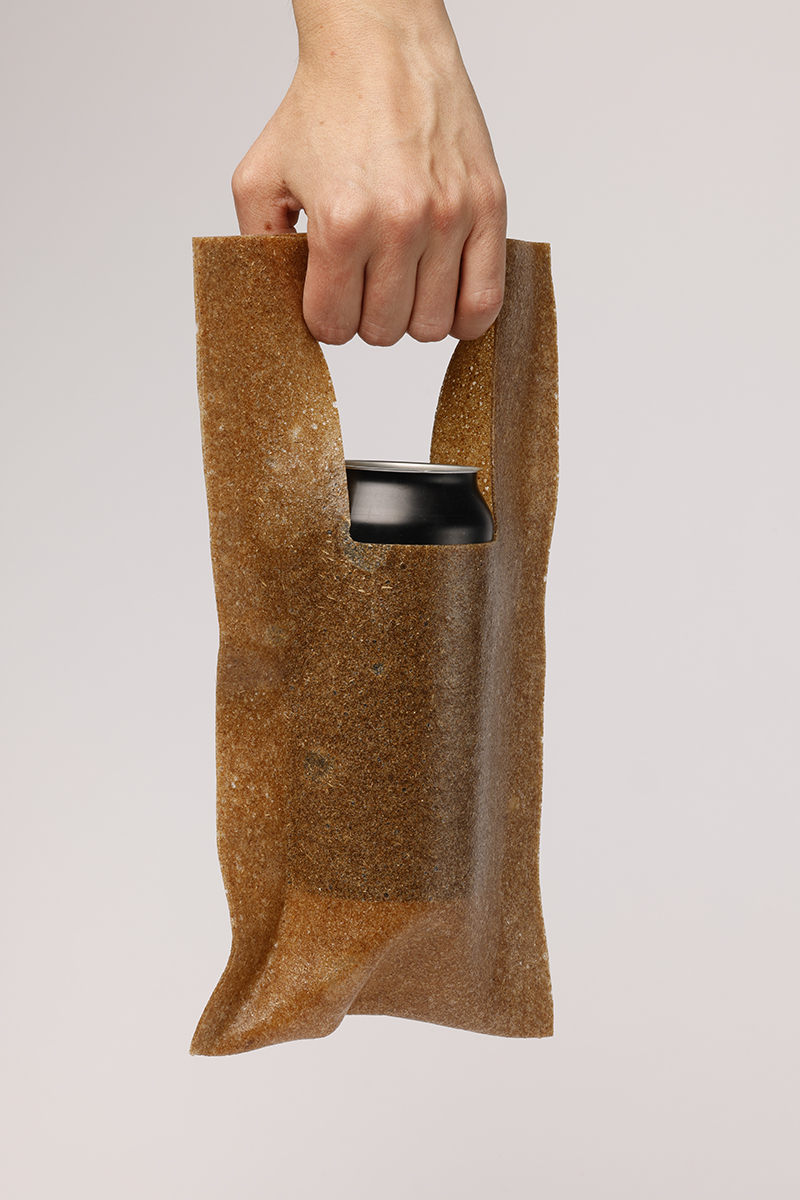
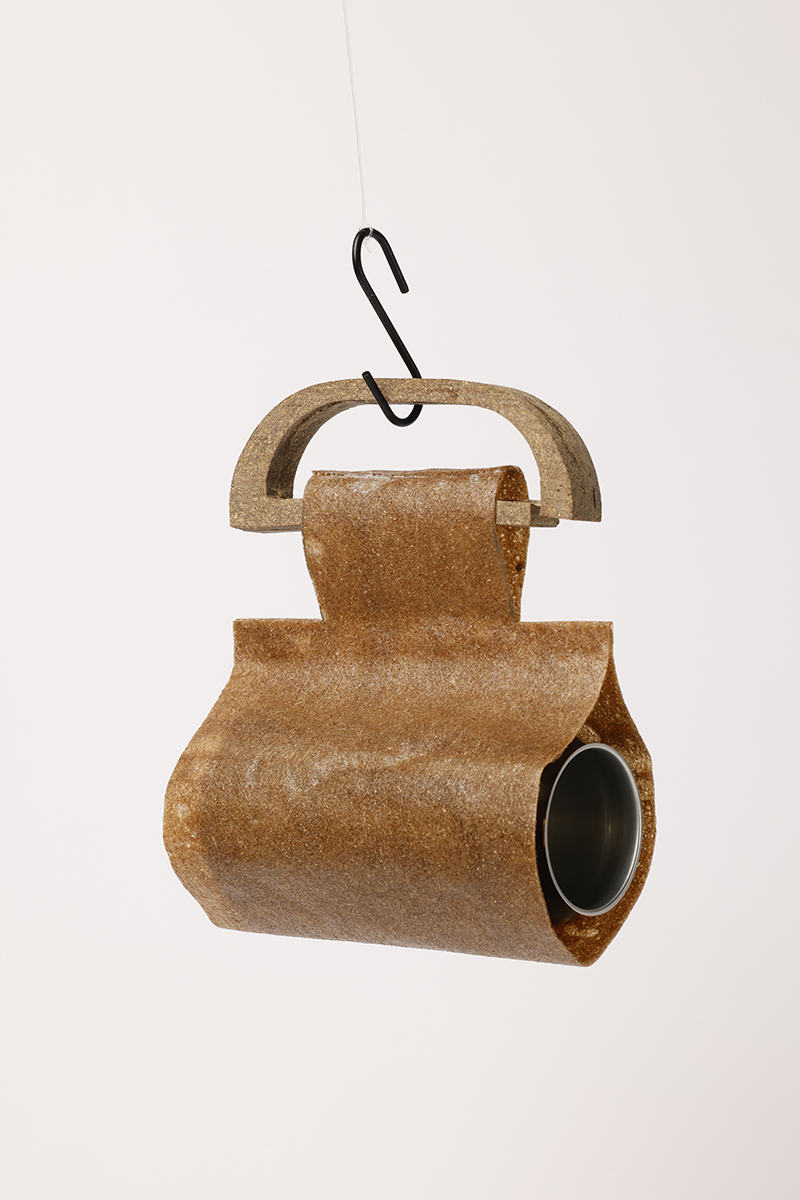
An example of a storage container made from the biofilm material and a support and grip system created through the combination of materials.
What makes it genuinely sustainable
Sustainable material development cannot focus solely on where the raw materials come from or whether they are biodegradable. It also needs to take into account the energy used in production, the emissions associated with manufacturing auxiliary materials, and the environmental impact of transportation. Life Cycle Assessment (LCA) provides a way of evaluating these factors and comparing the environmental performance of different materials.
In this case, I carried out a simplified screening LCA to identify the main environmental hotspots associated with the materials. The assessment followed a cradle-to-gate approach, meaning that it considered environmental impacts from raw material sourcing through to the production of the finished material. Based on this analysis, the materials I developed show promise from an environmental perspective. At the same time, the results indicate that their environmental performance is currently determined primarily by the binders and other additives used. The next step in the development process should therefore focus not so much on the base material itself, but on further refining the formulations.”
// /
[1] European Commission. 2024. Food Waste and Food Waste Prevention – Estimates 2022. Eurostat Statistics Explained. Downloaded: 3 June 2026
[2] Mussatto, Solange I., Gilberto Dragone and Inés C. Roberto. 2006. Brewers’ Spent Grain: Generation, Characteristics and Potential Applications. Journal of Cereal Science 43 (1): 1–14. https://doi.org/10.1016/j.jcs.2005.06.001
[3] [4] Lynch, Kevin M., Edward J. Steffen and Elke K. Arendt. 2016. Brewers’ Spent Grain: A Review with an Emphasis on Food and Health. Journal of the Institute of Brewing 122 (4): 553–568. https://doi.org/10.1002/jib.363
[5] Terefe, Geberemariyam. 2022. Preservation Techniques and Their Effect on Nutritional Values and Microbial Population of Brewer’s Spent Grain: A Review. CABI Agriculture and Bioscience 3 (51). https://doi.org/10.1186/s43170-022-00120-8
[6] Spahiu, Taulant, Samir Alarab and Evis Piperi. 2017. Investigation of Eco-Friendly Casein Fibre Production Methods. In Proceedings of the International Conference on Applied Sciences, 45–51.
The project was developed as part of the Fashion and Textile Design MA programme at the Moholy-Nagy University of Art and Design, with thesis supervisor Judit Bráda and consultant Apol Temesi DLA.
The author would like to thank PhD student József László Varga at the Budapest University of Technology and Economics for carrying out the mechanical testing of the samples; food engineer Márton Berezvai for his expert support in evaluating the results and throughout the material development process; and the Mad Scientist craft brewery for providing the raw material.
Editing: Dorottya Balkó