Chatterbag – Nóra Frankó’s REFOLD collection
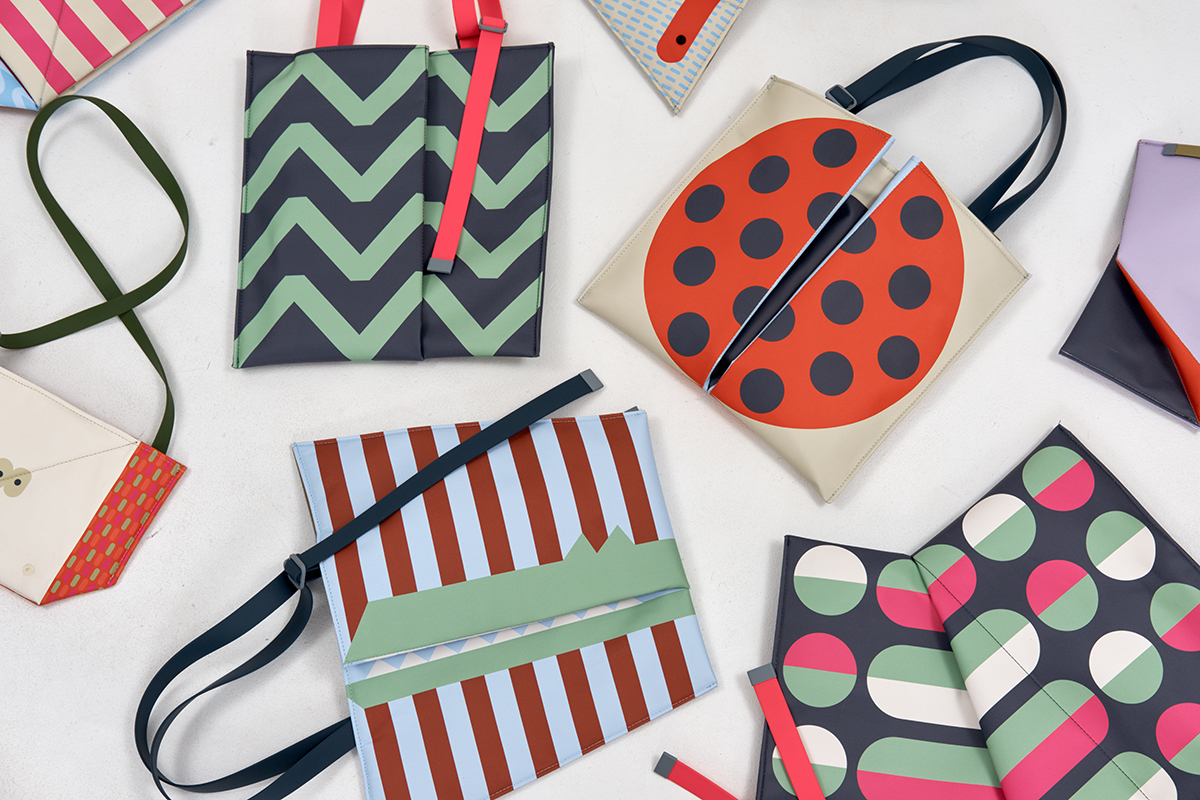
Many of us may still remember spending school breaks folding paper fortune tellers – or chatterboxes – and consulting them on all the complicated questions the future seemed to hold. Nóra Frankó’s bags revisit that childhood world of imagination and play, with folded structures and illustrative patterns. Built around interaction, the REFOLD collection reflects a design approach that creates an organic relationship between form, pattern, and user, treating the accessory not as a static object but as a series of different stages within a process.
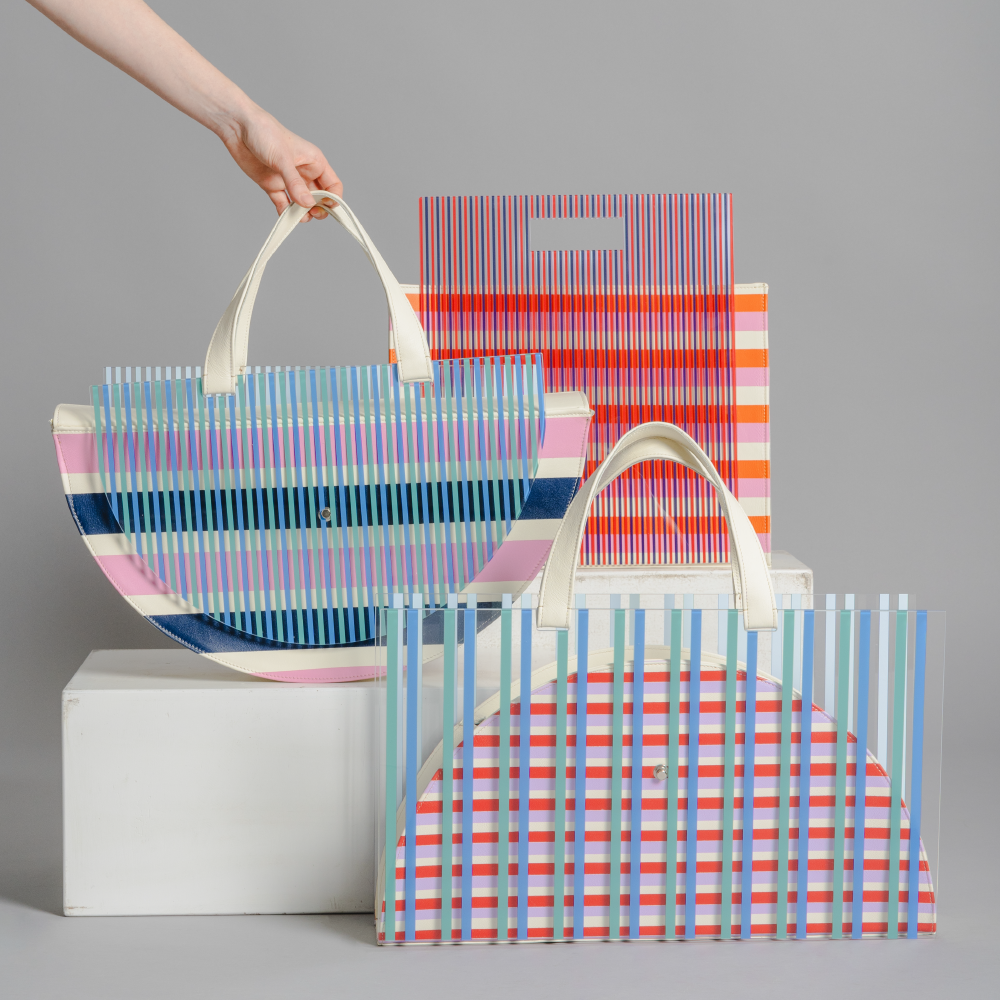
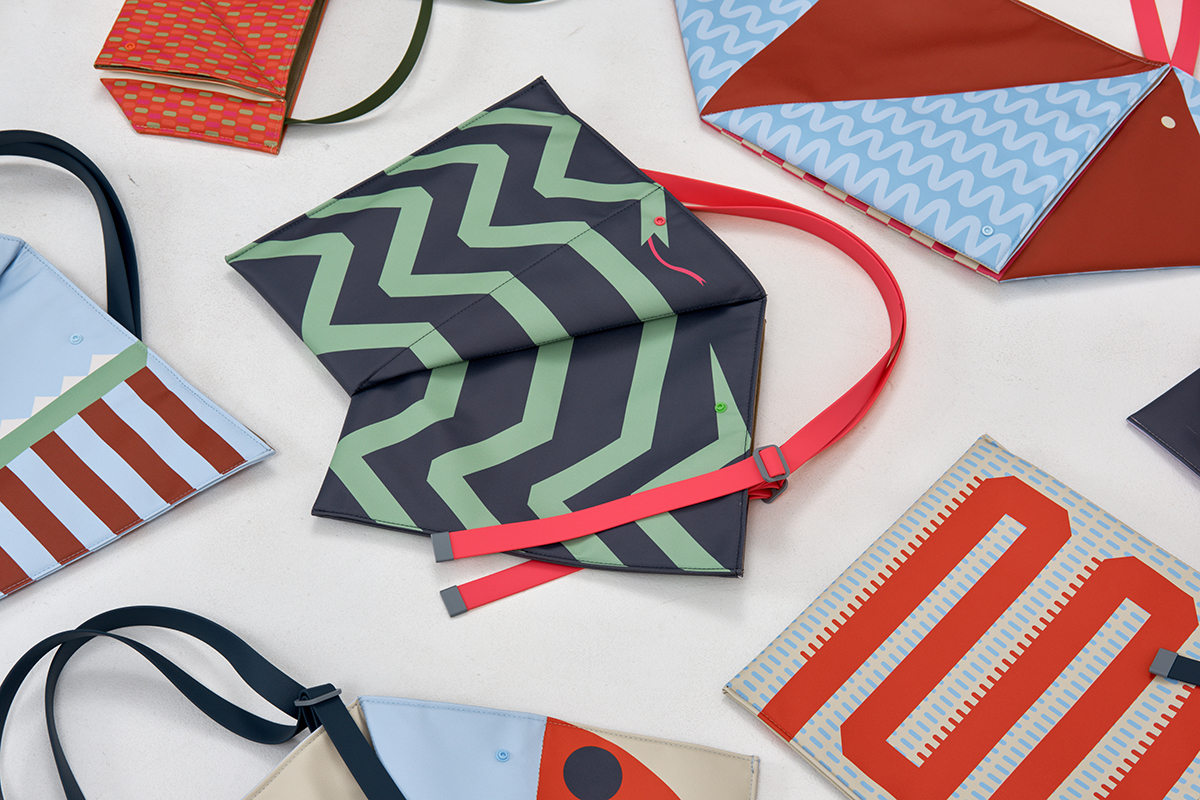
On the left, Nóra Frankó’s moiré bags, on the right, pieces of her REFOLD collection
My work is shaped by a holistic approach that brings together accessory and pattern design. I began exploring this relationship in my BA diploma project, looking for ways to take pattern beyond a purely decorative role and have it actively respond to form and its underlying logic. In my MA project, I took this idea further, exploring how pattern and form could actively complement one another. This led me to investigate approaches to form that allow for movement and transformation.
In my thesis underpinning the collection, I mapped and categorised the structural techniques used in textile design – appliqué, cutwork, folding, gathering, tucking, and pleating – as well as the ways in which they can be combined with pattern. My main focus was the organic interplay between pattern, structure, and form, particularly in techniques where folding creates this relationship either directly or indirectly. I found the most compelling examples in Issey Miyake’s work, so I approached the subject through his design philosophy.
In Constant Motion – Issey Miyake
Working at the intersection of fine art and design, much of Miyake’s work is the result of lengthy material development processes preceded by advanced technological experimentation. His garments can therefore be seen not simply as functional objects, but as records of the design knowledge accumulated.
To gain a deeper understanding of his work, I also explored parallels in fine art, including the work of Margit Szilvitzky. Her experiments with folded space and surface are presented not as standalone works, but as stages in a developing line of thought. She describes the square, for example, as a form emerging through folding, shifting the emphasis from the final result to the process leading up it. Her three-part work Open Process shows the same folded spatial element in three different states – laid out, partially folded, and completely folded. The interchangeability of these stages calls the linearity of the process into question and diminishes the significance of a single “finished” state.
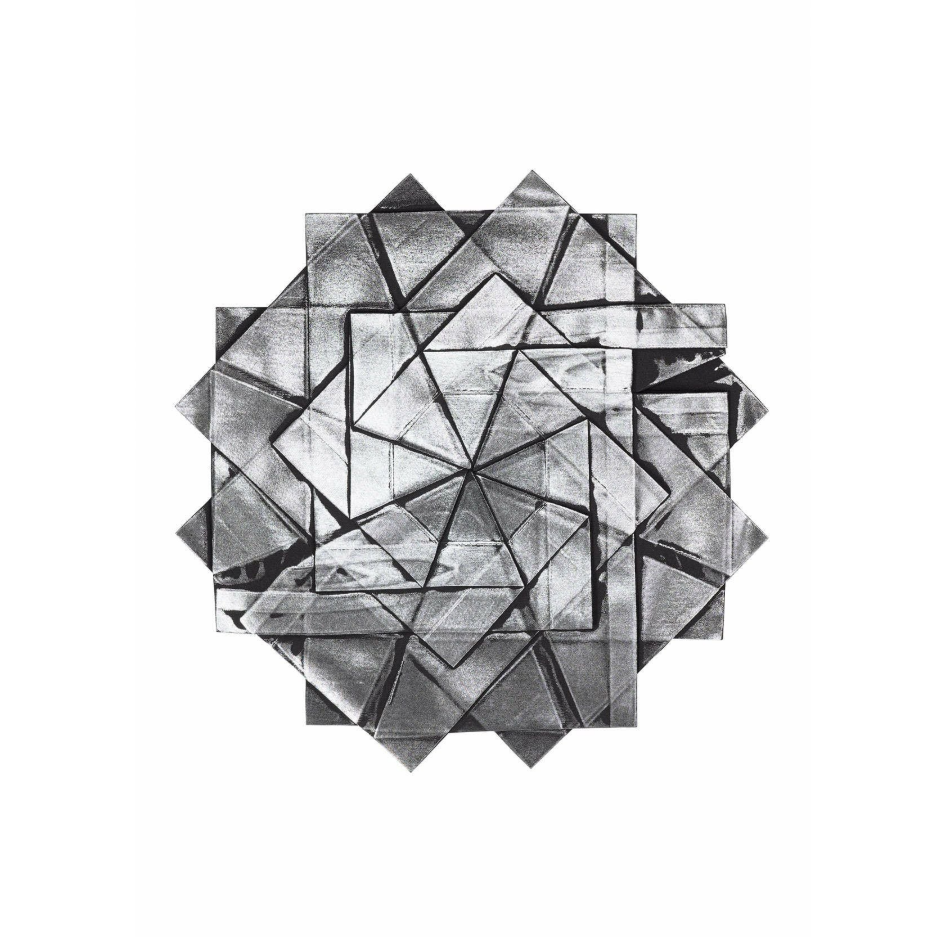
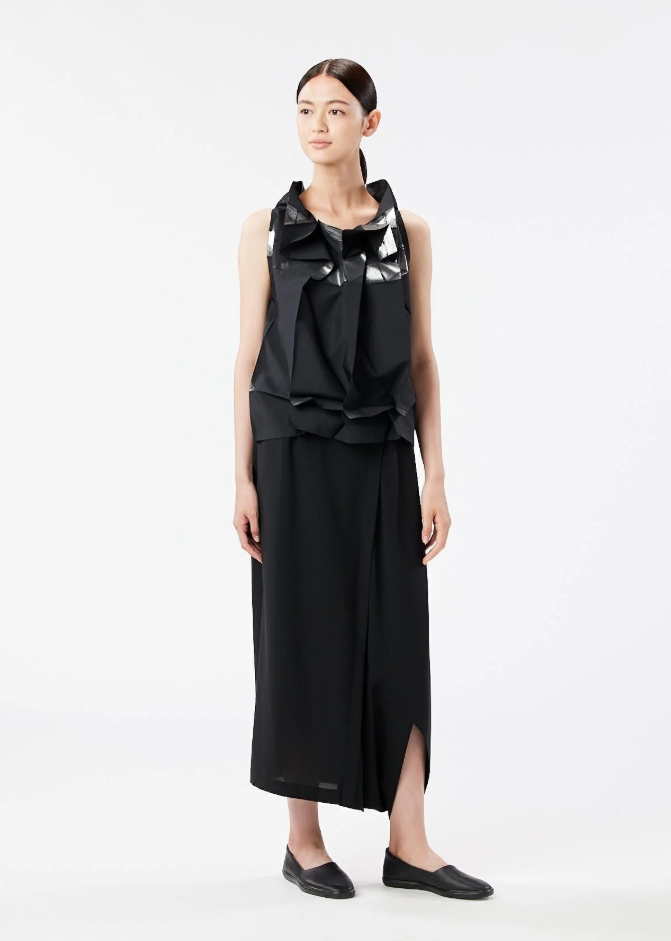
Issey Miyake: 132 5. // Forrás: isseymiyake.com
I explored folding and the process-based thinking it entails in Miyake’s work through case studies of three product lines: 132 5., Pleats Please, and Bao Bao. The 132 5. line consists of garments that can be folded completely flat, only assuming their full three-dimensional form when worn, as the structure unfolds under gravity. This gives the human body – the wearer – a role in “completing” the form. The printed pattern is equally important: it traces the geometry of the folding system, mirroring in print what is physically built into the material through the folds.
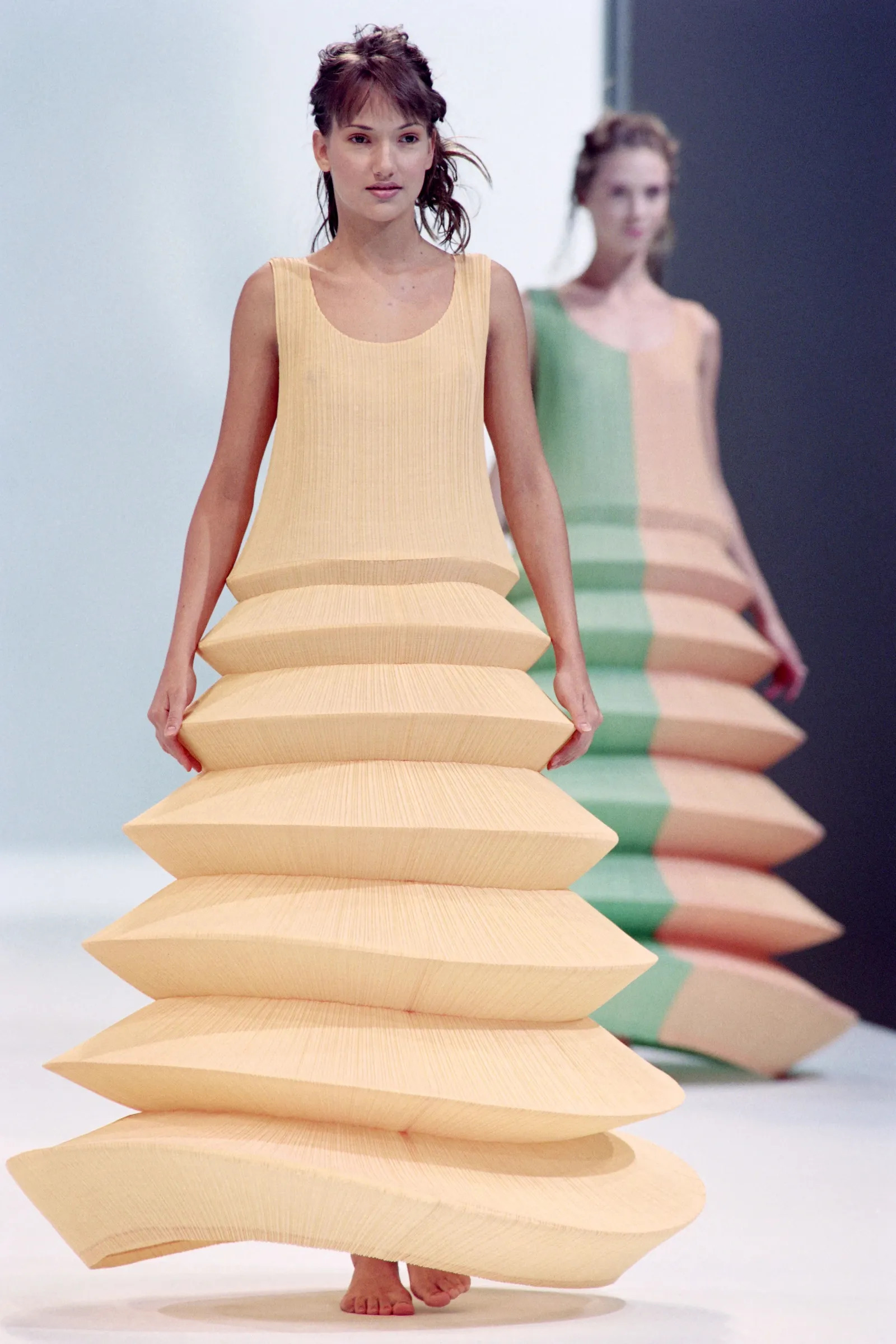
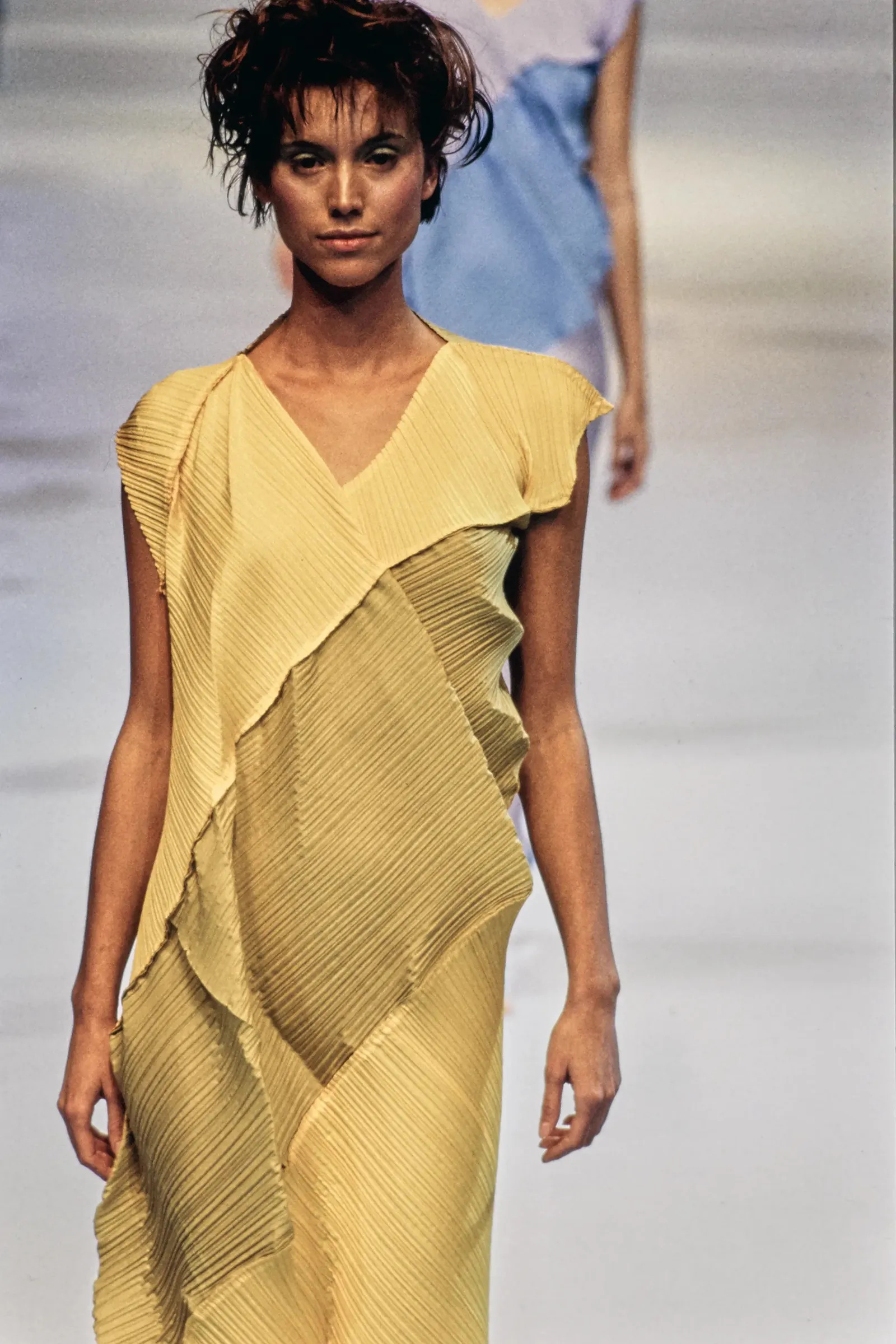
Issey Miyake: Pleats Please, 1995 // Forrás: British Vogue
While 132 5. explores transformation, Pleats Please uses pleating to explore how clothing adapts to the body. Miyake’s distinctive pleated structure is designed specifically for practical, everyday garments, while also democratising sizing by allowing the pieces to adapt to different body shapes and sizes. His pleating also provides fertile ground for experimentation with pattern, as the shifting structure visually transforms the print. In Pleats Please, folding serves as a visual signature of the brand, a means of achieving durability and timeless design, and an integral part of the garments’ functionality.
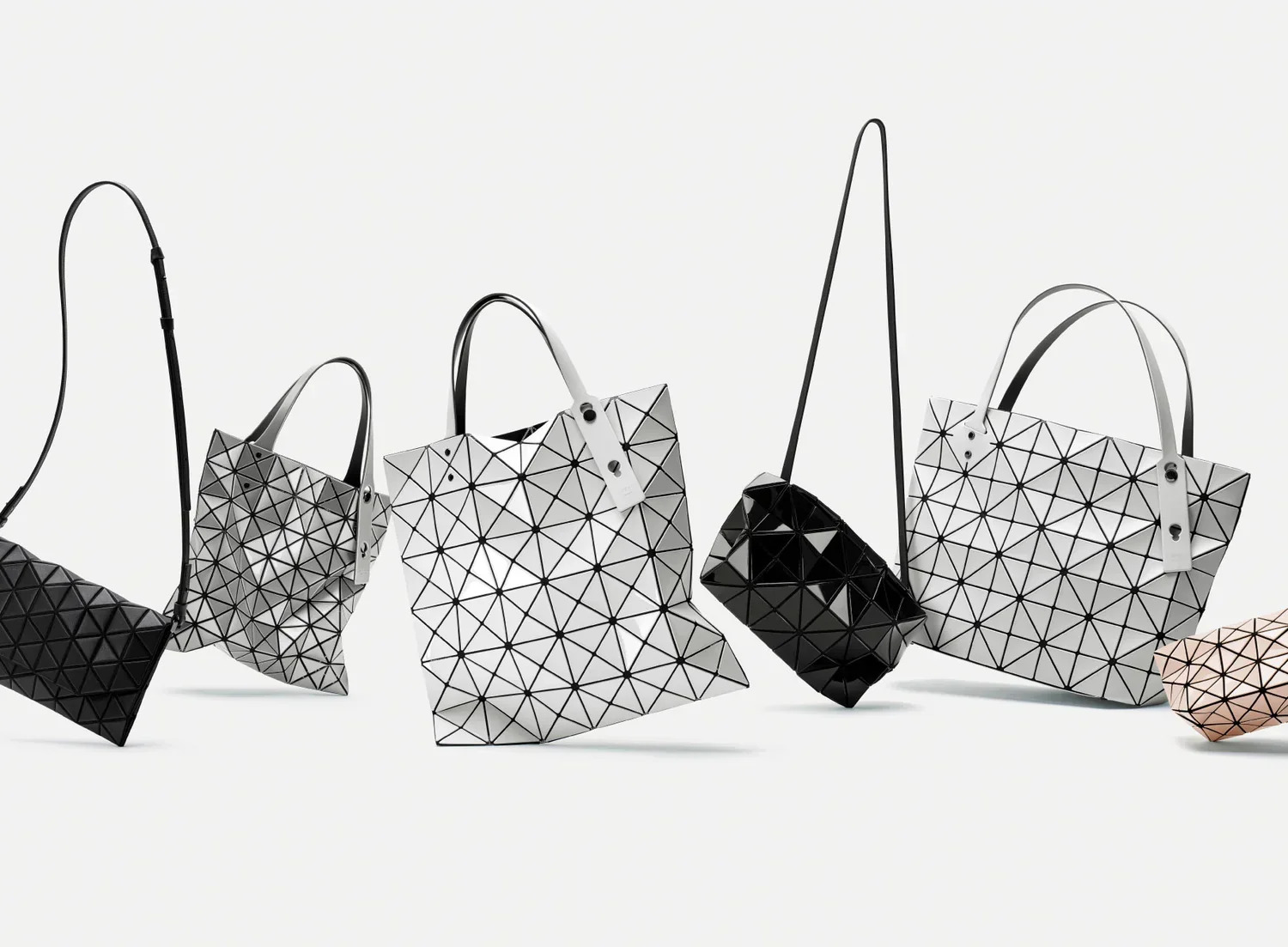
Issey Miyake: Bao Bao // Forrás: isseymiyake.com
The distinctive form of the Bao Bao bags, meanwhile, is created by a mesh-like structure of PVC triangles applied to a soft base material. Here too, the structure itself has become a distinctive hallmark of the brand. The mosaic-like arrangement of triangles adapts to the objects carried inside the bag, creating a surface that is constantly in motion. Although the moving mosaic already has a strong graphic quality of its own, it also provides a visual base for positioned prints. Whether abstract or figurative, the system can accommodate a wide range of imagery and themed collections.
Each of these three approaches uses folding in a different way, opening up different possibilities for the relationship between form and pattern. I also considered Miyake’s concept of the “space between the body and the garment”, which allows the human body – the user – to interact with the garment or accessory in a variety of ways. In 132 5., the body plays a relatively passive role as the garments take form, while in Pleats Please it actively shapes the structure. Several versions of the Bao Bao bags, meanwhile, have been designed so that the user can fold and transform them.
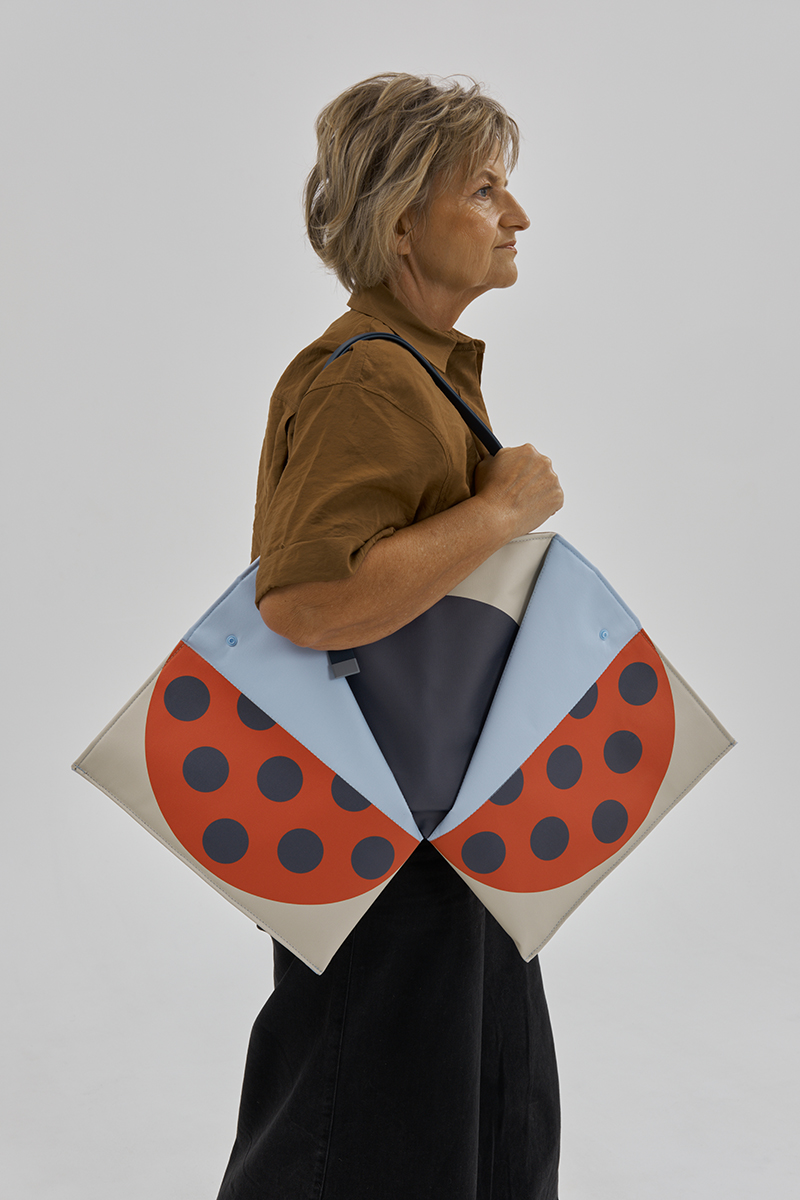
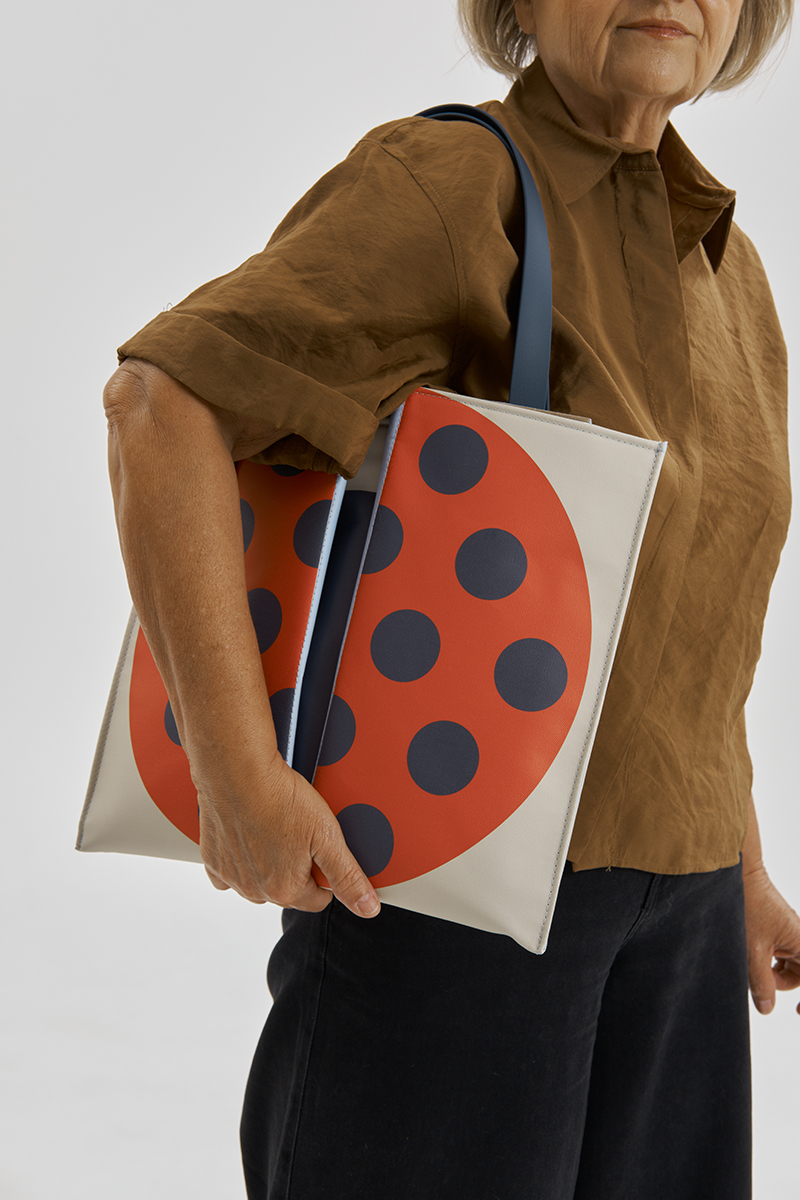
Nóra Frankó: REFOLD // Photo: Tamás Cseke // Model: Erika Wester
A chatterbox for all ages – REFOLD
My masterwork explored one way of creating a more active relationship between the user and the accessory through fold-based form-making. Folding not only allows the form to transform, but also provides a surface for the pattern that allows the graphic itself to change. I drew my visual inspiration from childhood games and their motifs. The bags can change form, transforming the patterns that appear on their surfaces as they are worn and inviting the user to interact with them.
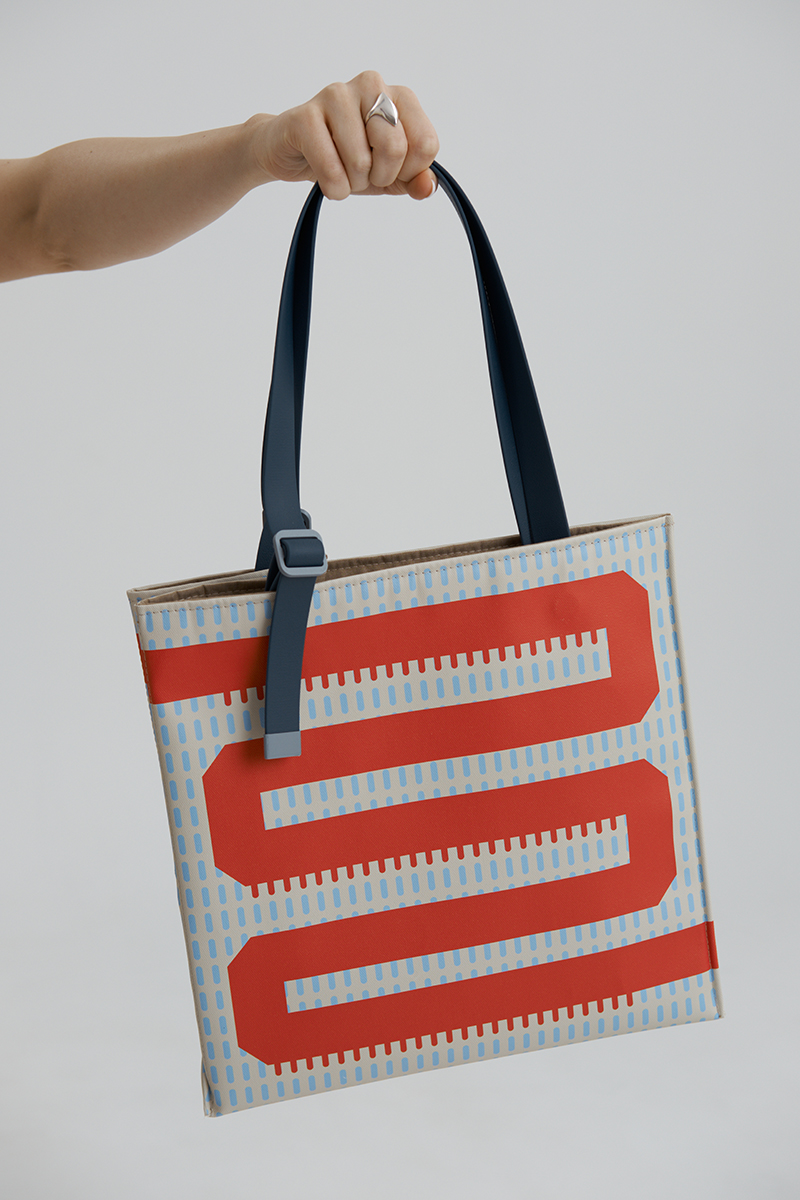
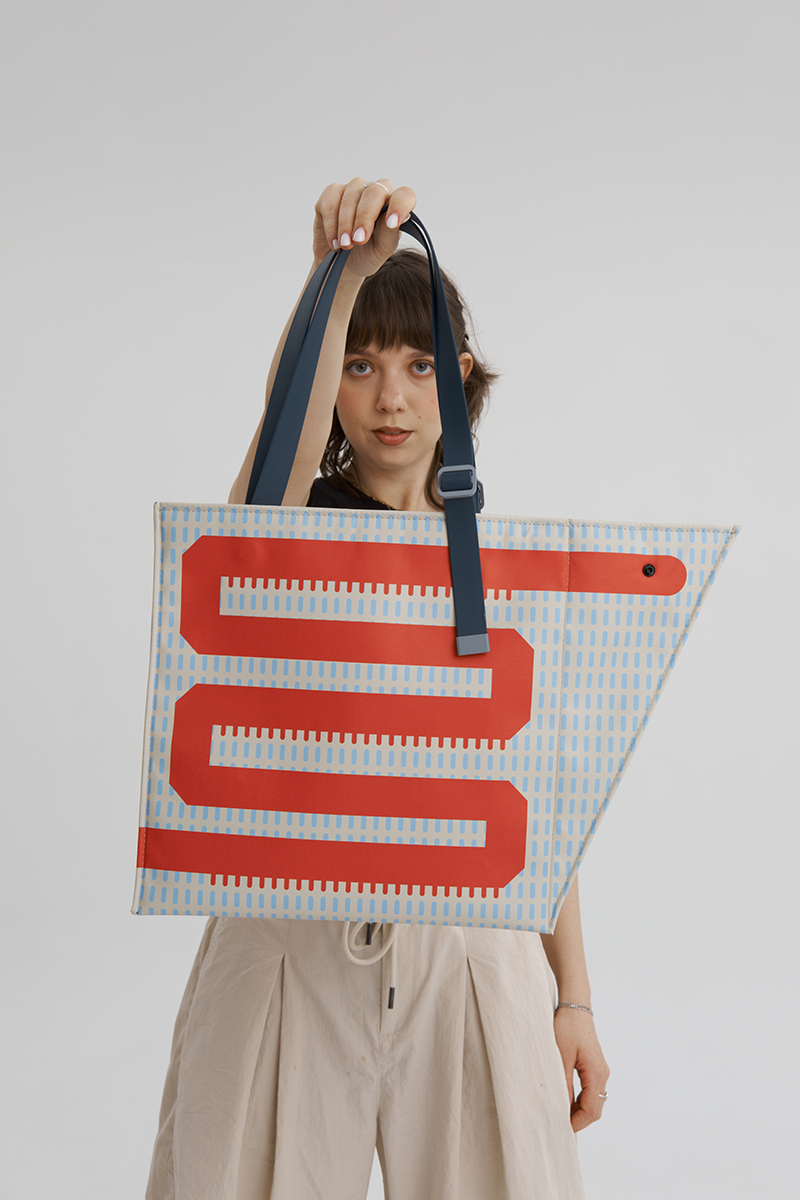
Nóra Frankó: REFOLD // Photo: Tamás Cseke // Model: Hanna Gollob
I developed the patterns around illustrative prints that evoke a sense of playfulness while also giving the changes in the pattern a thematic dimension. Alongside the animal and fruit motifs, I created repeat patterns without figurative imagery, making these pieces appealing to a broader range of users. Through its use of pattern and folded forms, the collection reflects on the timeless nature of play.
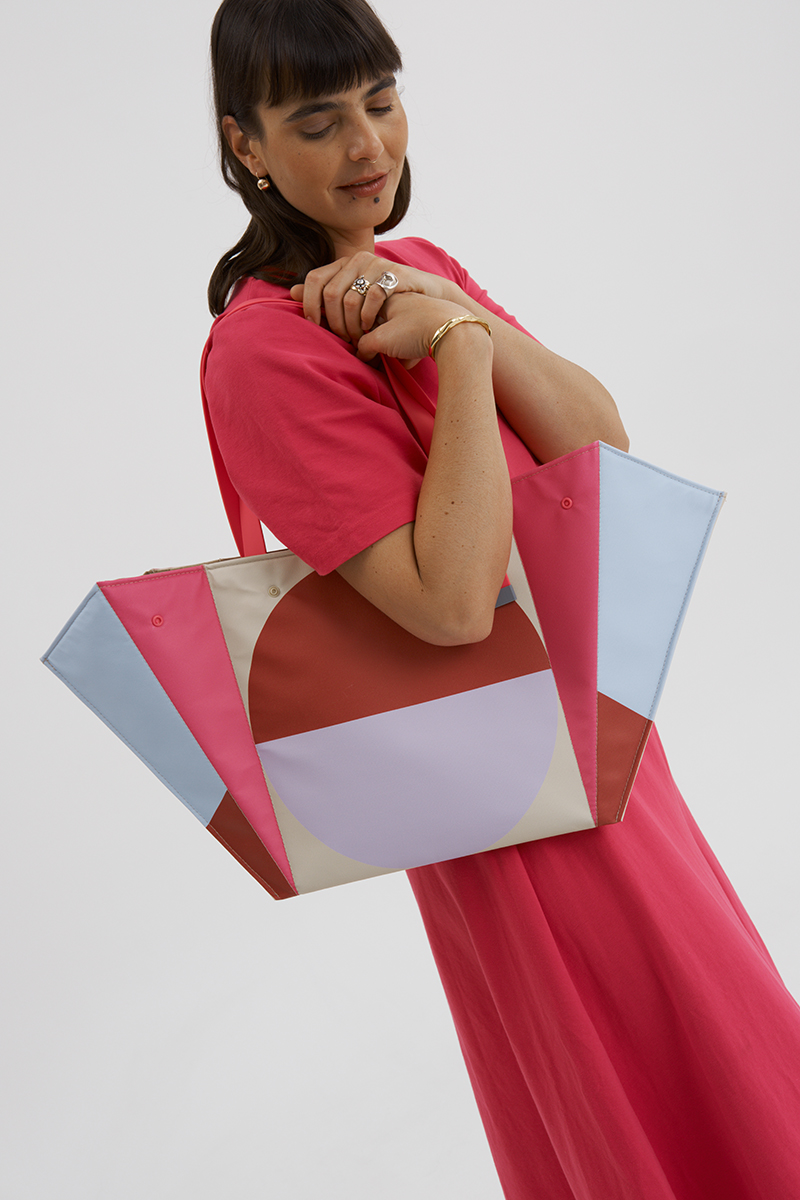
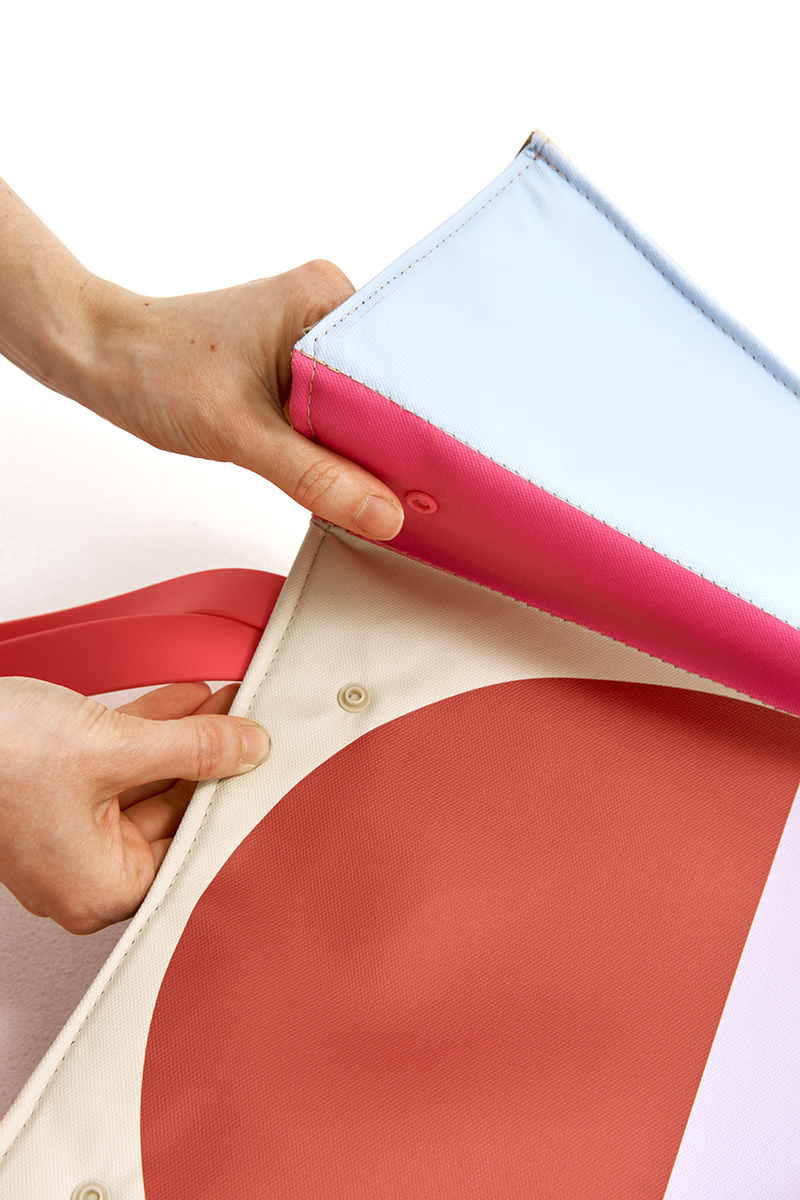
Nóra Frankó: REFOLD // Photo: Tamás Cseke // Model: Dóra Tomcsányi
The nine-piece bag collection was made using foam padding and quilting, with each bag cut from a single pattern piece. Silicone straps, plastic snap fasteners, magnets, and 3D-printed components complete the designs. For the printed outer layer, I chose a material commonly used in the advertising industry for its firmness and excellent printability.
The collection shoot also focused on the idea of playfulness across generations, which I emphasised by casting models from three different age groups. The photographs highlight the gesture of folding the bags, highlighting not only one of the collection’s key functional features but also the playful interaction that develops between the object and its user.
Miyake effectively reimagined the process of making clothes in many of his works. Drawing on his approach, I combined form and pattern design in an accessory collection that treats the bag as a transformable design object. Folding affects both form and pattern, turning the bag’s owner from a user into a “participant” who initiates the transformation. This playful interaction, which transcends age, offers a new perspective on the relationship between accessory and its user.
Nóra Frankó: REFOLD // Photo: Tamás Cseke
// /
The project was completed at the Fashion and Textile Design MA of the Moholy-Nagy University of Art and Design. The project supervisor was Judit Bráda, with Nóra Hevesi and Viola Veronika Balázs as consultants.