“The archive is not the final word on history” – Interview with Andréa Holzherr
The Magnum Photos agency occupies an indisputable place in the history of photography. In Hungary, the name of one of its founders, Robert Capa, is perhaps the most widely known. This May, a selection of the 1,000-piece Capa-collection held by the Hungarian state was presented as a screening at the Robert Capa Contemporary Photography Center. The exhibition Magnum Photos: Early Color places this material in a broader context, bringing together works by Capa’s contemporaries. The exhibition was developed with the contribution of Andréa Holzherr, Magnum Photos’ Global Cultural Director. On this occasion, we spoke with her about her role in the agency, the pleasures and challenges of working with an archive spanning nearly 80 years, and the importance of continuous renewal.

Andréa Holzherr
Dorottya Balkó: You have joined Magnum Photos in 2003. By then, it was a large, historically significant agency facing radical changes in both the art world and photographic image-making. I wonder how you approached the agency and how you would describe the role that you play in the operation of Magnum.
Andréa Holzherr: Before joining Magnum Photos, I worked at the Maison Européenne de la Photographie (MEP), where I was already in contact with several Magnum photographers, including Bruno Barbey, Henri Cartier-Bresson, and Martin Parr. At the time, Germany was an important market for exhibitions, and Magnum was looking for a German-speaking art historian with a broad knowledge of photography to direct its Exhibitions Department. The opportunity came at exactly the moment when I was considering leaving the museum.
Working at Magnum offered me something very different. In a museum, you can work extremely closely with an artist while preparing an exhibition, sometimes for several years, but once the exhibition is over, that relationship often comes to an end. I always found that rather heartbreaking. At Magnum, I have had the privilege of working with many of the same photographers for more than two decades. You develop a completely different understanding of their work because you follow it over time. New photographers join, others grow older, some pass away, and then the relationship often continues with their families and estates. It creates a remarkable continuity, and I find that infinitely satisfying.
When I arrived at Magnum, I also gradually began to change our exhibition strategy. Rather than producing exhibitions ourselves and simply touring them from one venue to another, I became increasingly interested in partnerships with cultural institutions. Museums have their own curators, their own audiences, their own spaces and, importantly, their own perspectives. I think it is much more interesting to allow them to engage with the Magnum archive and interpret it, while of course working closely with the photographer or with Magnum.
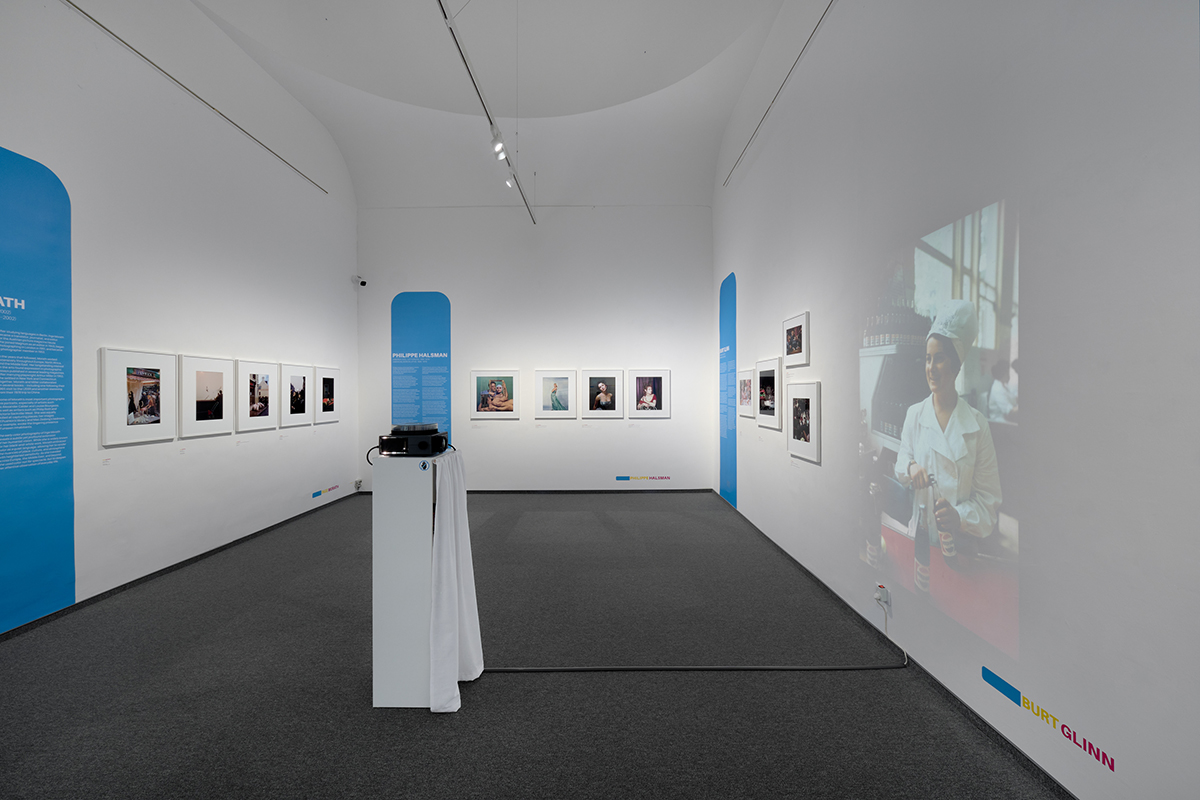
Magnum Photos: Early Color at the Robert Capa Contemporary Photography Center is a good example. The project grew out of a conversation with Orsolya Kőrösi, while the Capa Center was preparing an exhibition on Robert Capa. They were interested in his color photography, which led us to look more broadly at color work from Magnum’s early years and at photographers who belonged to Capa’s generation and were experimenting with color themselves. The exhibition therefore emerged through dialogue rather than from a ready-made concept that Magnum brought to the institution. That is the kind of collaboration I find particularly fruitful.
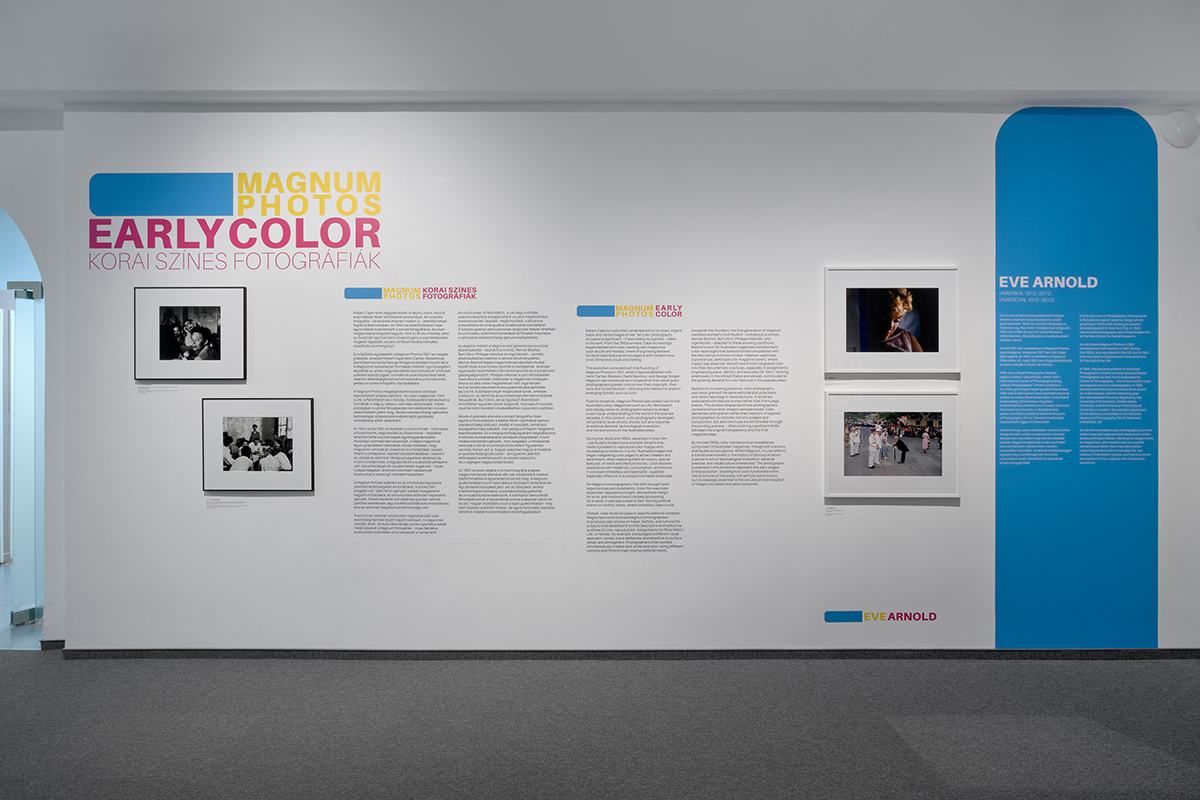
Magnum Photos: Early Color, interior. Photo: Capa Center
‘Early Color’ and ‘A World in Color’ are both exhibition projects of Magnum Photos highlighting the color material in its archive. You started them a few years ago – how did your focus shift to color, and why is it gaining relevance just now?
Magnum has one of the most extensive photographic archives in the world, both physical and digital. When the digital archive was developed in the 1990s, there were essentially two priorities: integrating new digital photography and digitizing the most important historical images.
But what was considered “important” was inevitably influenced by the photographic canon of the time. The history of twentieth-century documentary photography had largely been written in black and white. Many of the photographs through which we know Robert Capa, Henri Cartier-Bresson, Werner Bischof or George Rodger are black-and-white images, even though several of these photographers also worked in color. Color was often connected to the illustrated press, travel assignments, fashion, advertising and editorial commissions. Magazines increasingly wanted color, and photographers responded to that demand. Yet when their work entered museums, monographs and photographic history, it was very often the black-and-white work that was selected and celebrated. As a result, an enormous amount of color material remained relatively unknown.
This is what makes the color archive so fascinating today. We are not simply discovering forgotten photographs; we are also reconsidering the way the history of photography was constructed.
From the 1970s and 1980s onward, photographers such as Harry Gruyaert and later Alex Webb helped establish color as a serious language within documentary photography, while institutions gradually became more receptive to it. Today we can return to earlier material with different eyes. Projects such as Early Color and A World in Color allow us to bring these photographs back into the conversation and, in some cases, to complicate what we thought we knew about particular photographers and about Magnum itself.
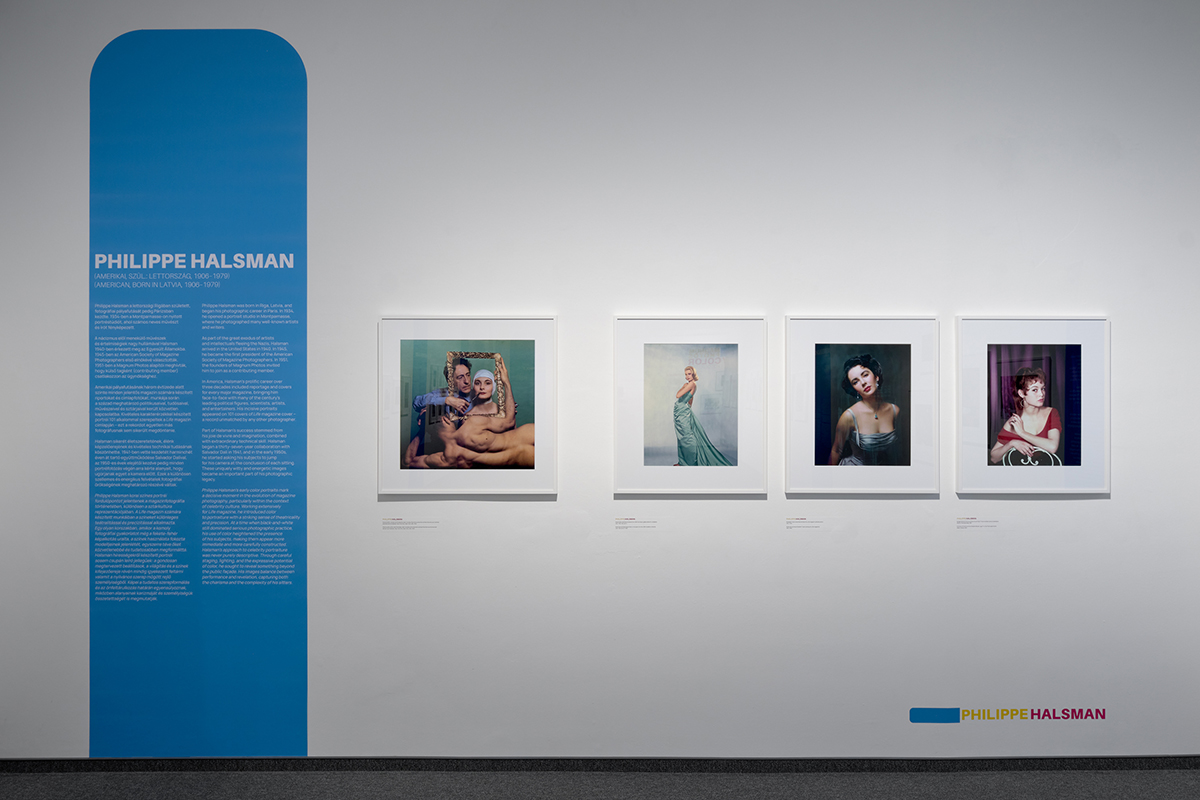
Magnum Photos: Early Color, interior. Photo: Capa Center
The exhibition at Capa Center features photographs from the end of the 1940s and the first half of the 1950s. Although the selection provides a glimpse into the first years after the end of the Second World War, the photographs depict an almost scenic, idealized reality. What does this era signify in photo and media history, and what does it say about the society of the period?
I think we have to look at these photographs within the much wider visual context of the period. Most documentary photography was still produced in black and white. Photographers were recording the devastation left by the war, displaced populations, reconstruction, the Marshall Plan and new conflicts emerging around the world. It was certainly not an idyllic moment.
But at the same time, there was an enormous desire for normality. The illustrated press needed stories about reconstruction, travel, leisure, fashion, family life and progress. After years of war and deprivation, there was a hunger for images that suggested that life could begin again. Color was particularly suited to this new visual language. It conveyed optimism, modernity and consumption. So, I would not necessarily describe these photographs as denying the darker reality of the period. They reveal another side of the same historical moment: the desire to rebuild, to travel, to consume, to enjoy life again and, above all, to believe in the future.
Of course, magazines also needed to sell, and hope was easier to sell than despair. But precisely for that reason, these photographs tell us a great deal about the aspirations of postwar society.
Magnum Photos: Early Color, interior. Photo: Capa Center
As you have mentioned, the photographs were originally published in magazines. However, as part of the Magnum Photos archive, they lose their original context and become cultural artefacts. This shift might pose certain questions regarding the curation of documentary photographs. What would you identify as the most significant challenge?
Context is probably the greatest challenge. A documentary photograph has several lives. There is the context in which it was made, the context in which it was originally published, and then the completely different context in which we encounter it today.
A photograph that originally appeared in a magazine was part of an editorial construction. It had a caption, a headline, an accompanying article; it was positioned alongside other photographs and was addressed to a particular readership at a particular historical moment. When we remove that photograph from the magazine, enlarge it and hang it on a museum wall under the photographer’s name, we fundamentally change its status. This is something we have to remain conscious of as curators. Whenever possible, I like to bring some of that history back into an exhibition through original publications, contact sheets, captions or other archival material. It allows the audience to understand that these photographs were not originally created as autonomous works of art. They were part of a much larger system of visual communication.
For me, that is one of the fascinating aspects of working with the Magnum archive. It exists at the intersection of journalism, history, authorship and art.
Since the founding of Magnum Photos in 1947, our visual culture has seen fundamental changes in technology, platforms, formats, accessibility, distribution systems and the sheer quantity of images. Against this backdrop, what challenges would you identify regarding the constant reinvention and recontextualization of a documentary photo archive rooted in the 20th century?
One thing I have learned from working with the Magnum archive is that we often need a certain chronological distance before we understand the significance of a body of work. If you think about Magnum in the 1990s, for example, photographs made only ten years earlier were not necessarily at the forefront of our attention. We were still concentrating on integrating the major historical landmarks into the archive: the Spanish Civil War, the Second World War, the founding of Israel and other events that had shaped Magnum’s historical identity.
Meanwhile Martin Parr understood something very important about the present. He photographed what was directly around him: the middle class, consumerism, tourism, leisure, food, bad taste, mobile phones and eventually selfies. He often pointed out that photographers were very interested in photographing the very poor or the very rich, whereas he wanted to photograph people like himself – his neighbours, his generation, the society in which he actually lived. At the time, some of these subjects could appear almost banal. Today we understand that he was recording behaviours that have become central to contemporary life.
That is what makes an archive so interesting: its meaning is never completely fixed. The photographs do not change, but we do. Society changes, and therefore the questions we ask of the archive change as well. Material that might have appeared secondary twenty or thirty years ago can suddenly become extremely relevant. For me, the challenge is therefore not simply to preserve a twentieth-century archive, but to keep returning to it with new questions.
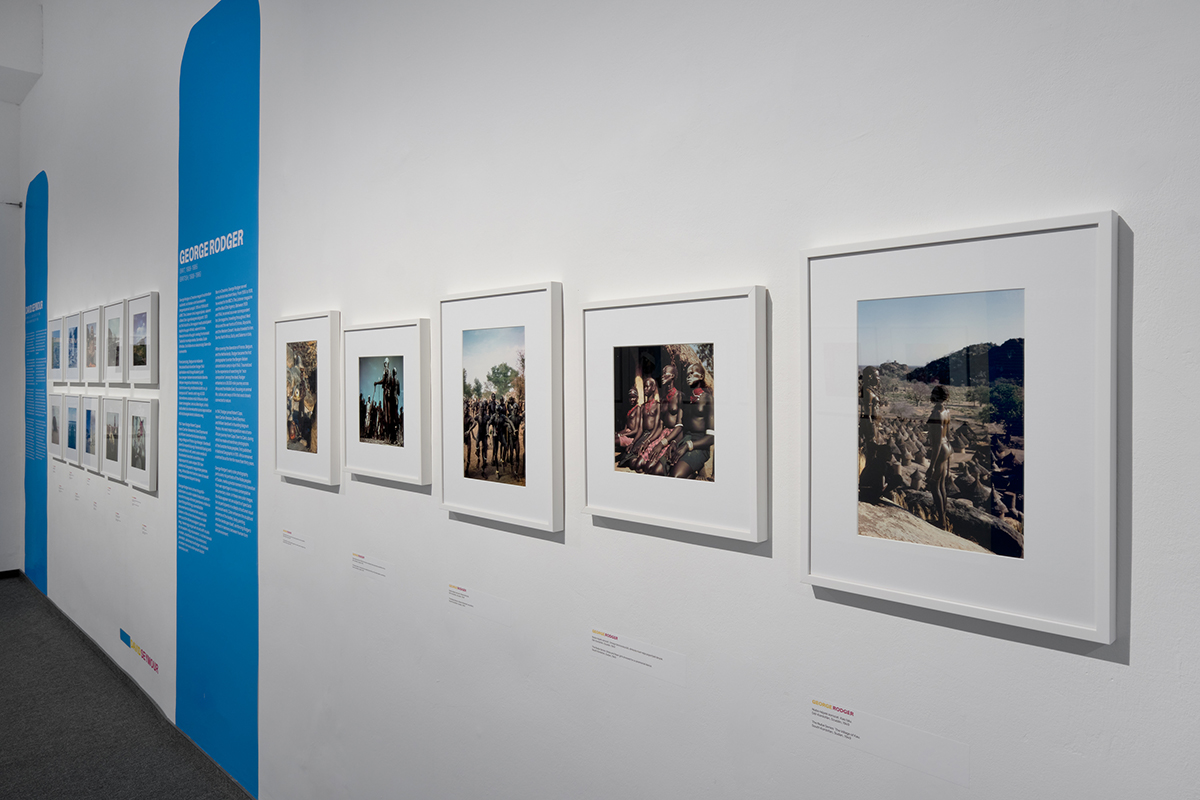
Magnum Photos: Early Color, interior. Photo: Capa Center
Recently, I have seen the film The Stringer: The Man Who Took the Photo. It is essentially an investigation into the origins of the world-famous The Terror of War photograph, questioning whether it was really Nick Ut’s work. The film set in the era of post-truth deals with serious questions about copyright, the exploitation of non-Western photographers, decolonization and the institutional apparatus built on documentary photography. How do you see Magnum’s operation within this contemporary context?
I have not seen the film, so I would be cautious about commenting on it, but the broader questions it raises are extremely important.
Questioning the way photographic history has been constructed is not a bad thing. On the contrary, I think institutions have a responsibility to continually reassess what they believe they know. Archives are not neutral, and neither are the systems through which photographs have been commissioned, edited, captioned, distributed, credited and ultimately incorporated into history. This does not mean that we should automatically distrust everything that comes before us, but we should be willing to look again when new evidence or new perspectives emerge.
Magnum itself is part of that history. It is a Western institution founded in the aftermath of the Second World War, and its photographers have documented an enormous part of the world. We cannot pretend that their perspective is the only possible perspective. The important thing is to remain open to other narratives and to understand the circumstances in which our own archive was created. I think institutions have to be prepared to question themselves. Credibility does not come from claiming that the historical record is infallible. It comes from being willing to examine that record critically and, when necessary, to revise our understanding of it.
I remember visiting a press archive in Vietnam when I was still working at the MEP. Until then, most of the photographs I had encountered of the Vietnam War had been produced or distributed through Western media. Suddenly I was looking at photographs of the same historical period from a completely different perspective. It was another visual narrative of the war. The experience stayed with me because it demonstrated something fundamental about archives: no single archive gives us the whole history. Every archive reflects particular viewpoints, circumstances and systems of distribution, and there are inevitably other perspectives outside it.
For me, this is precisely why archives remain so fascinating and so relevant. Our responsibility today is not simply to preserve them, but to keep asking questions: who made these images, under what circumstances, how were they used, whose perspective do they represent, and what might be missing?
The archive is not the final word on history. It is a place from which we can continue to investigate it.
// /
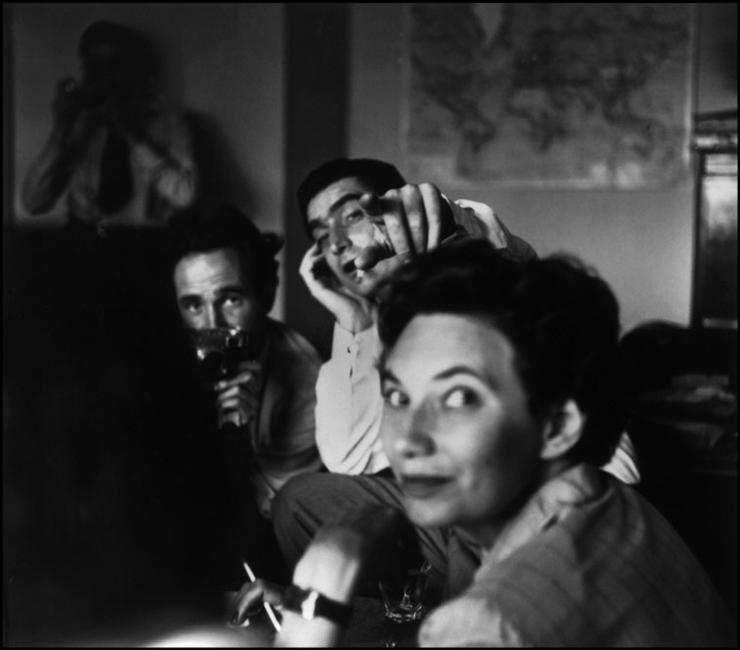
Cover photo: Magnum Photos meeting. Photographers Werner Bischof and Robert Capa, and in foreground Maria Eeisner the Bureau Chief. Paris, France, 1950. © Werner Bischof Estate/Magnum Photos
The Magnum Photos: Early Color exhibition can be seen until the 30th of August at the Robert Capa Contemporary Photography Center.
The exhibition was organized in collaboration with Magnum Photos and features a selection of photographs by: Eve ARNOLD, Werner BISCHOF, Burt GLINN, Philippe HALSMAN, Inge MORATH, George RODGER, David SEYMOUR.