What lies beyond the visible? – Róza Medgyesy’s modular furniture system
During the design process form, proportions, colour, and appearance of a particular object are brought into focus. However, when designing for blind and visually impaired people, the emphasis is often narrowed down exclusively to functionality and usability. Róza Medgyesy became interested in what the aesthetic and sensory experience of an object might mean for blind and visually impaired people, and how an understanding of these experiences could be incorporated into product design.
For blind and partially sighted users, aesthetic and sensory experiences are closely intertwined with usability, sensory comfort, reliability, material quality, intuitive use, and the experience of independence. From these findings, I identified several key design principles:
- functionality and usefulness are fundamental;
- safety and reliability are equally important, meaning that products should minimise potential hazards;
- products should be simple and intuitive to use in order to reduce cognitive load;
- finally, ease of handling is also essential: rounded forms, a clear structure, and carefully integrated multisensory cues all emerged as important design considerations.
Designing for my target group clearly called for a participatory approach, as this was the only way for me, as a sighted designer, to gain insight into the everyday routines, challenges, and sensory experiences of blind and partially sighted people. I worked with nine participants aged between 22 and 40 – seven men and two women – each with a different level of independence. Most live in residential care or university halls of residence, while one participant lives in their own home.
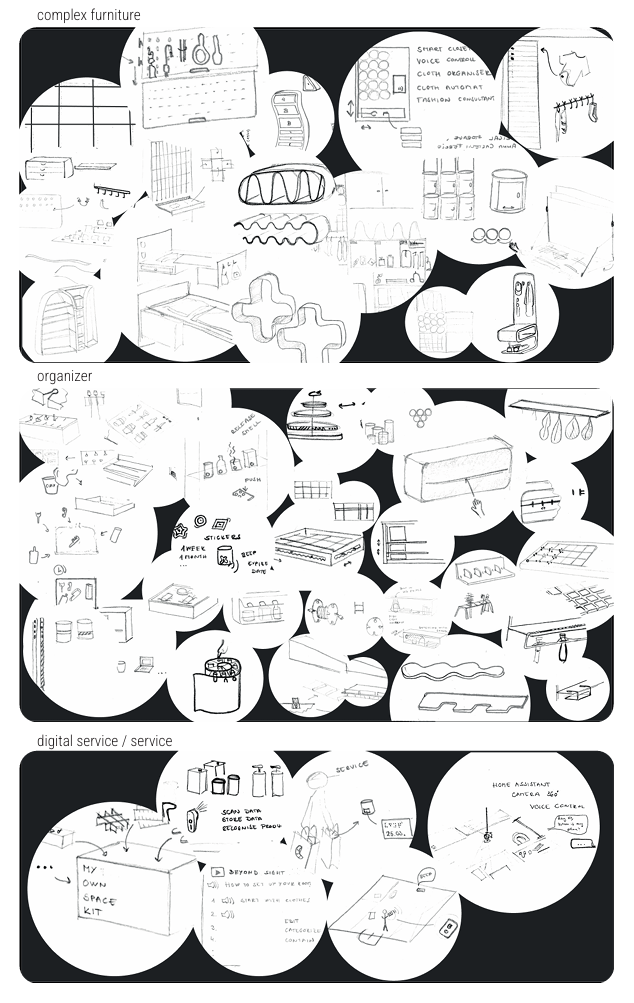
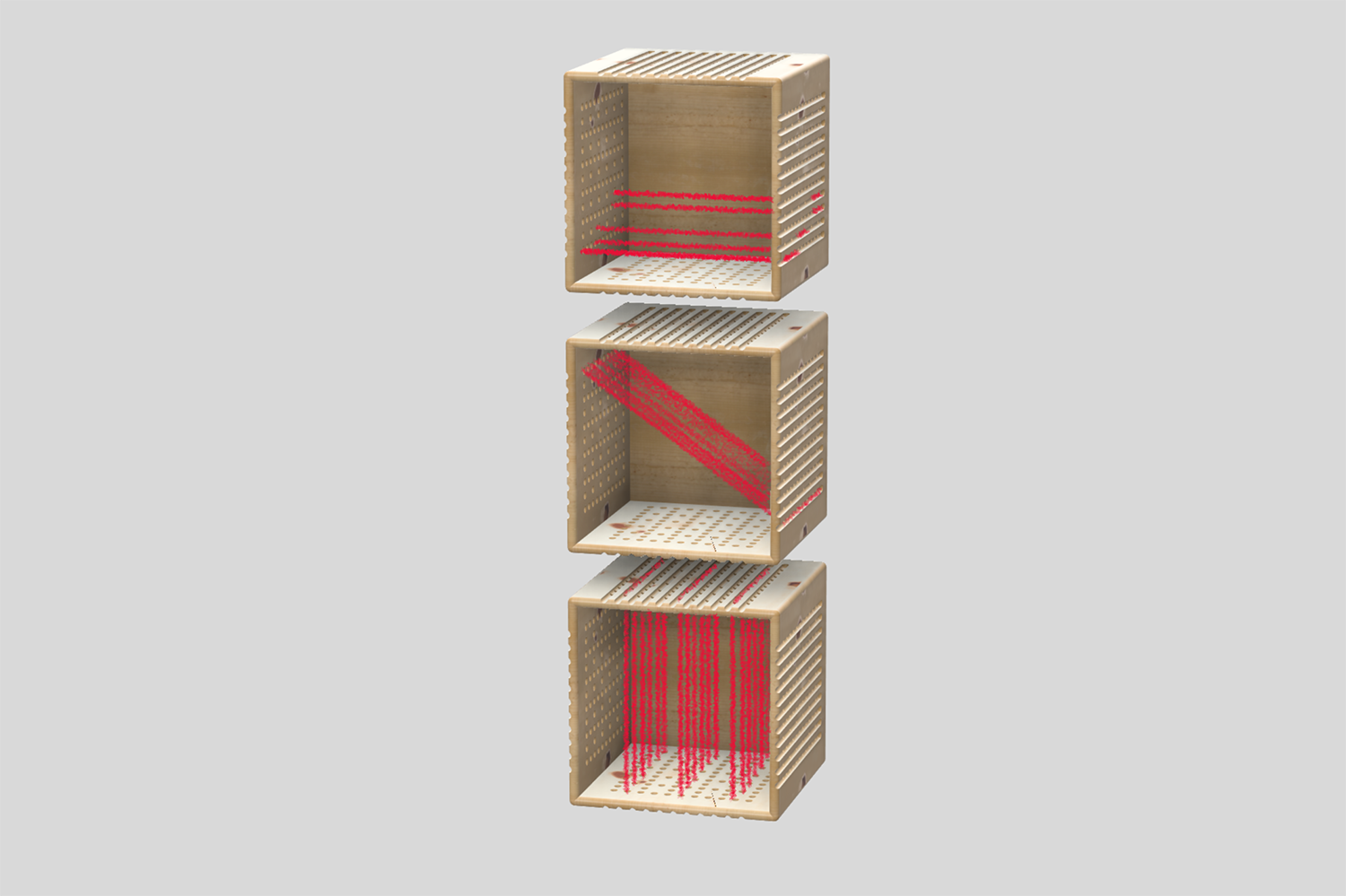
Sketches and renderings for the Beyond Sight modular furniture system.
“It’s frustrating when I can’t find something – objects should stay where I put them.”
Benchmark research, an interview conducted at the assistive products shop of the Hungarian Federation of the Blind and Partially Sighted, as well as home visits and conversations with participants, all pointed to organisation as one of the main everyday challenges and one that is particularly difficult to resolve. It became clear that maintaining a sense of independence and security depends on every object having a fixed place and staying where it is expected to be. The main issue was not a lack of storage space, but finding a secure, accessible place for objects where they could be easily located by touch and moved around as needed.
My aim was therefore to create a modular system that could accommodate different living situations, help users stay organised, reduce cognitive load and increase their sense of security, while also offering a rich sensory experience and aesthetic value.
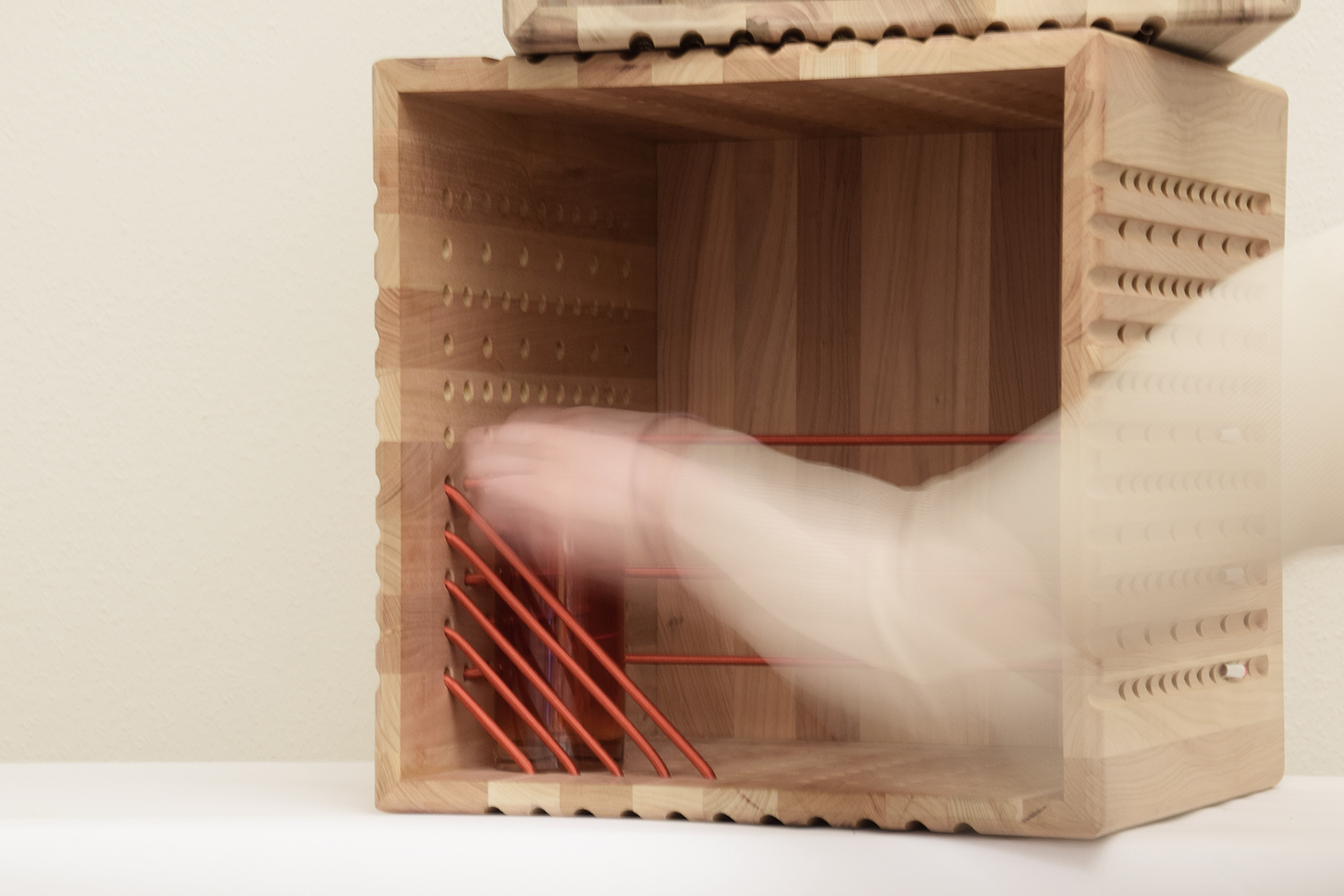
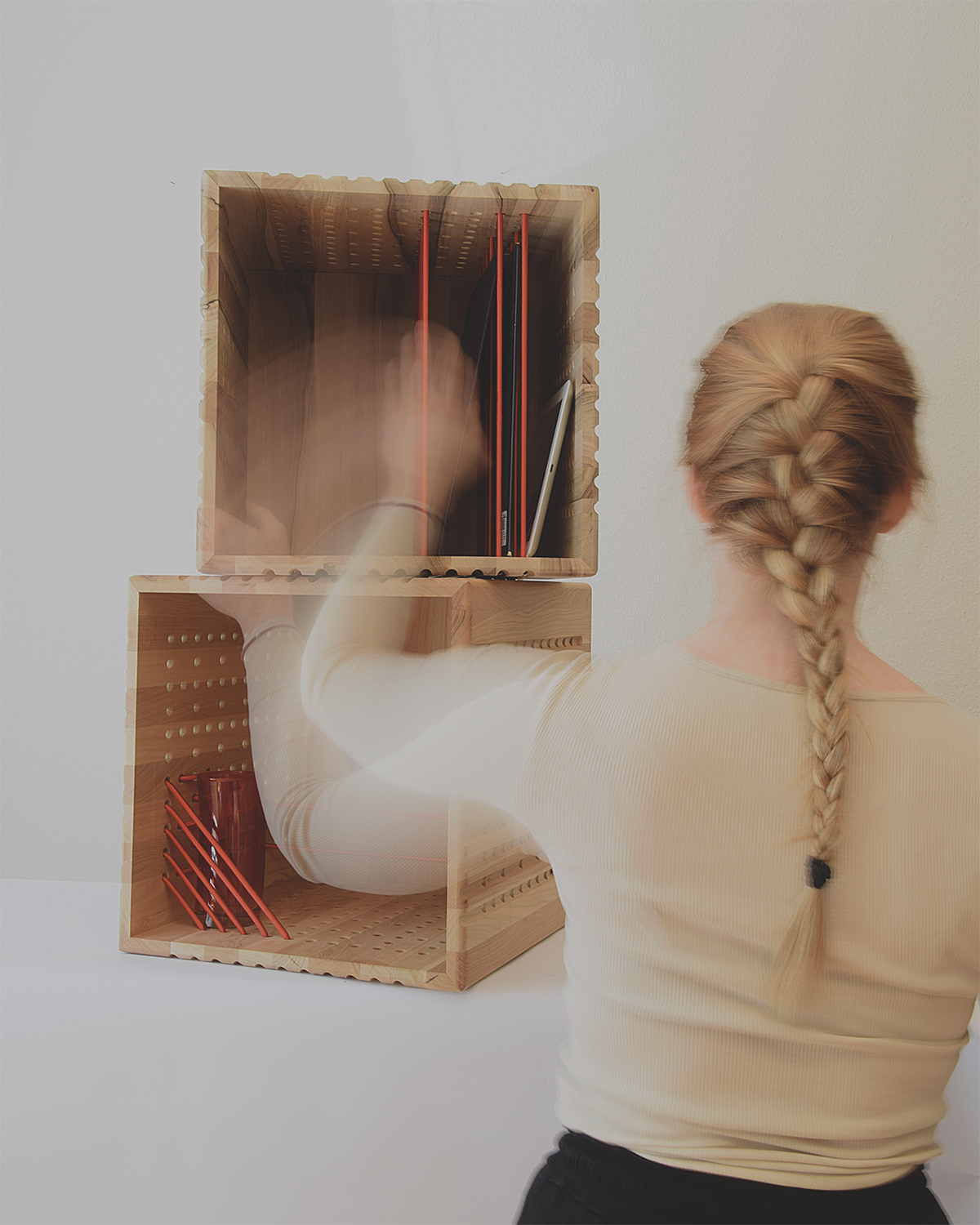
The system I developed is based on two core components: a smaller module and a larger one three times its height. The modules can be used individually or combined to create a complete storage system suitable for residential care facilities and student accommodation. I incorporated cords into the modules to divide the internal space, guide the user’s hand, create reference points, and keep objects in place. The concept responds to the way blind and partially sighted users search for things: they often sweep their hands across surfaces, inadvertently shifting or knocking over objects.
I tested the initial prototype with the participants, then used their feedback to refine the module’s size and capacity, the spacing between the cords, the perforation pattern, and the grooves. At this stage, I was still using thin cords and threads inside the box, but testing showed that they were too fragile and that hands or objects could easily get caught in them. I also incorporated the participants’ comments and ideas into the next iteration, including the suggestion that the box should also be usable with its opening facing upwards.
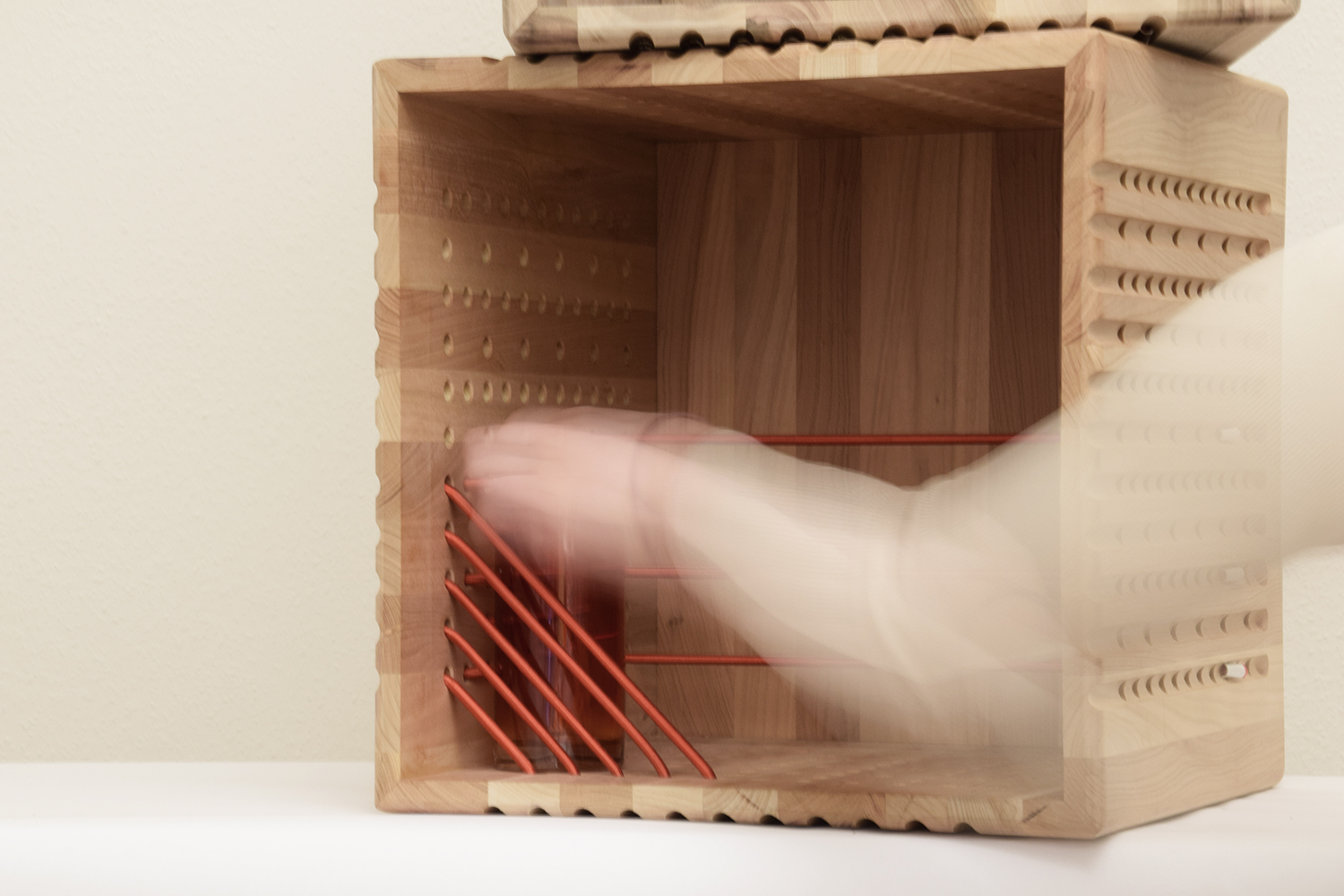
Róza Medgyesy: Beyond Sight
“It really got my imagination going!”
At the start of the co-design process, we explored a range of materials and surfaces, then looked at possible configurations and ways of using the system. The participants showed a clear preference for the smoothest surface, an MDF board. When comparing rope and elastic cord for structuring the inside of the boxes, they unanimously chose the elastic cord, which also proved to be the best option from a functional point of view.
When exploring how rounded edges affected handling, we discussed how easy the box-shaped samples were to grip and hold, as well as what size would work best. The participants preferred more generously rounded edges. Two even suggested that the softer corners could reduce the risk of bumping into the object or catching a foot on it.
The next task was threading the cords through the boxes, which the participants thoroughly enjoyed – some even saw it as a fun game. The long cord proved difficult to handle, and they struggled to find the right holes with it. Shorter lengths were much easier to manage, although they could snap back if not secured properly – something I took into account in the final design.
Participants approached the cord layouts in different ways. One particularly enjoyed experimenting and came up with more complex, functional arrangements, while others preferred simpler configurations that required minimal effort, using the cords mainly as a decorative or playful element. This suggested that the product should offer pre-designed layouts tailored to specific functions, while still allowing users to create or modify the cord arrangement themselves if they wished.
During the co-design process, the participants came up with numerous ideas for how the box could be used. The most common suggestion was for storing books, followed by kitchen use, storing notebooks, pencil cases and smaller items, organising bottles kept by the bed, and keeping snacks and sweets. The idea of adding a handle also came up, which would make the box easier to move.
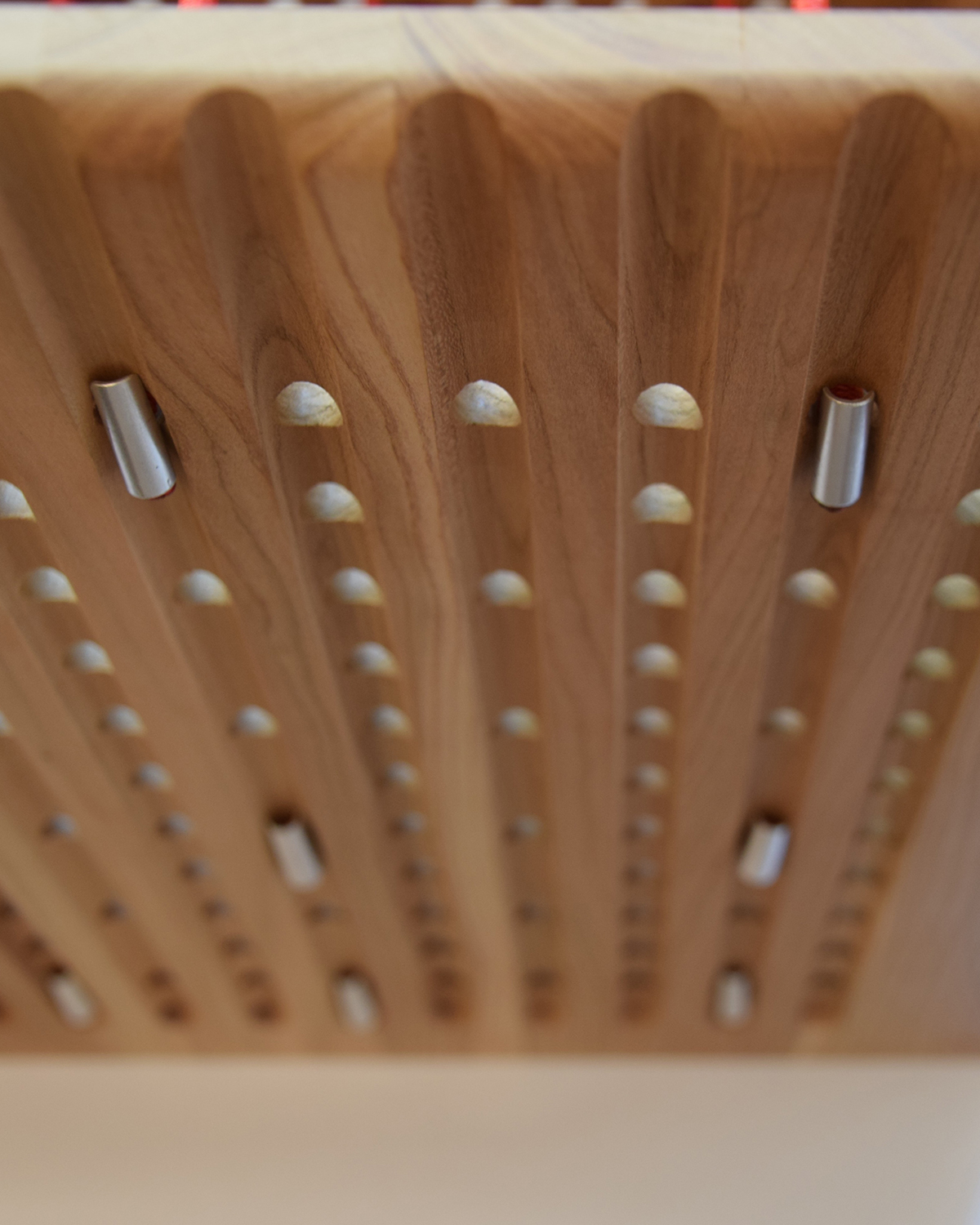
Róza Medgyesy: Beyond Sight
Beyond Sight
By the end of the process, the Beyond Sight modular furniture system had taken shape, built around two wooden boxes of different sizes. The prototypes were made from lighter-toned woods, cherry and walnut, which I sanded completely smooth and treated with oil. For larger-scale production, however, painted MDF could offer a more cost-effective alternative. The wall-mounted modules can be used in different positions: open at the side or, when rotated, open at the top.
The boxes are fitted with a system of elastic cords that guides the user’s searching hand and helps keep objects in place. Each cord ends in a rubber-coated metal tip that can be secured with a simple movement. Alongside its colour, material, surface, practicality, and functionality, the product also offers an engaging tactile experience through the use of the cords, making it feel more personal and playful.
During the co-design process, I realised that the furniture could benefit from supporting educational resources. These would introduce the overall concept, explain how the product can be used and arranged, and provide more general tips on staying organised. They would be freely available online, with in-person support offered where needed. Organisations supporting the rehabilitation of blind and partially sighted people could provide this assistance. Beyond Sight could become part of the equipment and training they offer, giving users an opportunity to familiarise themselves with the product, work together to create their own layout and then personalise their chosen configuration.
One possible avenue for further development would be to broaden the target group, which could make production and pricing more economical and commercially viable. The furniture could, for example, be used on boats, in motorhomes, schools, or nurseries, although further market research would be needed to assess the potential of these applications.
// /
The project was developed at the Design MA programme at Moholy-Nagy University of Art and Design, supervised by Fanni Csernátony DLA, with Mary Karyda PhD as consultant.
The subtitles are from the interviews the author conducted with the participants.