Direct contact with the material – Maja Sára Magyar’s experimental luminaire
With the rise of mass production and rapid consumption, we rarely stop to consider where the materials in the objects around us come from or how those objects are made. By contrast, contemporary design is increasingly concerned with material choices, production methods, and the long-term use with minimal environmental impact. Rethinking the degree of control a designer exerts over the process, Maja Sára Magyar set out to create an object whose design reflects both the properties of the material and the way it is made.
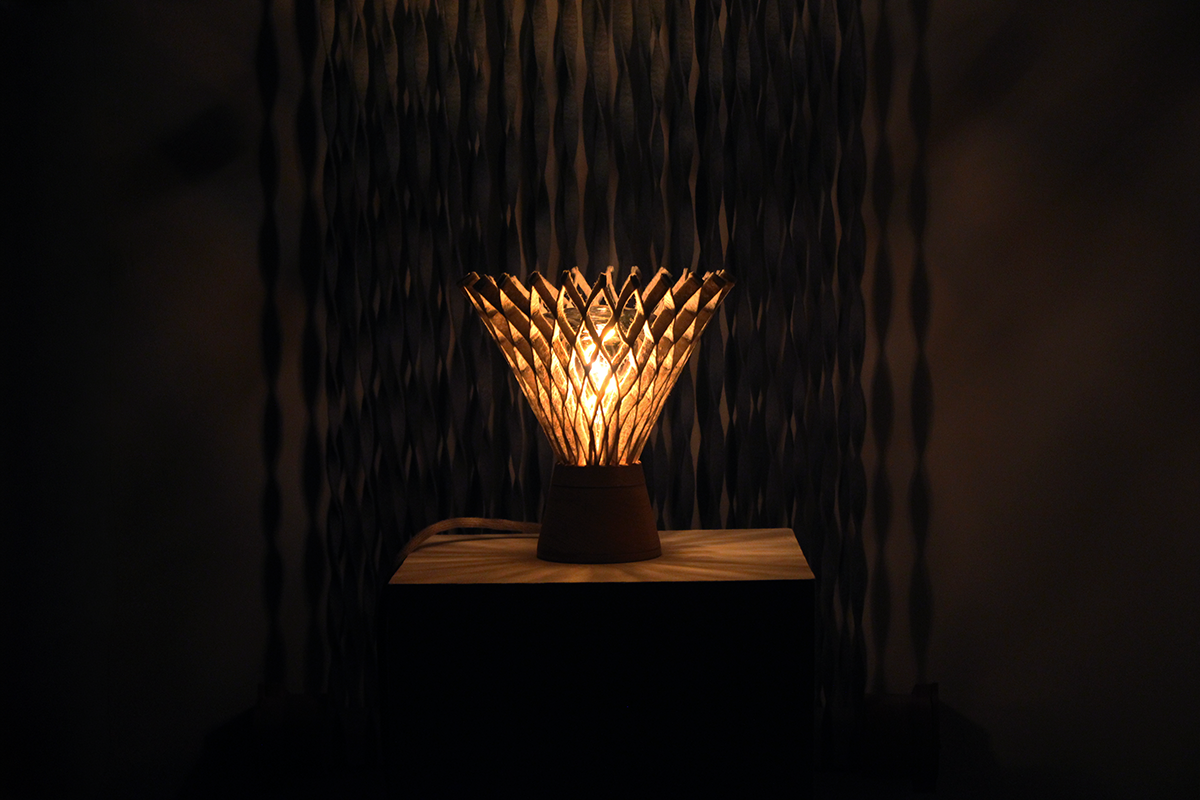
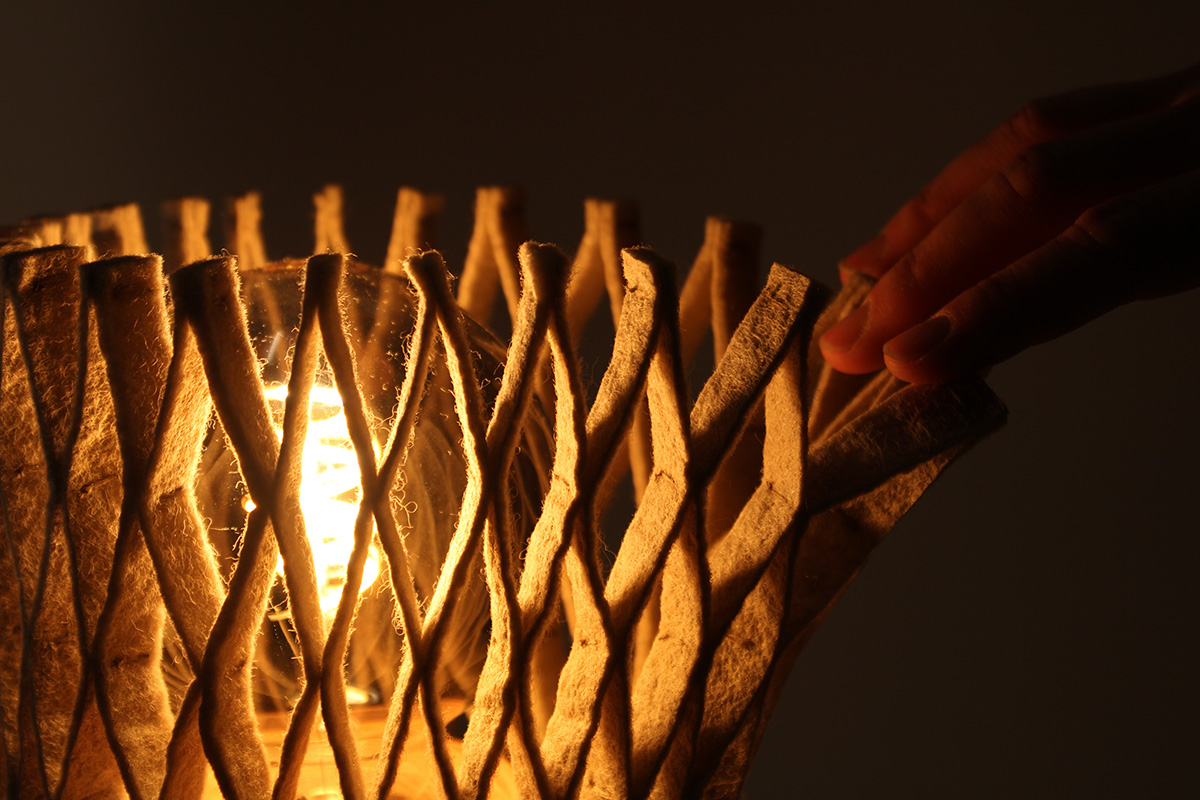
Tabletop structure. Plant-based dye made of common walnut (Juglans regia L.) and sage (Salvia officinalis L.).
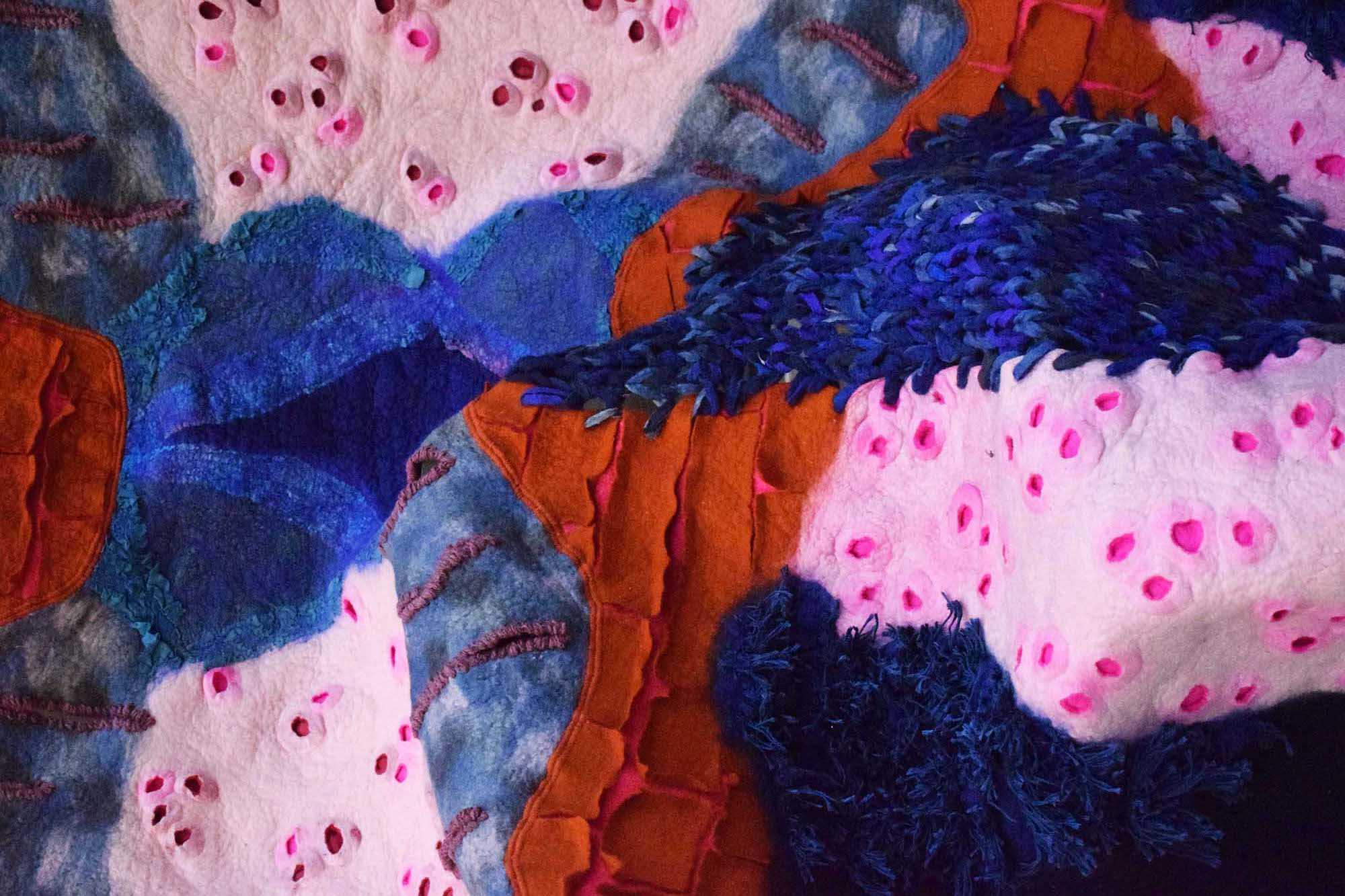
The Soft & Hard project brings together sustainable material use, traditional technologies, and experimental structural design. I worked with natural and partly recycled materials as alternatives to synthetic ones and those that require large amounts of energy to produce. Wool, one of the oldest natural fibres used in textile production, proved particularly interesting. It sits somewhere between textile and sculptural material: with the right treatment, it can hold a three-dimensional form while retaining its organic character and fibrous texture. Wool also has inherent light-diffusing properties, filtering light to produce a soft, warm glow. I chose to work specifically with waste wool, much of which still goes unused despite the material’s valuable properties.
One of the main challenges was finding a way to give the wool greater structural stability without compromising its natural texture and flexibility. Natural, biodegradable rice starch ultimately proved the most suitable solution, reinforcing the wool without making it rigid. Finding the right ratio took extensive experimentation: too little starch provided insufficient support, while too high a concentration made the material brittle. The final mixture allowed the wool to hold its shape while retaining a degree of flexibility and remaining soft to the touch.
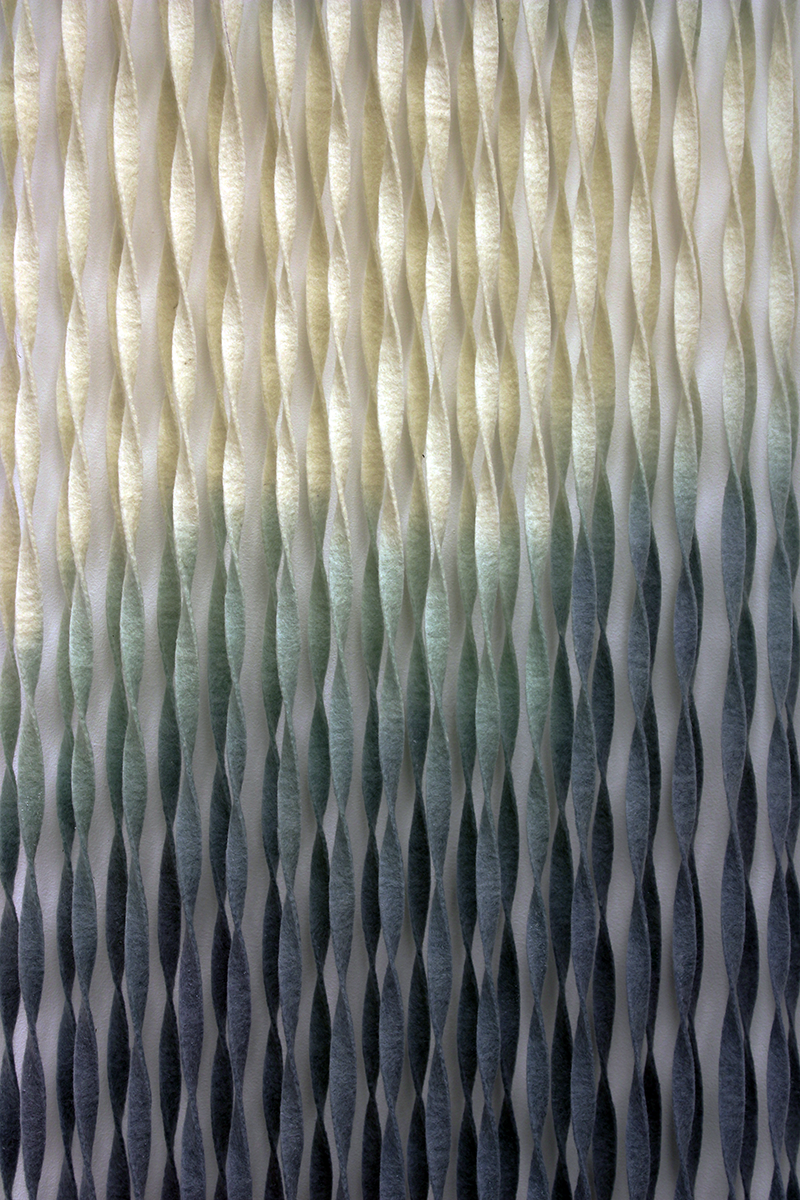
Wall structure. Plant-based dye made of red cabbage (Brassica oleracea var. capitata f. rubra).
I also experimented with natural dyeing throughout the project. Rather than simply adding colour to the material, I wanted the dyeing process itself to become part of the object’s concept. What particularly interested me about plant-based textile dyeing was the way colour changes over time. In contemporary design, colour is often treated as fixed, controlled, and permanent, while natural pigments challenge the very idea of permanence. They change over time in response to light, moisture, use, and environmental conditions. Rather than seeing this as a flaw, I see it as an aesthetic and conceptual opportunity to rethink how an object relates to the passage of time.
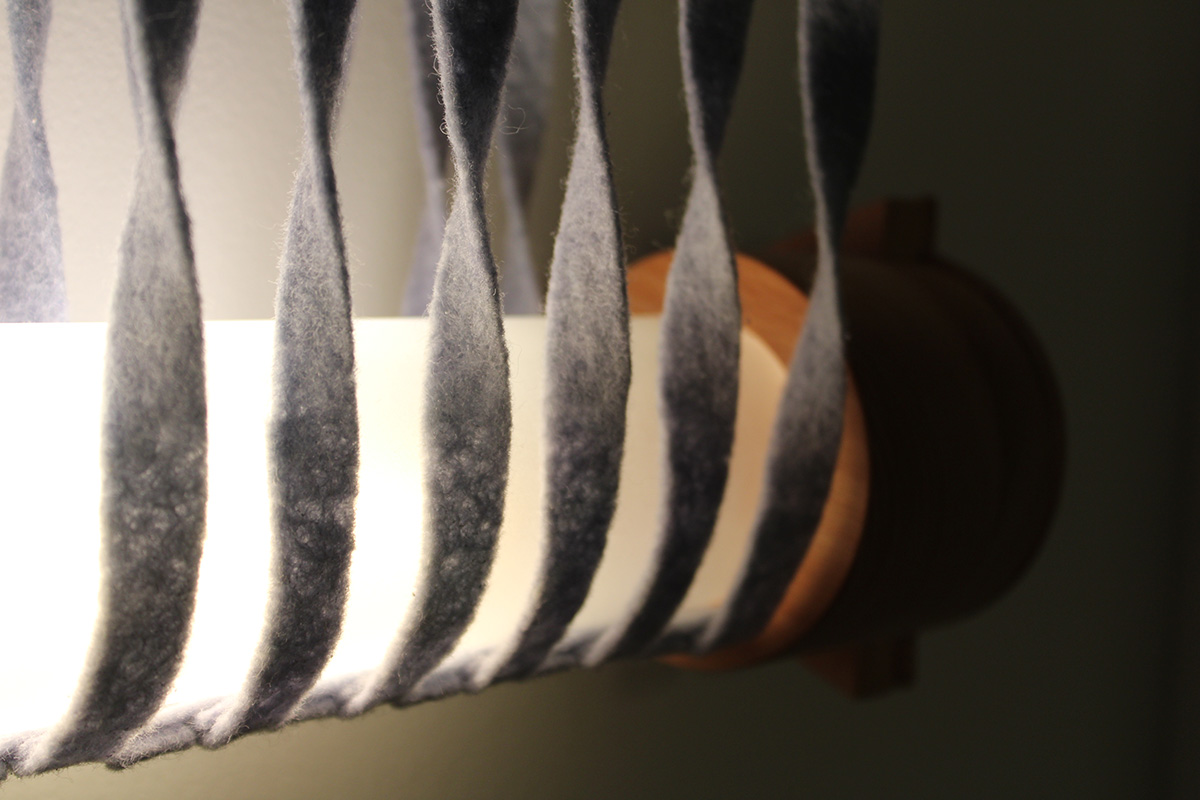
Rather than following a regular geometric form, the design developed organically through the repetition and variation of individual modules. I wanted to avoid making the composition overly decorative or elaborate, keeping the emphasis on the natural materials and the lightness of the form. The finished luminaire has a light, layered structure that looks different from every angle.
The object, however, needed to be stable as well as lightweight. The delicate connections between the wool modules therefore required a discreet but robust supporting framework to provide balance, for which I chose wood. Durable and easy to work with, wood is also a renewable material when sourced responsibly, while its longevity and natural appearance align well with my approach to design.
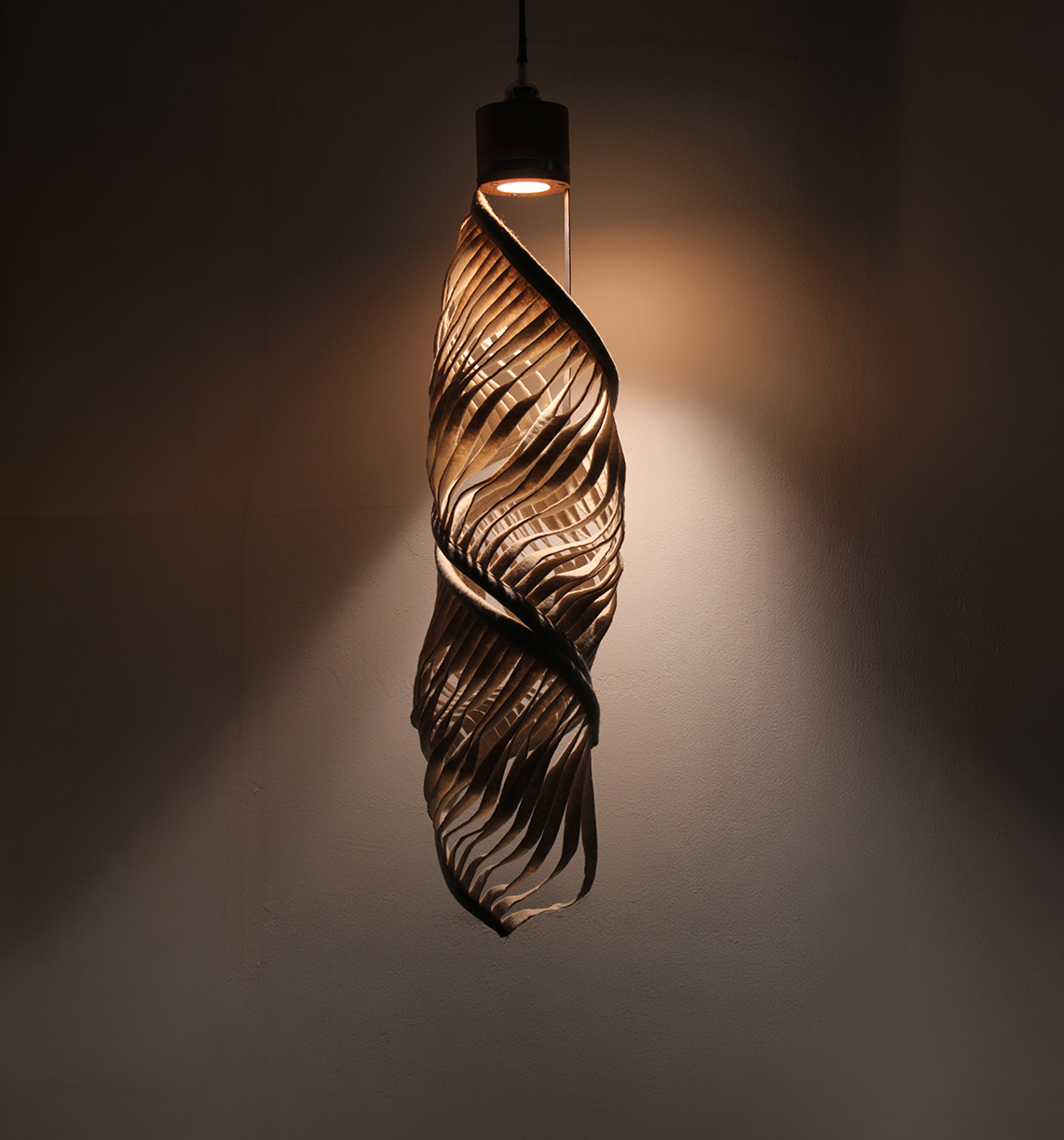
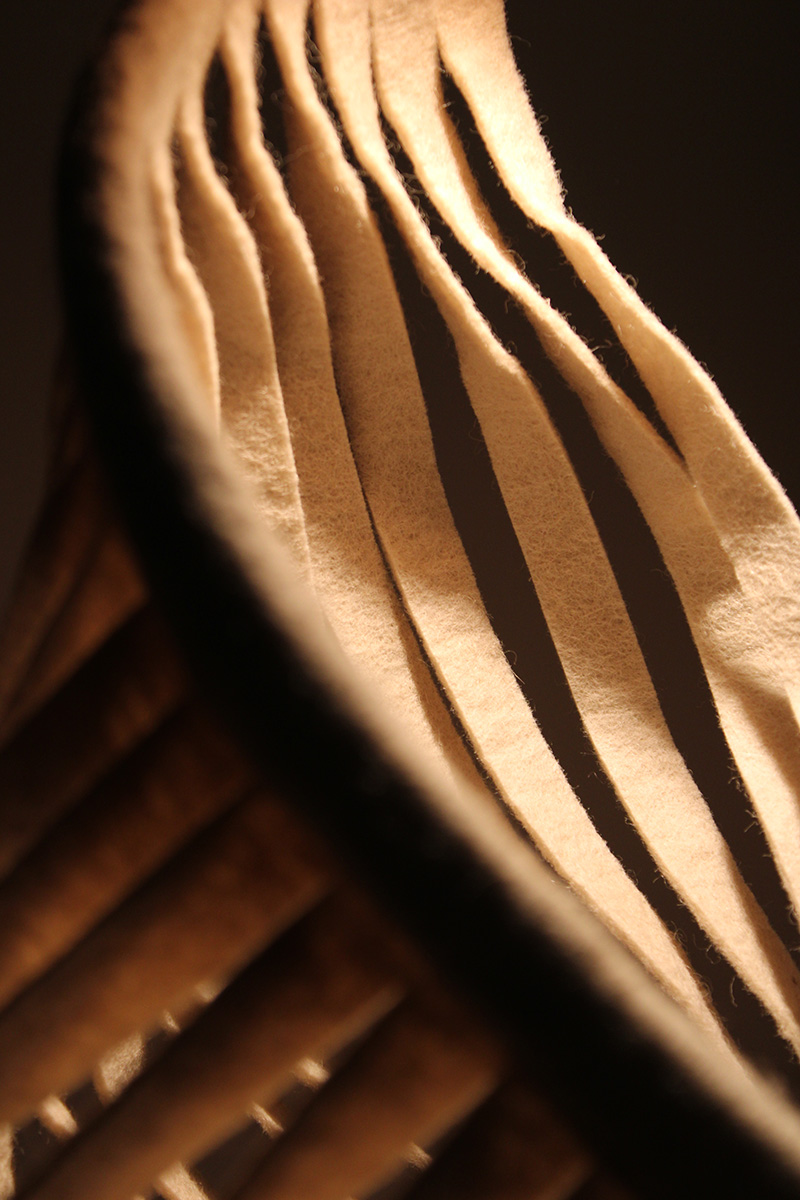
Ceiling structure. Plant-based dye made of common horse-chestnut (Aesculus hippocastanum).
Rather than dominating the wool surfaces, the wooden elements subtly complement them, providing the necessary support without compromising the luminaire’s airy, floating, organic qualities. The wool’s soft, fibrous texture contrasts with the harder, more solid quality of the wood, creating a distinctive visual and tactile experience. Together, the two materials bring balance to the object.
Looking back, no part of my design process could have been rushed or fully controlled. Observing how the wool responded, working with natural dyes, and allowing for drying time all required a deeper understanding of the materials and a more direct engagement with the object itself. Each stage of experimentation left its mark on the finished piece, with the resulting deformations contributing to its character. This approach runs counter to design practices that seek complete control over the process, instead accepting and celebrating a degree of unpredictability in the materials themselves.”
// /
The project was completed at the Designer-Maker MA of the Moholy-Nagy University of Art and Design with Edit Kondor DLA as her supervisor and Zoltán Lubloy DLA as her consultant.