On interdependence – The MOME INTRO exhibition
We depend on one another, yet all too often find ourselves alone and without the support we need to navigate everyday life. In neoliberal thinking, care is seen as a sign of weakness, even something pathological, when in fact it is essential to sustaining life. Through the work of young designers, the MOME INTRO: Layers of Care exhibition reveals just how many areas of life our interdependence affects, and how many different forms care can take.
“ChatGPT is my therapist. Is that a good thing?” is the question posed in a recent video on Telex’s social media channels. As my friends and I discuss it, we realise that the more interesting question isn’t what the answer might be, but why anyone would ask it in the first place. It’s not just about the appeal of having an AI assistant in your pocket, ready to help at any hour. It’s also about the aching emptiness we try to soothe with its computer-generated diagnoses in the lonely hours before dawn. An emptiness characterised by therapy that few can afford, the lack of quality time with family and friends as people juggle two or three jobs just to make ends meet, and fledgling relationships cut short by online ghosting.
The pandemic exposed just how badly our systems of care had been eroded. Care had systematically been stripped of its value, reduced to a matter of personal responsibility for individuals expected to be self-reliant and endlessly resilient, or reduced to tools designed to boost tech billionaires’ profits. Since then, a succession of exhibitions in Hungary has explored different aspects of the crisis. Some have focused on mental health or the reproductive labour that goes unseen in the capitalist economy. Others have highlighted what happens when people are left to fend for themselves without institutional support, and what ways they choose to cope – whether by finding strength in their communities or retreating into escapism. MOME INTRO: Layers of Care fits partly into this wider conversation and partly into the tradition of exhibitions showcasing student work.
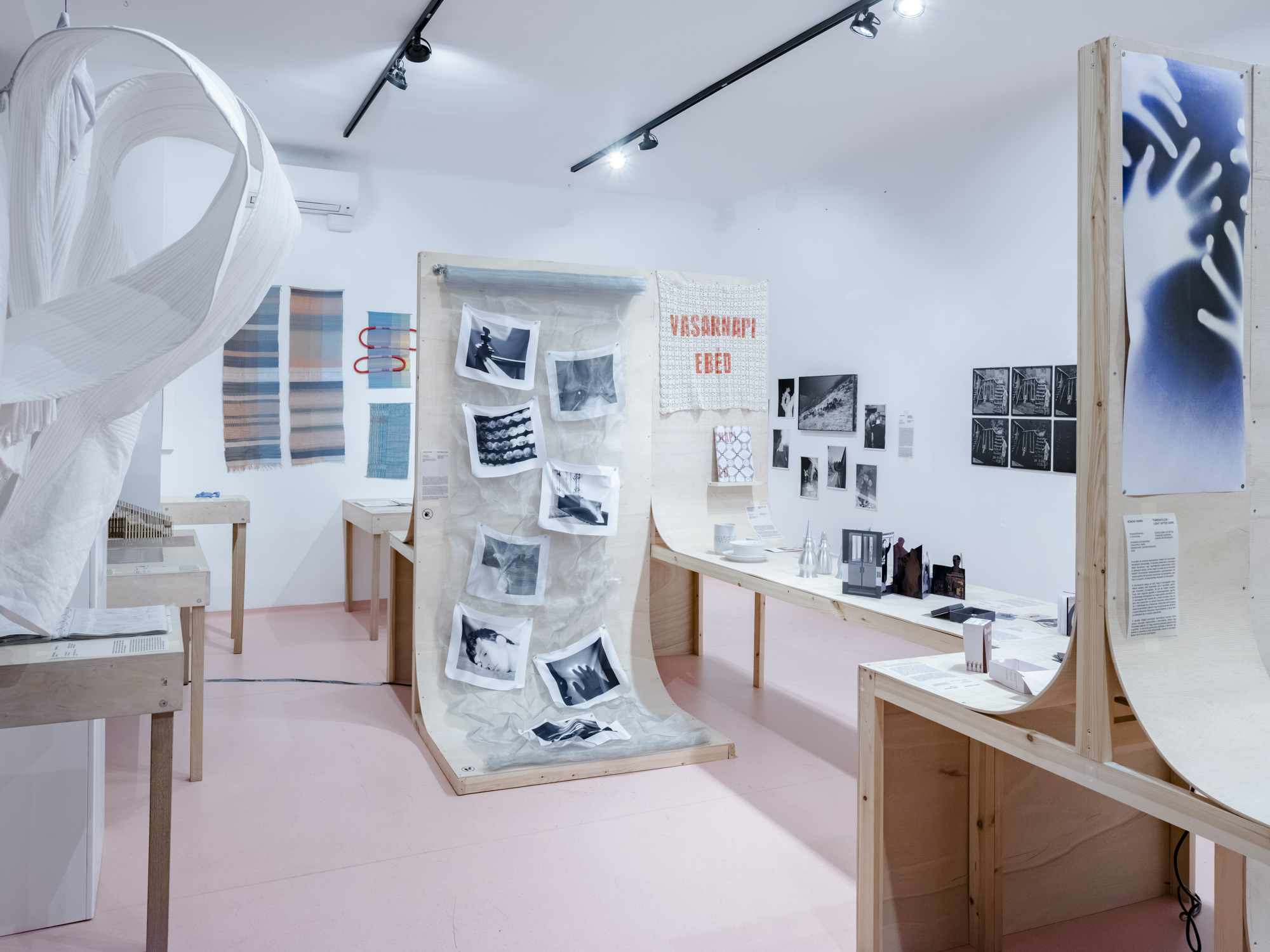
MOME INTRO: Layers of Care interior. Photo: Máté Lakos
As curators Lili Nadin Pokker and Aida Udvarhelyi-Ujfaluczki explain, the exhibition, which brings together work by young designers, grew out of a pilot programme that made its debut in February 2026 with the exhibition Work/Flow. That exhibition featured a selection of diploma portfolio projects by third-year MOME students, organised around five themes: sustainability, identity, innovation, heritage, and inclusivity. A striking number of the projects tackled sensitive issues, revealing just how deeply young designers were concerned with different forms of care. This is how care became the focus of the exhibition featuring BA student work.
Selected through an open call at the university, the 34 works on display at Editory approach care from a wide range of perspectives, from preserving our cultural heritage and exploring our relationship with the natural world to the role our communities play in our lives. Although the exhibition sets out to explore the different layers of care, perhaps it would be more accurate to say that it tells a story of their fragility, their transparency, and their gradual, sometimes barely perceptible disappearance.
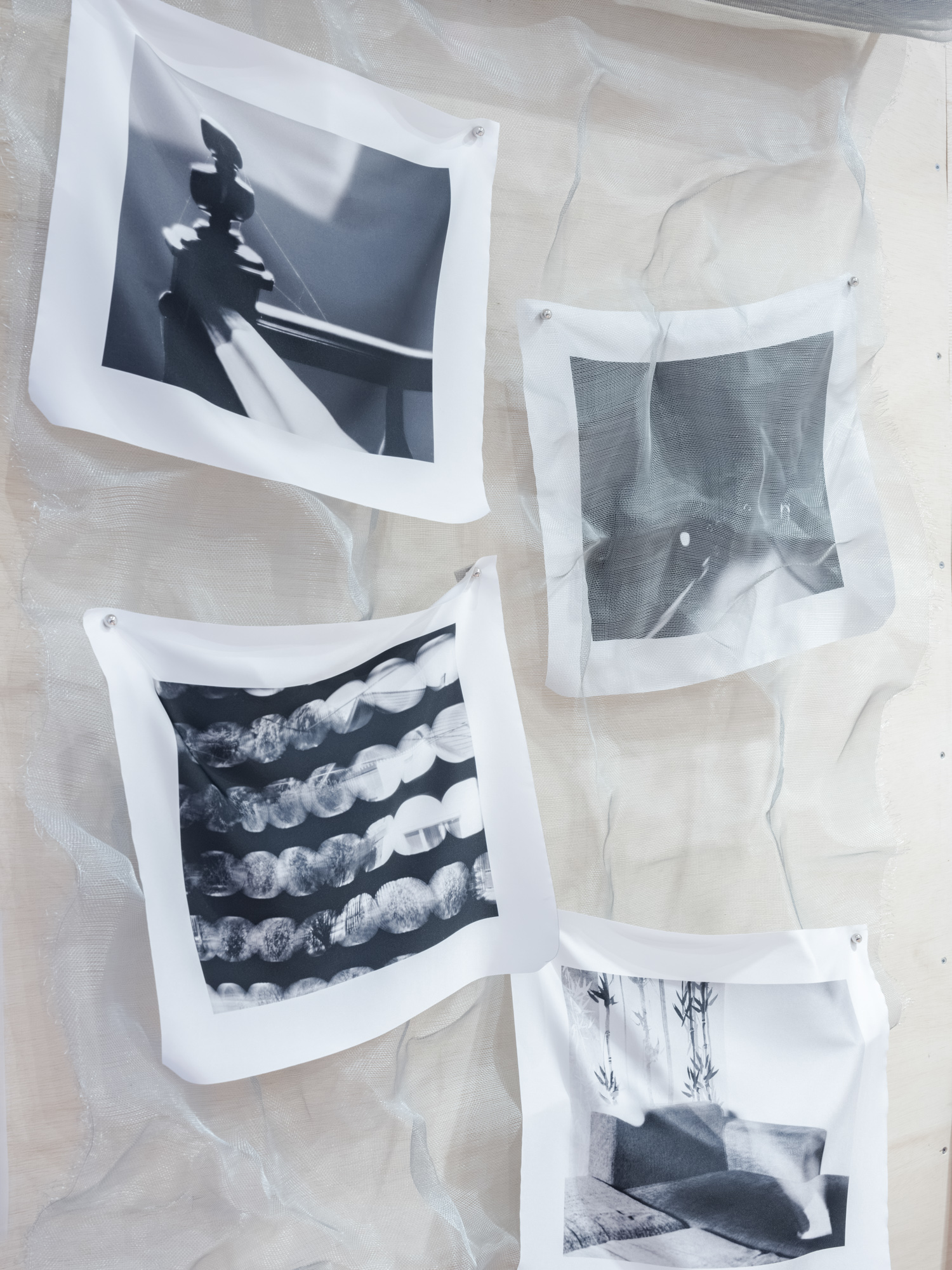
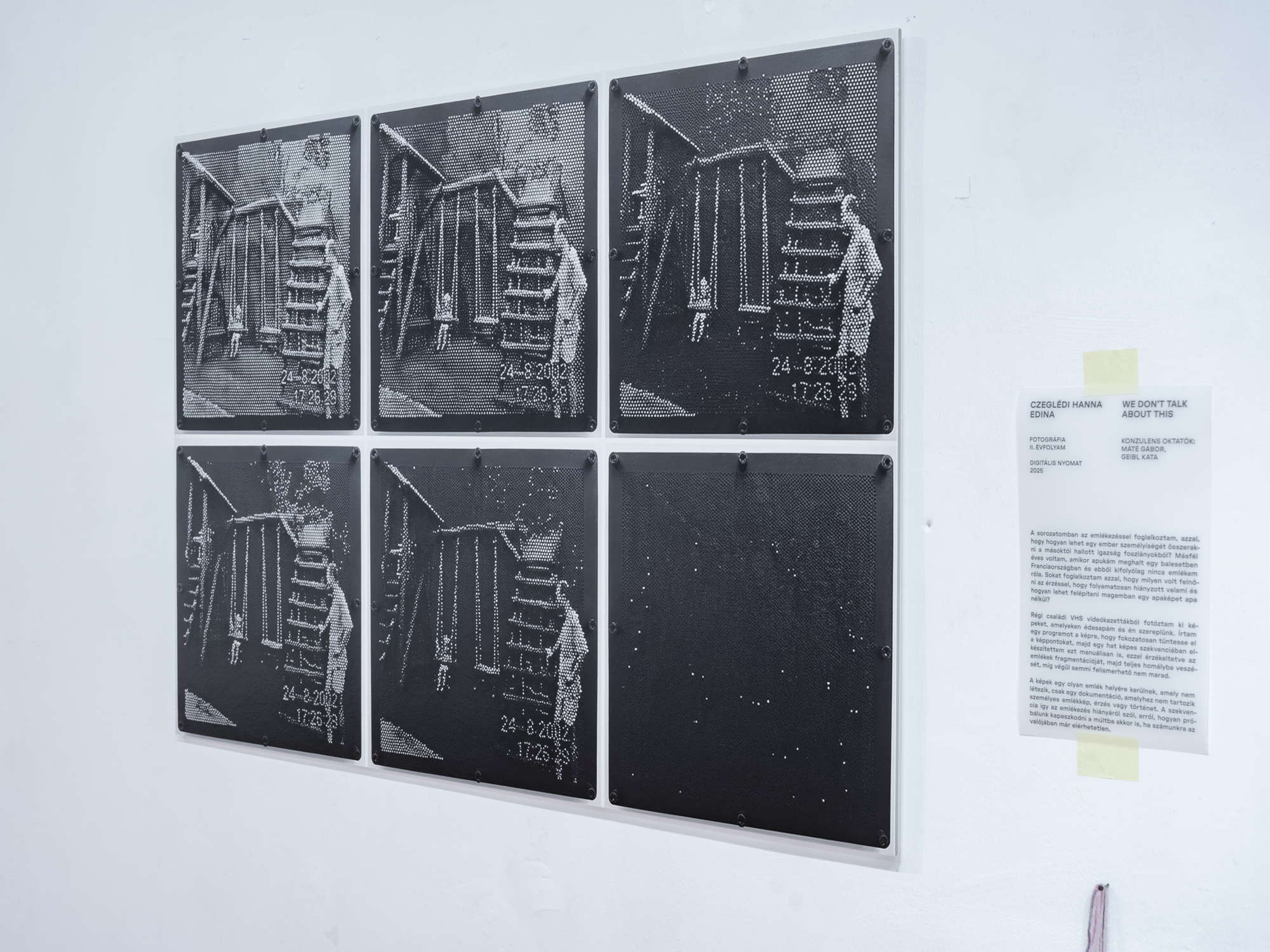
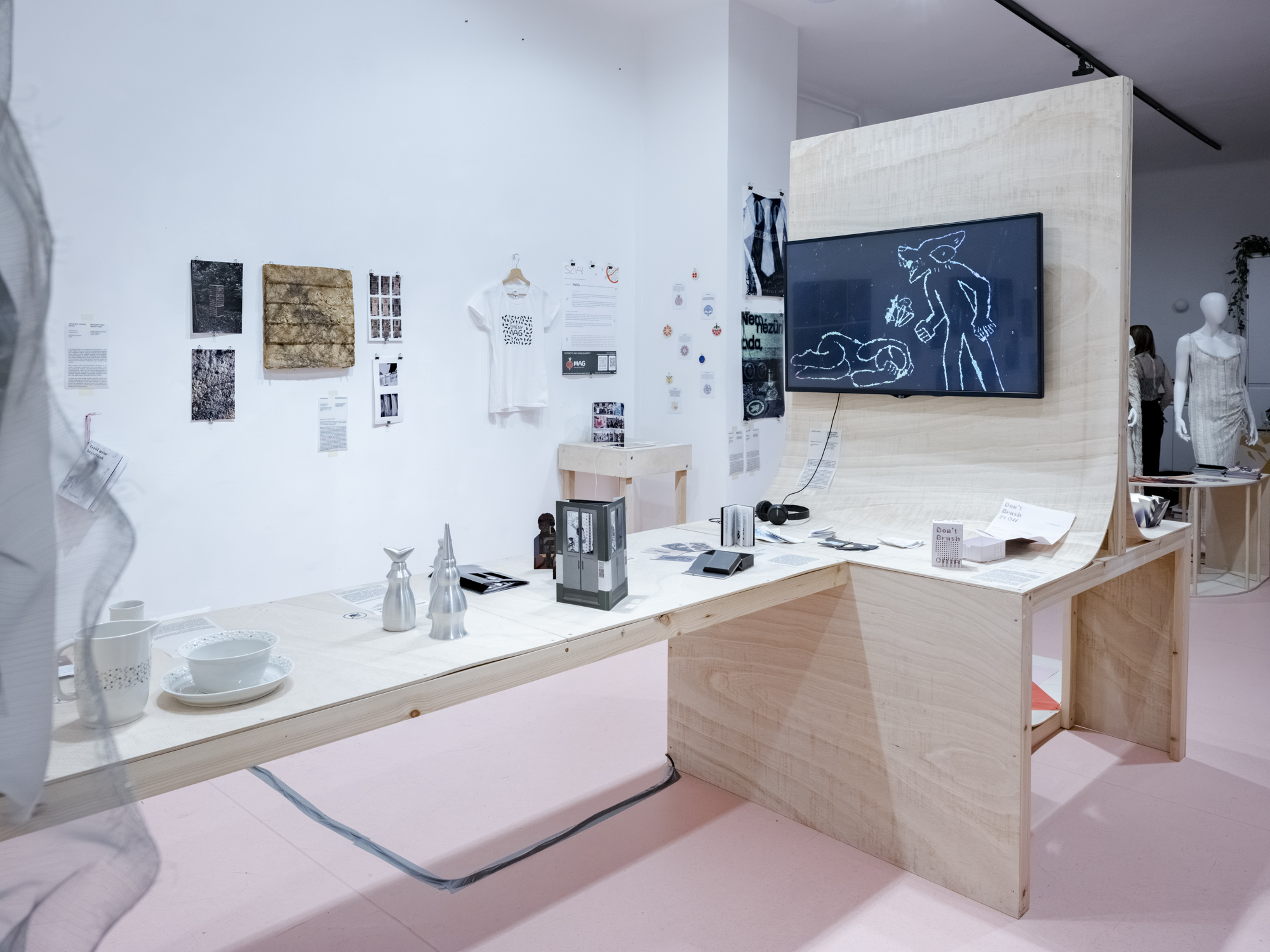
Ádám Zsiros: Becoming Wind, and Hanna Czeglédi: We Don’t Talk About This. Photo: Máté Lakos
This is particularly evident in the works dealing with grief. Pieces by Hanna Czeglédi and Ádám Zsiros confront us with the almost unimaginable experience of losing a parent far too soon. While Ádám’s black-and-white analogue photographs, printed on delicate silk, ripple under the weight of recent memories of his mother, Hanna’s sequence conveys the absence of memories of her father. She began by photographing family footage from VHS tapes, then used software to gradually erase pixels from the images. The damaged archival image ultimately took shape as a physical object and a digital print made from it. Each artistic decision, each change of medium and intervention, takes us further from the original image – much as the passage of time and the fragmented nature of memory take us further away from someone we have lost.
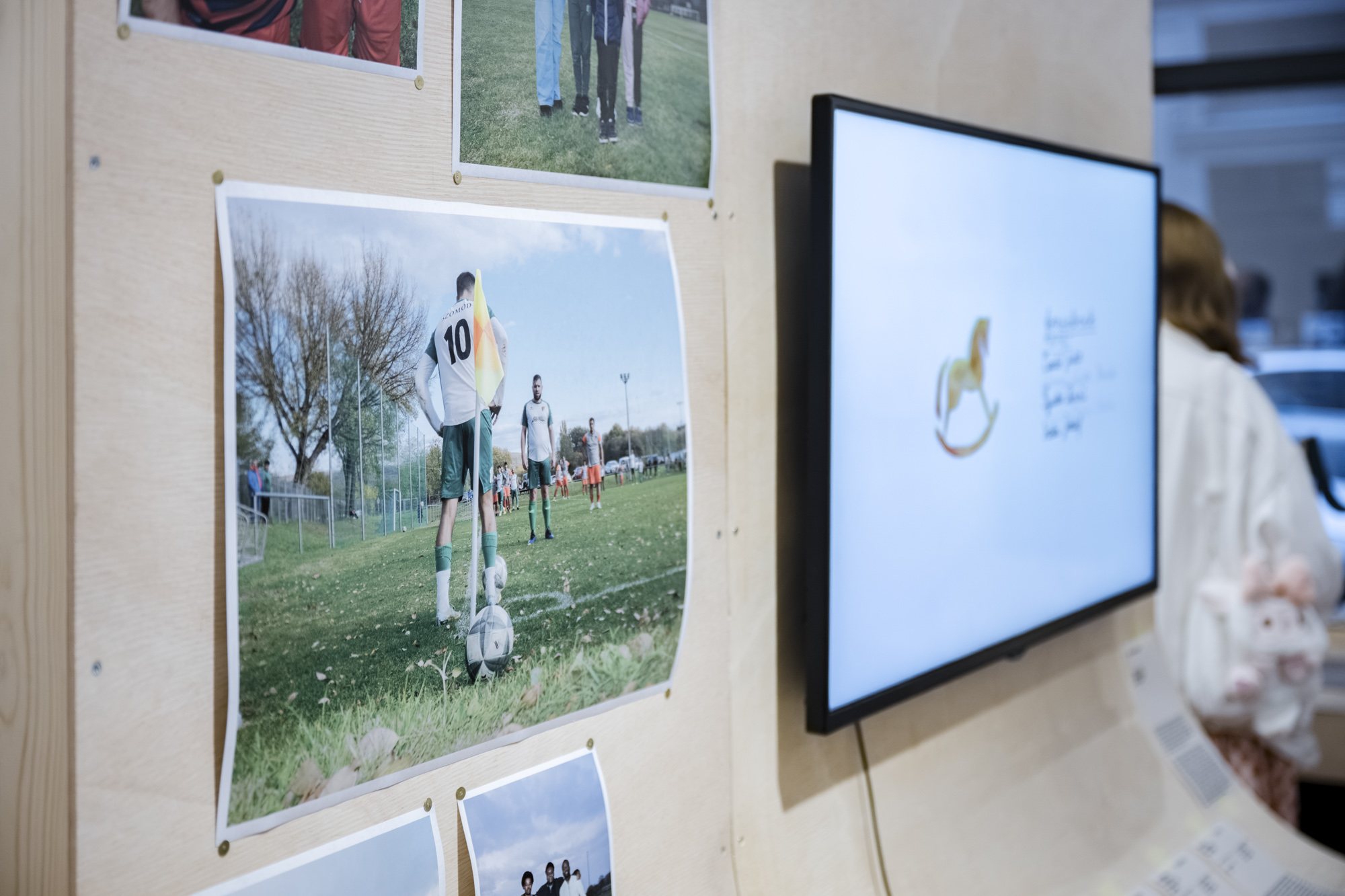
Gergely Áprili: The Third Half: The Football Team as a Community-Building Force. Photo: Máté Lakos
We inevitably carry some of our grief alone, but rituals and grieving together can help ease the burden. Or rather, they could, if the loss of our communal traditions hadn’t left us sohelpless and alone. The exhibition also features projects that highlight the importance of these traditions and explore ways of preserving them. Gergely Áprili’s design theory research, accompanied by a photographic series, focuses on the power of sport to create a sense of community. Football plays a particularly important role in the villages of Komárom-Esztergom County that form the basis of his case studies. There, the camaraderie within third-division teams helps shape not only the identities of their players but also those of the wider communities.
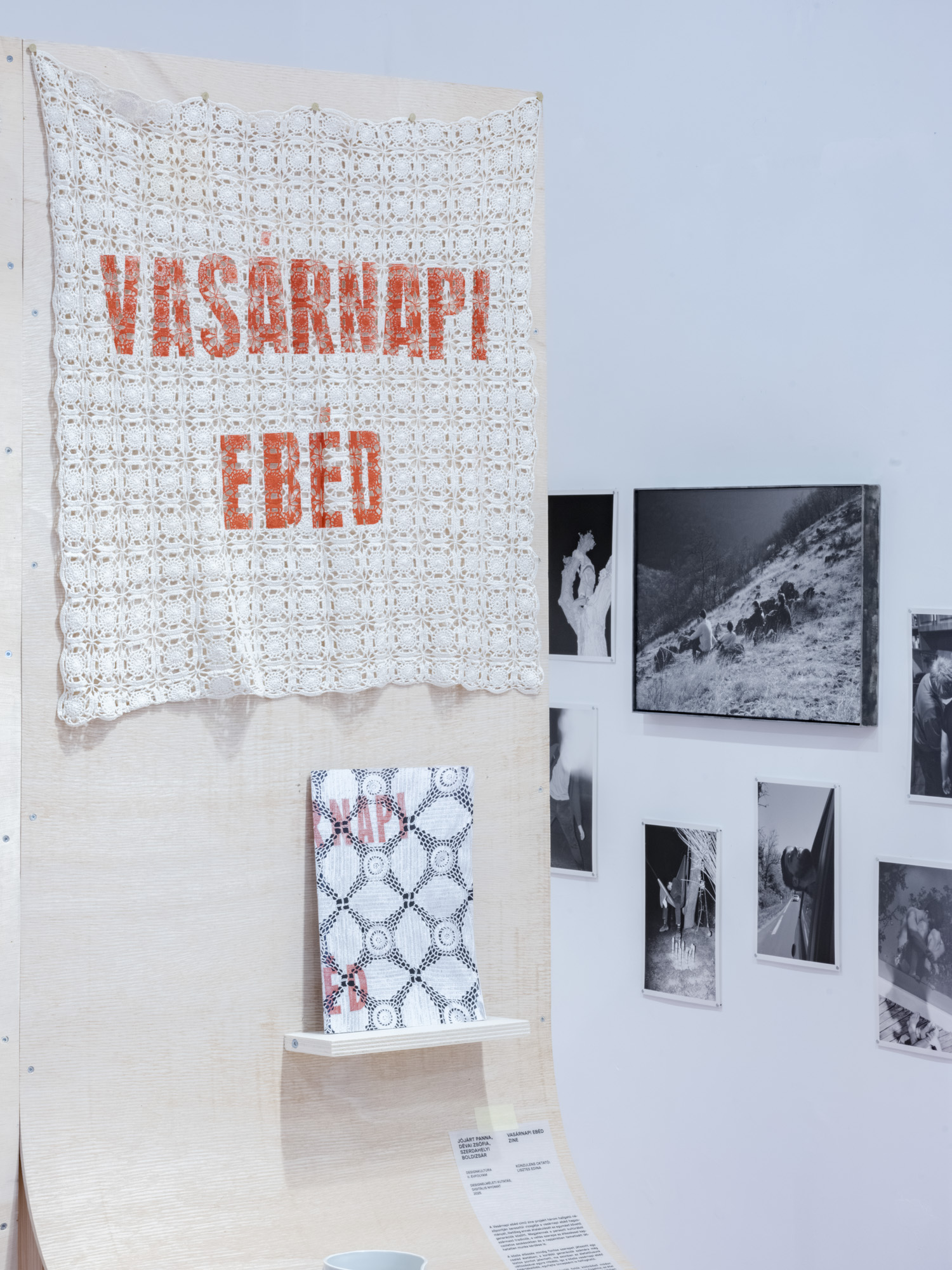
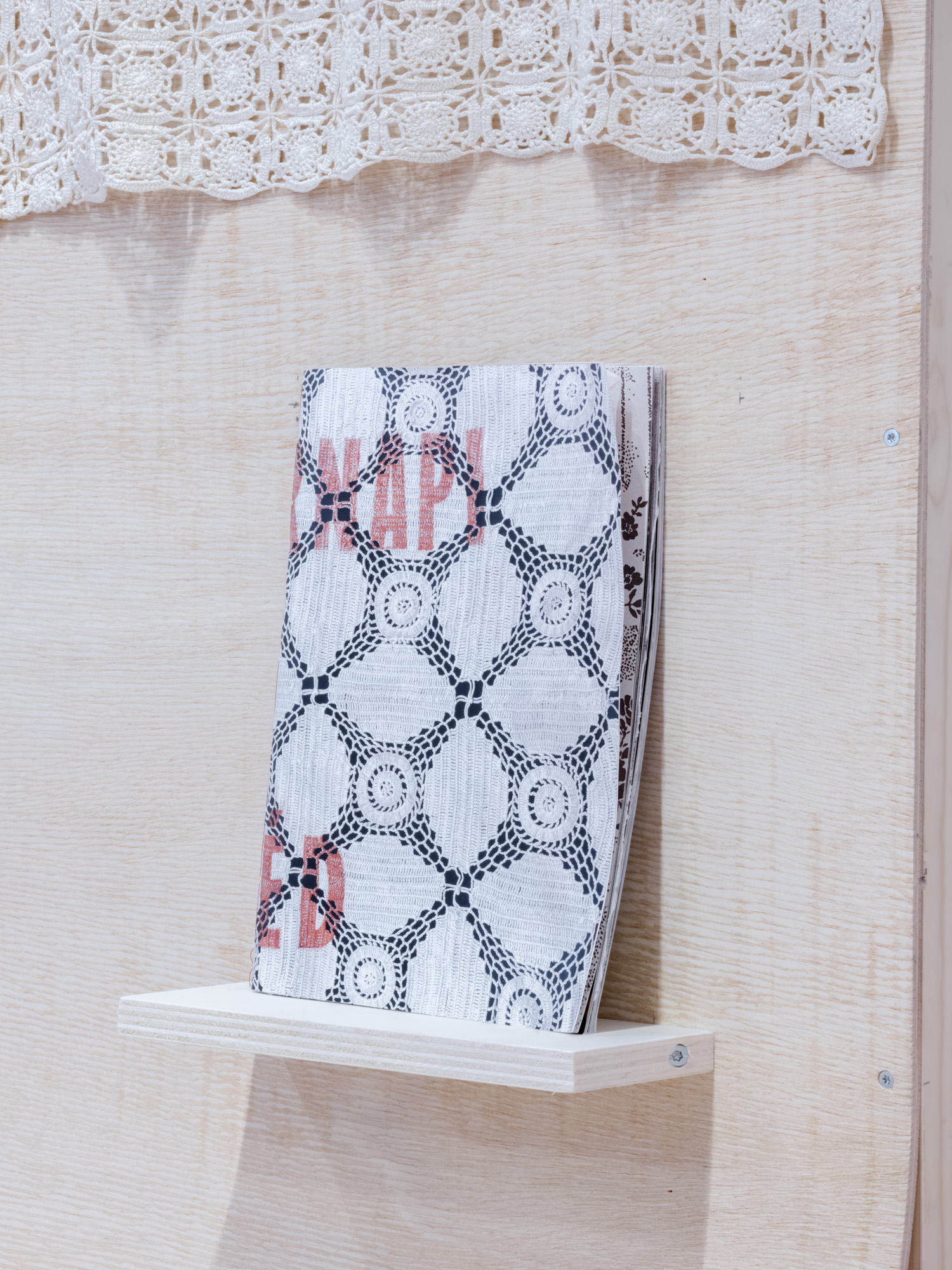
Panna Jójárt, Zsófia Dévai and Boldizsár Szerdahelyi: Sunday lunch zine and doily. Photo: Máté Lakos
Alongside the local football pitch, the dining table is an equally important place for people to come together. It’s where we celebrate birthdays, wedding anniversaries and Christmas, or simply enjoy the company of friends. Yet between our tiny rented flats offering little more than breakfast bars big enough for two stools, and the increasingly frantic pace of modern life, we’re finding it increasingly difficult to make time and space for meals shared with family and friends. And yet it’s these occasions that continually renew our relationships – the stories told over crystal glasses accidentally knocked over onto crocheted tablecloths beside silver cutlery received as wedding gifts, the unexpected details that emerge in tales we’ve heard a hundred times, and the meaningful silences between sentences. In a publication bringing together their photographic essays, Panna Jójárt, Zsófia Dévai, and Boldizsár Szerdahelyi capture socialist-era interiors, women’s hardworking – and typically invisible – hands, and people gathered around tables. Running through these images is a bittersweet nostalgia for increasingly rare Sunday lunches, coupled with a desire to keep these traditions alive.
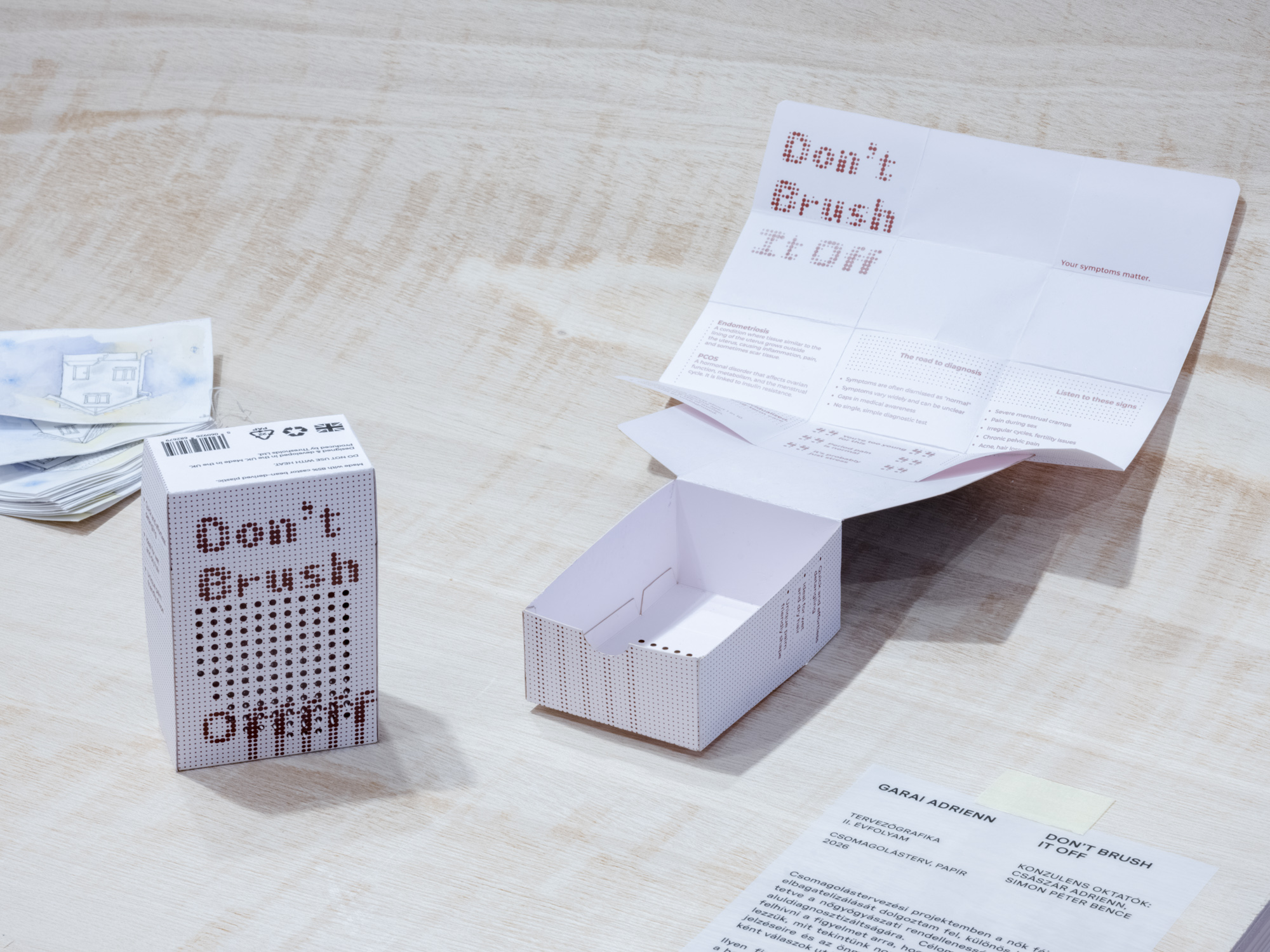
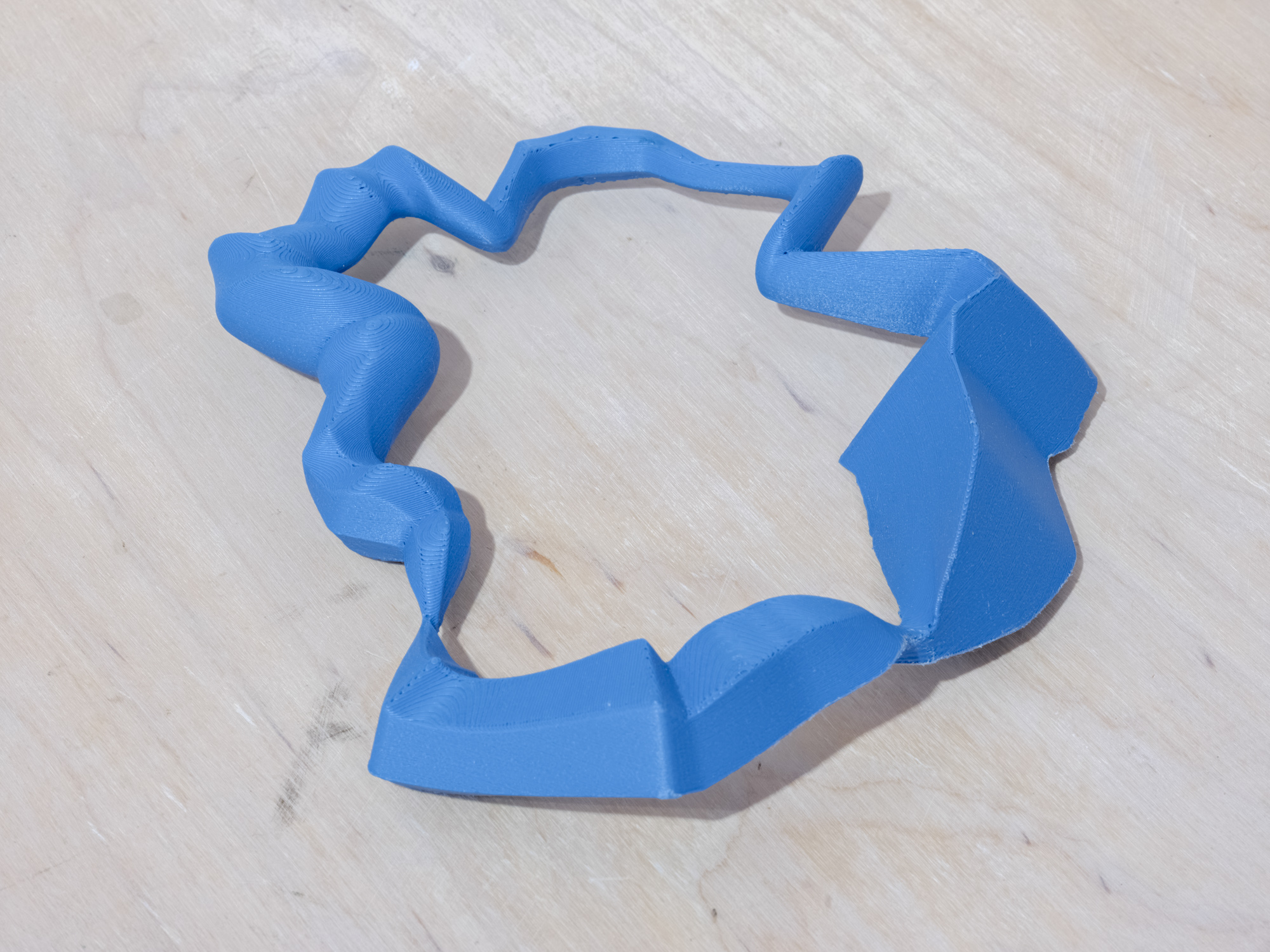
Adrienn Garai Don’t Brush It Off, and Naomi Czinkóczi It’s Not Written on My Forehead. Photo: Máté Lakos
Ideally, caring for ourselves should go hand in hand with being part of a community. Yet the shame fuelled by social taboos can effectively shut certain subjects out of public discussion. Women’s health is one such area, with issues often overlooked in medical research, secondary school biology lessons, and even conversations among women themselves. The menstrual cycle, for example, becomes quite literally tangible in Naomi Czinkóczi‘s data sculpture. Yet it isn’t just the complexities of the female body’s natural functions that remain on the margins of medical research and mainstream health education. The same is true when those functions are disrupted. Anyone who has sought medical help for a female health issue has probably heard a gynaecologist offer some variation of “There could be all sorts of reasons for this. We just don’t know”, delivered with either weary resignation or dismissive scepticism. It’s as though the female body were a black box that even openly expressed pain cannot always unlock. Adrienn Garai‘s educational packaging design for a hairbrush raises awareness of the symptoms of endometriosis and PMOS (polyendocrine metabolic ovarian syndrome). These include increased hair loss and severe pain, which the packaging communicates not only through printed information but also through touch: the brush bristles protruding from the box deliver a sharp prick, reminding us of the importance of taking our bodies’ warning signs seriously.
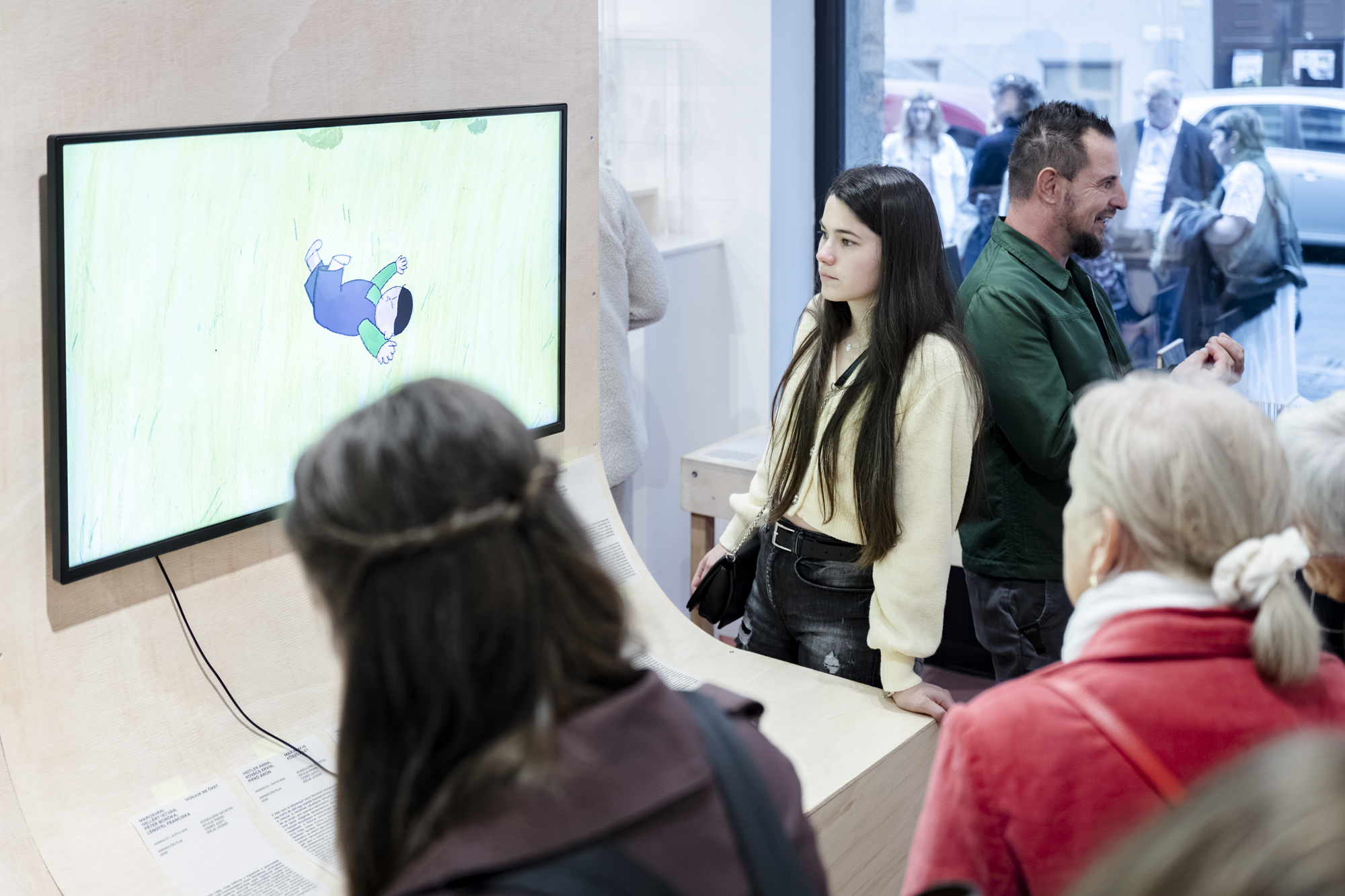
Short films produced in collaboration between MOME Animation BA and the Hintalovon Child Rights Foundation. Photo: Máté Lakos
As the curatorial text puts it, contemporary design and creative practice can play “a particularly important role and bear considerable responsibility in establishing and mapping […] connections”. The short films made by MOME Animation students in collaboration with the Hintalovon Child Rights Foundation demonstrate how design can bring social issues into sharper focus. Beyond championing important causes and presenting personal or small-scale community approaches, however, we also need to ask broader questions about the discourse surrounding care.
We may want to look after ourselves, one another, and our environment, but can we really do so in a system that remains indifferent to these needs? If individual and community efforts aren’t enough, what can we say about the institutional, political, and economic structures that shape every aspect of care?
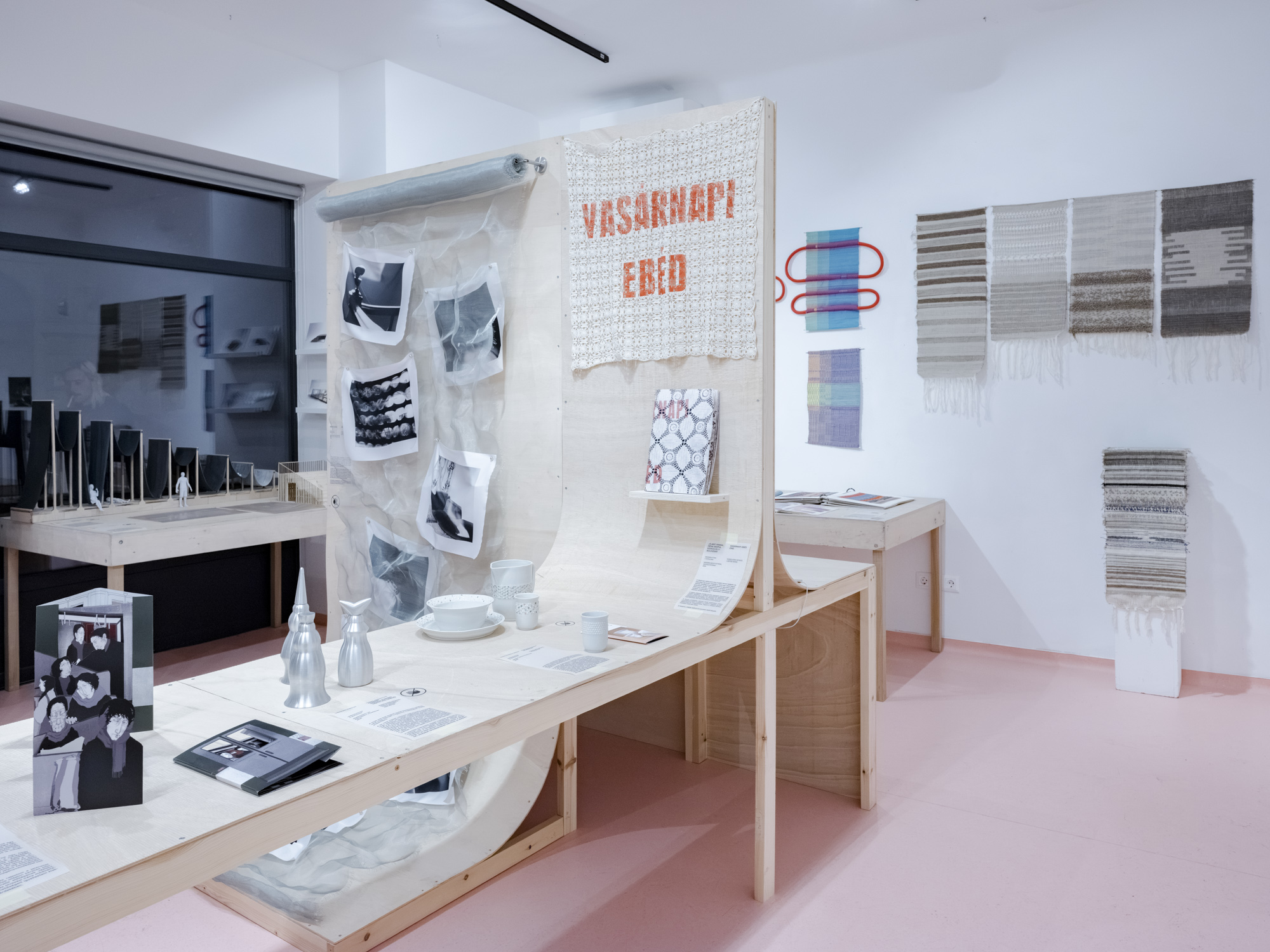
Interior. Photo: Máté Lakos
My questions draw on experiences of both MOME INTRO and earlier exhibitions exploring the theme of care. I don’t expect this one exhibition to provide the answers, nor was that ever its intention. The aim was to present a thematic selection of student work, with a particular focus on projects from bachelor’s programmes, which typically receive less institutional spotlight. In this regard, it has succeeded. The diverse selection offers an insight into the design work being undertaken across nine degree programmes and their specialisations, pointing to a new generation of young professionals attuned to the crisis of care. Perhaps one day we’ll also examine why different aspects of care resonate with us, how they depend on one another, and what systemic alternatives we might envision – including within our own university community.
// /
The MOME INTRO: Layers of Care exhibition was on view at the Editory until 18 October 2026.
Exhibiting artists:
Gergely Áprili, Nóra Korina Baksa, Nóra Bátky, Alexandra Bekker, Márta Anna Bukits, Hanna Edina Czeglédi, Naomi Czinkóczi, Zsófia Dévai, Borbála Ertl, Adrienn Garai, Janka Göllönt, Anna Heitler, Fanni Helmli, Virág Horváth, Réka Anna Ignácz, Panna Jójárt, Milán Kas, Krisztina Klimcsuk, Fanni Kokas, Adél Kovács, Ervin Kovács, Nikoletta Fanni Kovács, Boróka Langmár, Franciska Lengyel, Gellért István Marosvári, Maja Kamilla Menyhárt, Richárd Mezei, Nóra Molnár, Pippin Nádori, Hanna Pap, Boróka Péter, Áron Pifkó, Lora Molli Polyányi, Léna Salamin, Bozsóka Sándor, Véda Sárai, Orsolya Simon-Pál, Boldizsár, Szerdahelyi, Réka Júlia Szöllősi, Dóra Tasi, Réka Teleki, Maja Valcz, Lujza Blanka Vinnai, Sarolta Virághalmi-Vizy, Ádám Zsiros
Curators: Lili Nadin Pokker, Aida Udvarhelyi-Ujfaluczki