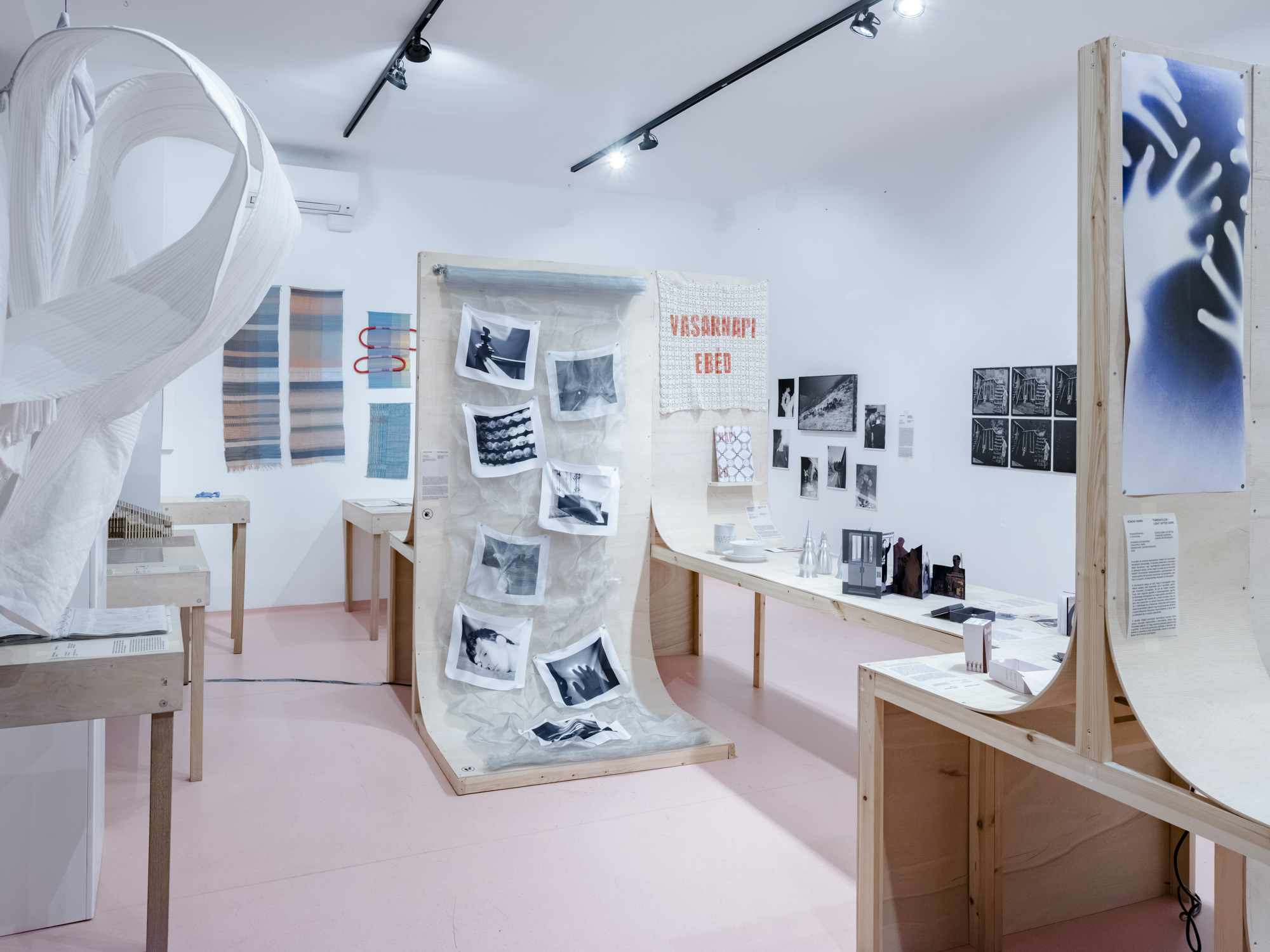
Who Gets to Design the World? – Beáta Sosity in conversation with Shilpa Das, 2023–2026
I first interviewed Shilpa Das, the Professor of Interdisciplinary Design Studies at the National Institute of Design (NID), in 2023. That conversation remained unpublished, but many of the questions it raised have only become more urgent. Three years later, we met again in Budapest, where she delivered a keynote at MOME’s Social Dialogues in Art and Design (SODA) Symposium and co-led a workshop with me exploring everyday objects adapted and modified by disabled people, and what these objects reveal about disabled people’s knowledge and lived experiences, as well as the assumptions, limitations and exclusions of the systems in which we live. Our conversations, three years apart, return to a fundamental question: what happens to design when disabled people are recognised not merely as users, participants or beneficiaries, but as people whose lived experiences and ways of knowing can reshape design itself?
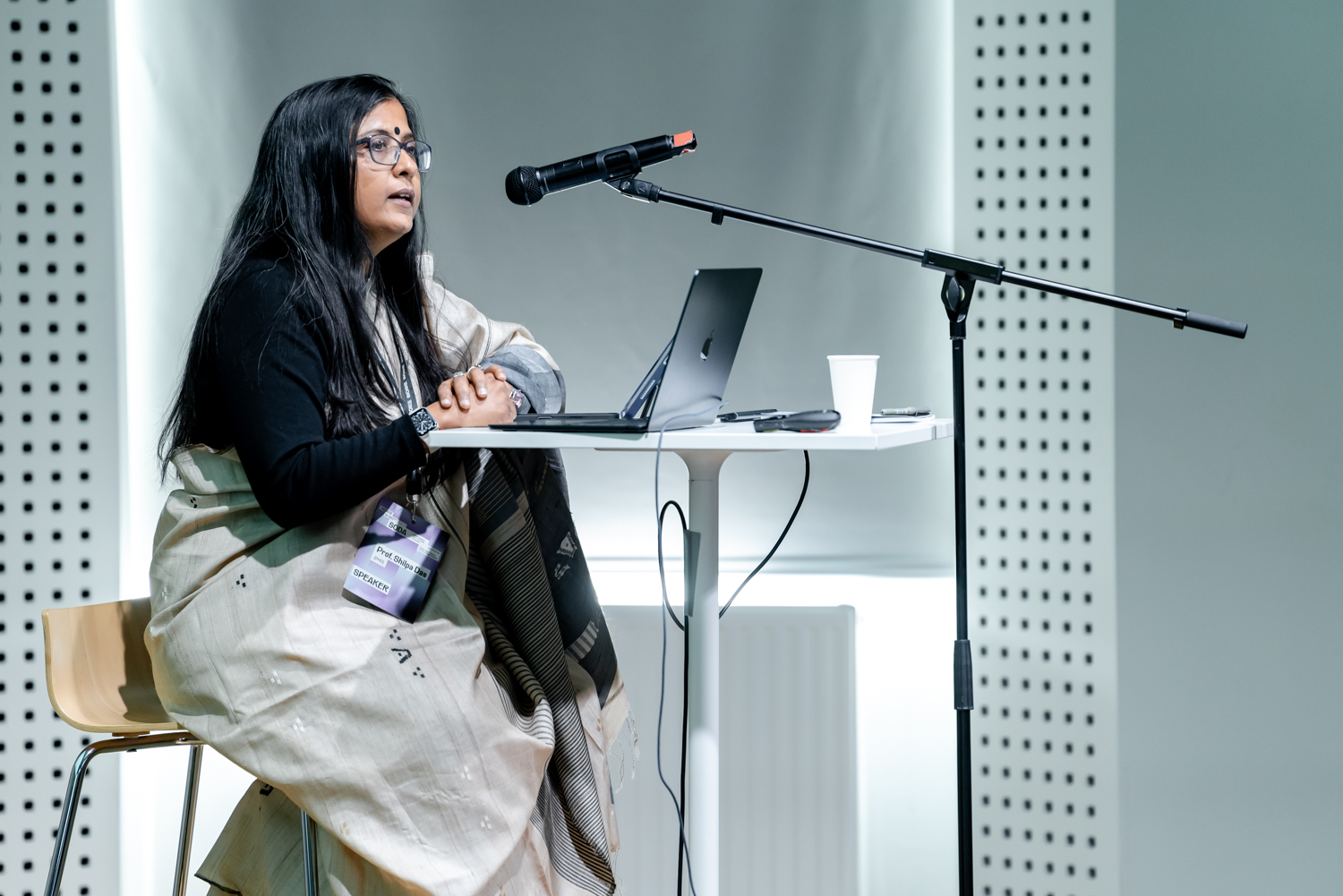
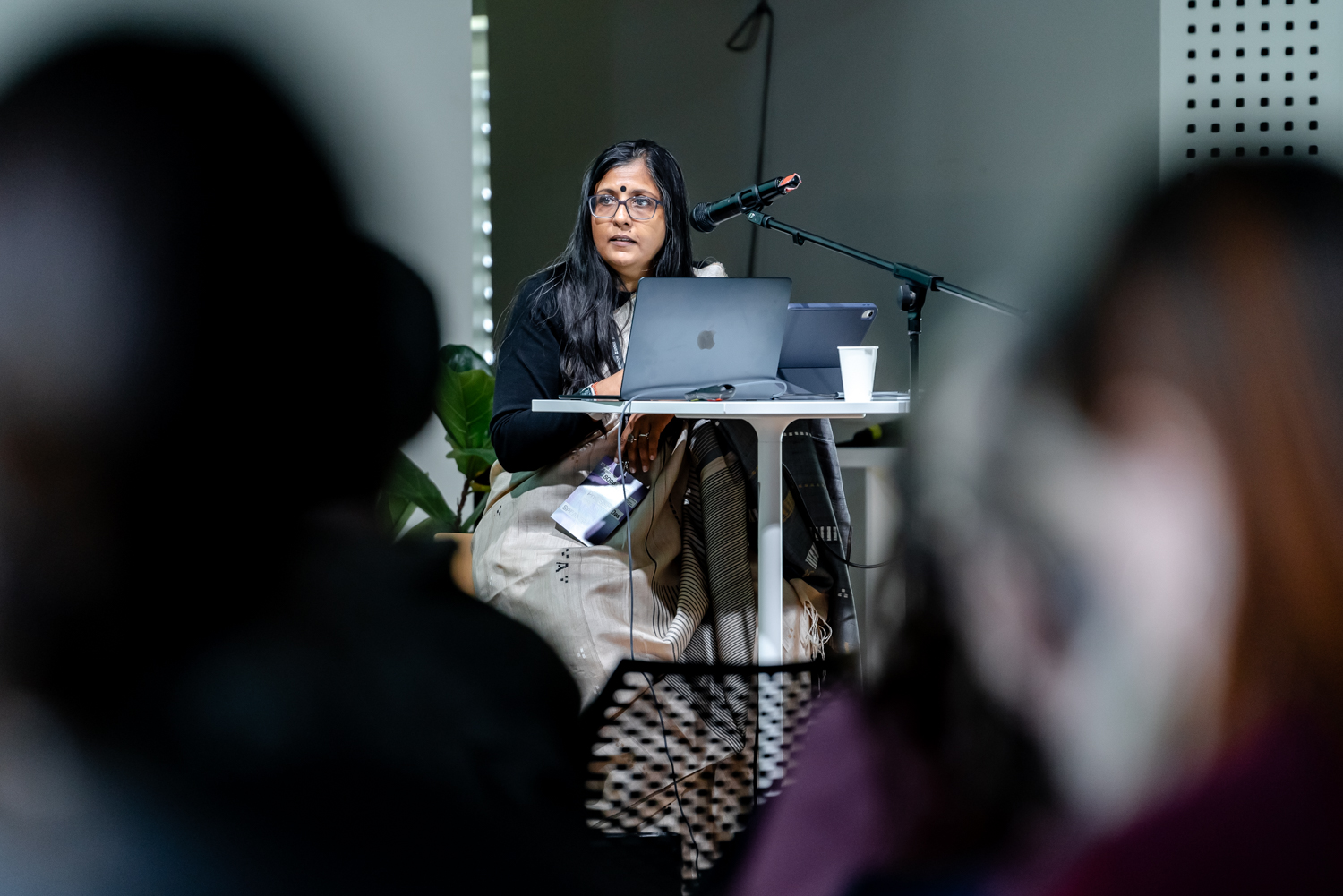
Shilpa Das at MOME’s Social Dialogues in Art and Design (SODA) Symposium, 2026. // Photo: Zsuzsa Darab
When we first spoke in 2023, you introduced the concept of “design apartheid”:
Shilpa Das (2023): Tackling design apartheid is the biggest challenge I feel. The way we design our houses, schools, cities, transport systems, products and services feeds into stereotypes of normality and normativity as well as reflects ableist design principles that consign populations such as the ageing and the disabled into the margins of society. […] Barriers […] deny people the opportunity of independent living, dignity and rights to full participation in education, economic, social, cultural and many other spheres of life as citizens of a country. This loss of opportunity is dual: the design community loses out on an opportunity for significant design intervention, and it is a loss for the disabled individuals concerned and also society’s loss that misses out on their contribution.
If exclusion is built into the systems, institutions and professional assumptions through which design operates, can design itself become a means of dismantling it? Or does the profession first need to rethink its own authority?
Shilpa Das: Design can’t dismantle what it actively reproduces until we question who gets to sit in the designer’s chair and claim authority. In my years teaching and practising, I’ve seen design operate as a form of spatial apartheid – our housing, transport and public spaces are built on an unquestioned expectation of the “body-normal”. The profession treats disability as a clinical deficit to be fixed by an enlightened able-bodied expert. That’s where the trap lies. If we just add “inclusive” features without ceding authority, we’re just paternalising the same exclusionary structures. Real dismantling happens when design abandons its saviour complex. We have to shift the designer’s role from a top-down decision-maker to a mediator or ally, recognising that disabled people already possess the expertise on their own bodies and survival.
Can design dismantle exclusion? Only if it stops treating marginalised lives as problems to solve and starts treating them as the primary authorial voice in shaping the world.
In your SODA keynote, “Staging Resistance”, you described a field intervention in rural Gujarat where sanedo and garbo performances succeeded in engaging communities that conventional health posters had failed to reach. What did these cultural practices make possible that conventional health communication could not? And how does the designer’s role change when local traditions and ways of knowing are taken seriously, rather than simply used to deliver predetermined messages?
Shilpa Das: Conventional health posters in rural Gujarat failed, I believe, because they relied on a clinical, biomedical model that treated disabled women as passive, tragic figures. They spoke down to people through sterile, bureaucratic language. When we shifted to sanedo – a vibrant, rhythmic Gujarati folk theatre form – it opened a participatory space of collective joy and unmediated dialogue that no poster could ever match. During our field performance, over 200 villagers gathered. Instead of watching passively, a woman with dwarfism moved to the centre to dance, a D/deaf girl synced her steps with the rhythm, and a woman with polio used her crutches not as a limitation, but as an expressive extension of her dancing body. They reclaimed joy and space in front of their entire village, disrupting generations of stigma in a single evening.
When we take local traditions seriously, the designer ceases to be an author delivering top-down, predetermined messages. We stop treating culture as decorative packaging for policy goals. Instead, the designer becomes a facilitator who listens deeply, co-creating within the community’s own idioms, humour and performative rituals. Lived experience and local heritage take over the steering wheel, turning health communication into a site of genuine political resistance and community transformation.
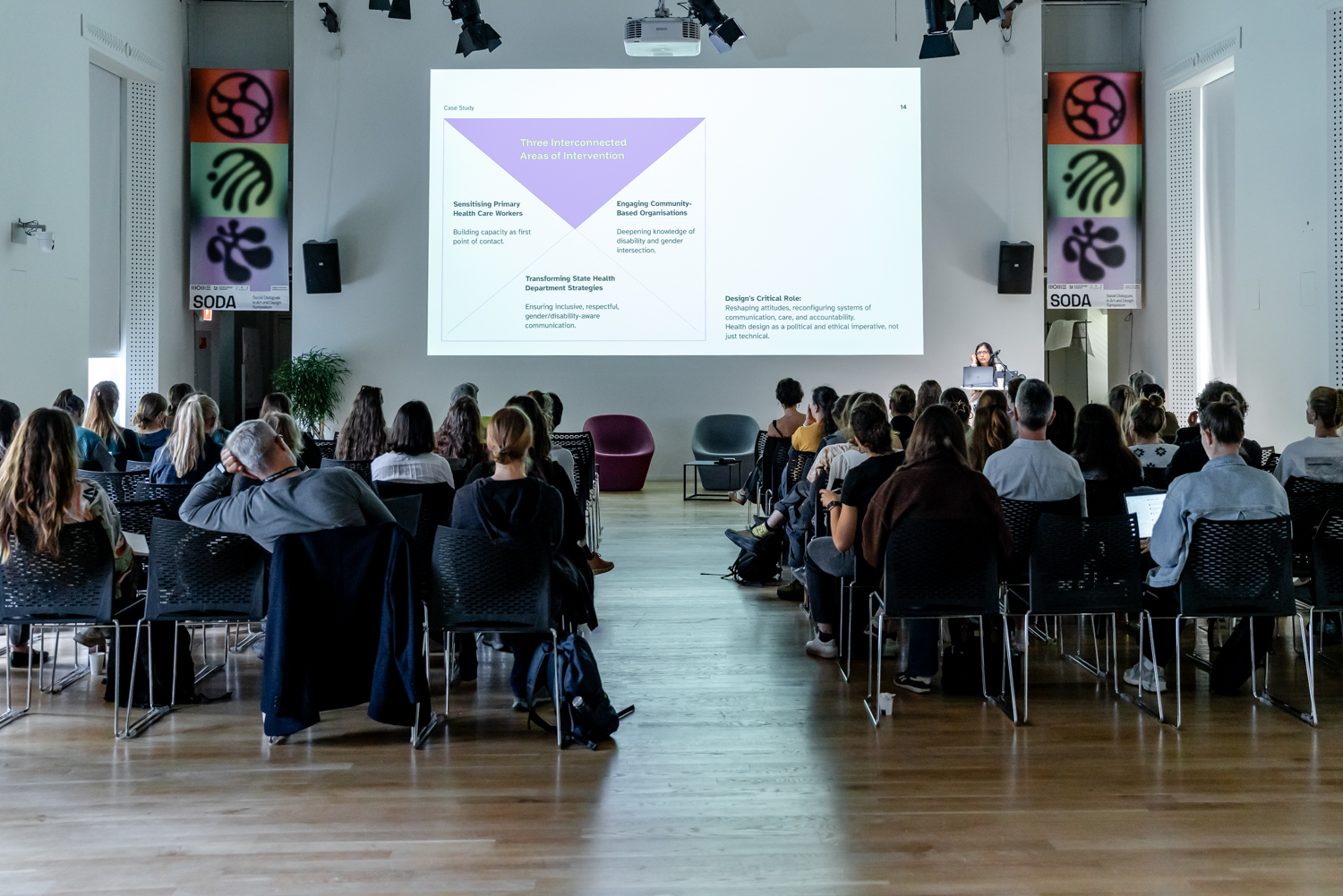
Shilpa Das at MOME’s Social Dialogues in Art and Design (SODA) Symposium, 2026. // Photo: Zsuzsa Darab
Participatory and user-centred design are often presented as more inclusive approaches to design, yet involving people in a process does not necessarily mean sharing power with them. From a feminist disability perspective, what are the limitations of these approaches? Do they go far enough in challenging established hierarchies of knowledge and decision-making, or do we need to rethink the design process more fundamentally?
Shilpa Das: User-centered and participatory design frequently perform inclusion without ever disturbing power. From a feminist disability standpoint, their biggest flaw is that they reduce disabled lives to “use cases” or data points while keeping the able-bodied designer in full control of interpretation and decision-making. Disabled people become colonised consumers – consulted, observed, but stripped of real governance over the outcome. This is what we may call epistemic invalidation: extracting embodied knowledge while granting authority only to formal design credentials. A feminist disability approach insists that we must rethink the design process fundamentally.
We have to move from designing for or briefly with people to an emancipatory framework where disabled individuals act as primary researchers, decision-makers and authors. It means centering crip epistemologies – valuing knowledge forged through pain, adaptation and structural survival – and acknowledging that true inclusion is a political commitment to redistributing power, not an exercise in corporate empathy.
In your recent article with Jonathan Ventura, “Somaesthetic Socio-Cultural Design for Disability: Rethinking Body Marginality”, [1] you question some of the underlying assumptions of conventional inclusive design. Does this mean that we need to rethink inclusive design itself?
Shilpa Das: Yes, absolutely. Conventional inclusive design has largely been co-opted by market functionalism. It pushes the logic of “design for the extreme, sell to the mainstream”, which sounds pragmatic but often flattens bodily difference into a profitable standard. In prioritising mass-market viability, it leaves out deep political, cultural and somatic realities. It assumes a neutral user and ignores how stigma, sensory joy and local context shape our relationships with objects. We need to rethink inclusive design so it moves beyond mere physical access and “good design”. A somaesthetic, socio-cultural approach doesn’t try to hide disability or merge it into mainstream uniformity. It demands that we treat disabled bodies as sites of rich sensory knowledge, dignity and aesthetic expression.
When we first spoke in 2023, I asked you how assistive devices shape identity, and how you had experienced this yourself. This was your response:
Shilpa Das (2023): Design practice […] primarily considers designing for the disabled inappropriately as for “special need” rather than lifestyle aspirations. […] The normative assistive design product seems to be similar to the durable medical equipment industry in pink or beige colours, aluminium or fibre with no visual appeal; in short, ugly and bad. Users feel that the visibility and lack of aesthetics of the aids becomes a marker of their disability. I wore 8 kg steel callipers on my leg (up to the thigh) till the age of 14. They were ugly, heavy, had no visual appeal. They seemed to have been developed with no thought of whether someone would actually want to use these or be seen using them. To me, it sent out signals of pity by becoming a marker of my disability. […] If people lose respect for their own body, and internalise the negative messages that are thrown their way, their body becomes a source of pain and shame. But barriers can be attitudinal too. 25–30 years ago, when I was interviewed for the post of lecturer at some college, I was asked, “How will you manage your way about in this college with four floors of stairs to climb and descend throughout the day?” And I said without batting an eyelid, “Very easily. Besides, polio did not touch my mind, but it seems to have coloured yours.”
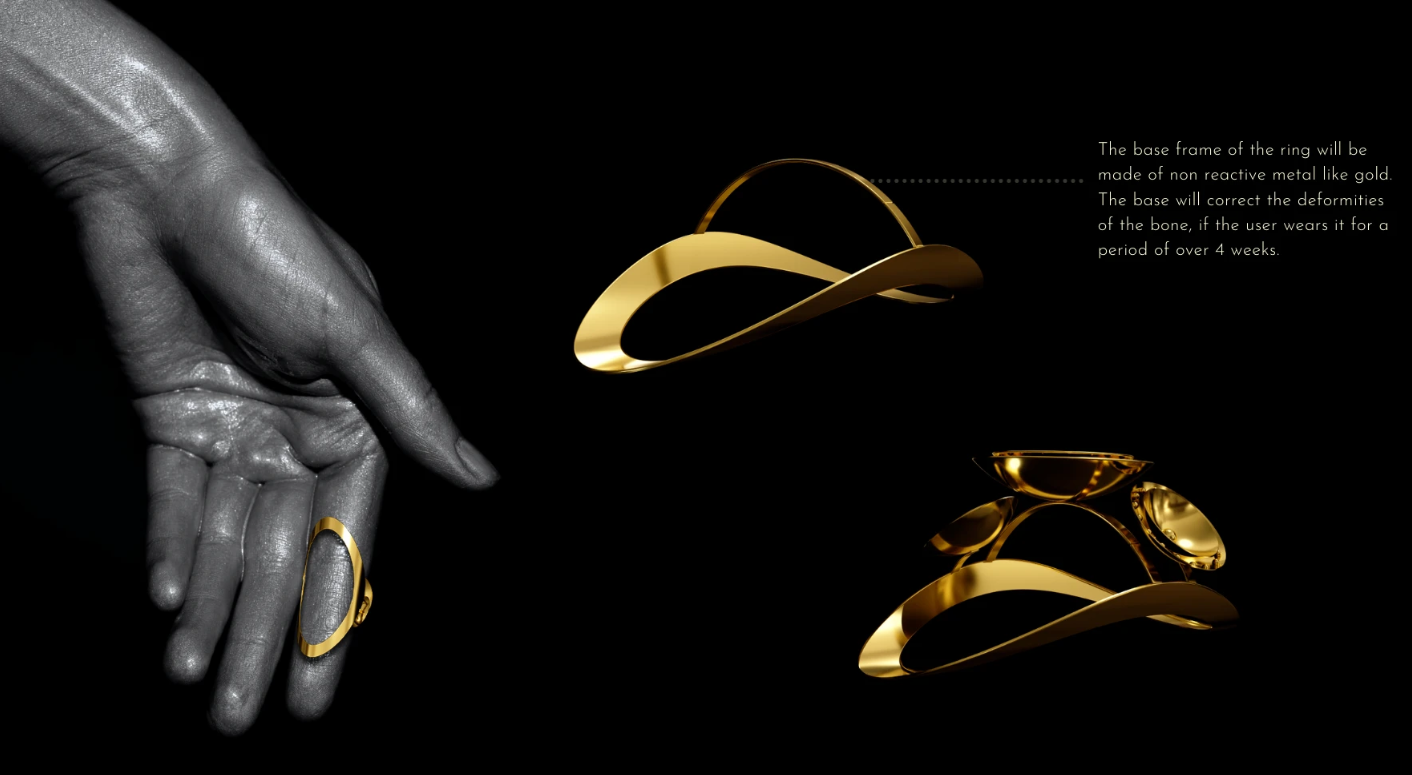
Shruti Unnikrishnan: Dharika medical splint // Source: Behance /Shruti Unnikrishnan
In your recent chapter, “Not Only Physical: The Socio-cultural Elements of Disability Reflected Through Pedagogical Case Studies from India and Israel”, [2] co-authored with Jonathan Ventura and Nijoo Dubey, you discuss Dharika, a medical splint designed by Shruti Unnikrishnan as traditional gold jewellery for Indian women with arthritis. How does a project like this challenge the conventional aesthetics of assistive technology? And what does it reveal about the relationship between disability, visibility and cultural identity?
Shilpa Das: As opposed to the conventional assistive devices, Dharika transforms an arthritic finger splint into intricate South Indian gold temple jewellery. This project exposes how deeply disability, visibility and cultural identity are intertwined. In India, gold isn’t just decorative; it carries immense cultural reverence, dignity and social standing. Many elderly women resist wearing typical splints because they refuse to be marked as “weak” or diseased in public. By integrating corrective mechanics directly into traditional ornamentation, Dharika shifts the visibility of disability from a mark of shame to a celebrated assertion of cultural identity. Instead of hiding a physical impairment or wearing a cold, clinical aid that signals vulnerability, the user wears a piece that honours her lifestyle aspirations and aesthetic values. Unnikrishnan’s project proves that medical functionality must never strip a person of their agency, self-worth or cultural pride.
Disability simulations and empathy exercises remain common in design education, often based on the assumption that temporarily experiencing a physical limitation can help designers understand what it means to live with a disability. What are the ethical and epistemic risks of relying on such methods?
Shilpa Das: Disability simulations are ethically and epistemically flawed because they mistake temporary physical clumsiness for the complex, lived reality of disability. Putting on a blindfold or sitting in a wheelchair for two hours doesn’t teach you what it means to navigate an ableist world; it only teaches you how frustrating it is to suddenly lose a bodily function you take for granted. Epistemically, it produces false knowledge. It completely misses the rich, adaptive expertise, community care and spatial negotiation that disabled people develop over a lifetime. Ethically, these exercises reduce disabled existence to a tragic costume party. They evoke pity, fear and relief (“thank goodness I can take this blindfold off”) rather than an understanding of structural oppression and spatial discrimination. Designers walk away thinking they’ve “experienced” disability, reinforcing an arrogant saviour complex where they feel entitled to design solutions without ever listening to or sharing power with actual disabled people.
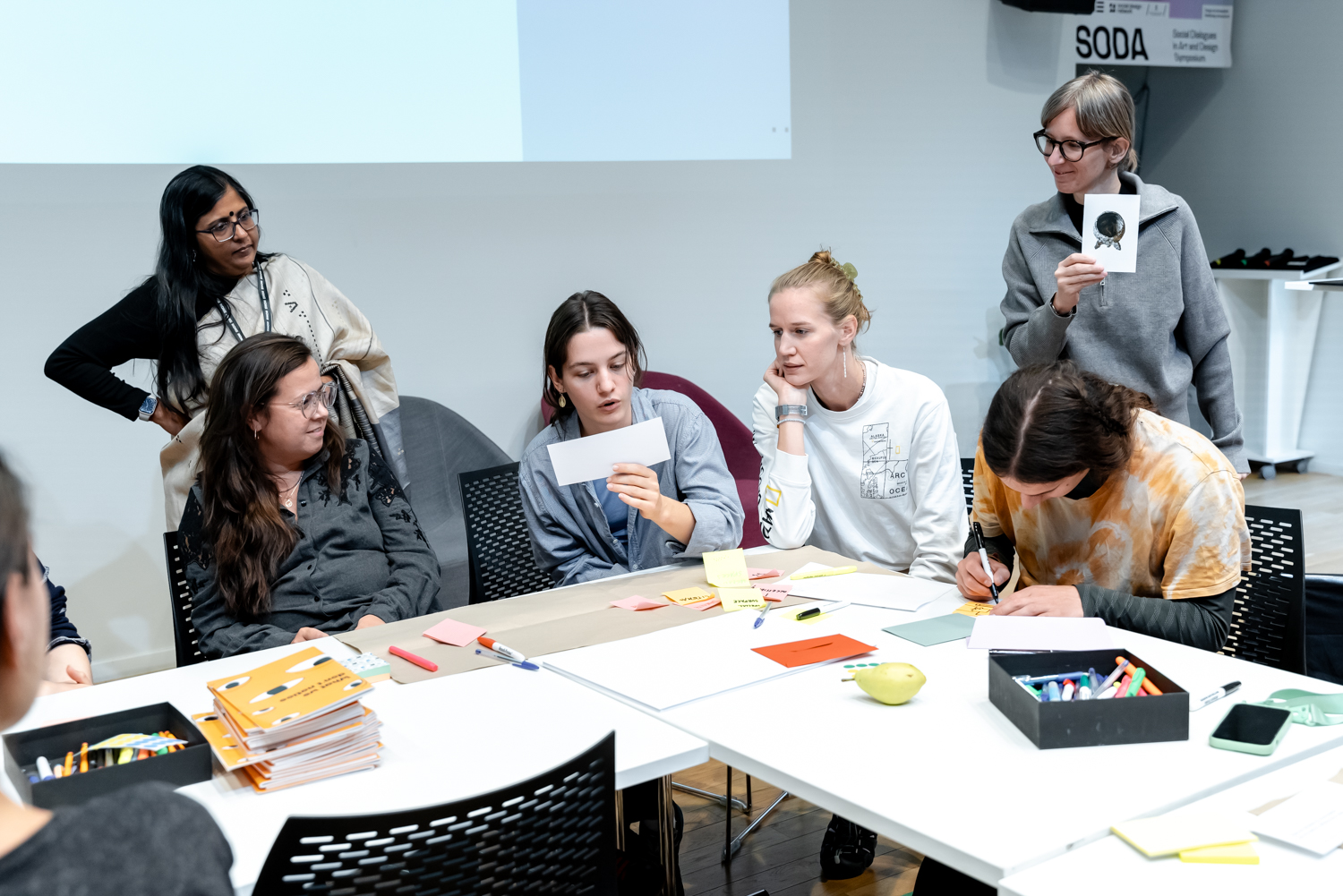
The “Reading Disability Through Epistemic Artefacts” workshop led by Shilpa Das and Beáta Sosity at MOME’s Social Dialogues in Art and Design (SODA) Symposion, 2026. // Photo: Zsuzsa Darab
In our SODA workshop, “Reading Disability Through Epistemic Artefacts”, we explored everyday objects adapted and modified by disabled people themselves. These objects emerged outside professional design practice, yet they reflect practical ingenuity, lived experience and ways of knowing that conventional design often overlooks. What do these objects make visible?
Shilpa Das: These adapted objects – whether a handmade camera mount, hacked slippers or a smartphone-powered nebulizer – make visible the immense agency and creative friction of disabled lives. They reveal that disabled people aren’t waiting around for institutional design to rescue them; they are actively re-engineering a world that wasn’t built for them.
This is the essence of crip technoscience: the practice where disabled people act as non-compliant knowers and makers, forging DIY interventions out of political necessity and lived expertise rather than commercial intent.
These objects sit precisely at the intersection of Umwelt (the individual’s lived, sensory and bodily experience) and Mitwelt (the shared social, cultural and institutional world). They show how individual sensory needs collide with and actively reshape hostile public infrastructures, institutional gaps and normative expectations.
What could designers learn from these objects?
Designers have so much to learn from these epistemic artefacts. First, we must realise that mass-market design continually fails because it designs for a mythic average user. Second, adaptation is not a crude compromise or a desperate workaround; it is a sophisticated, generative form of world-making. These objects prove that knowledge doesn’t just come from design studios – it is embedded in the material choices, improvisations and daily resistance of disabled creators. Design needs to stop treating disability as a problem to solve and start recognising it as a primary source of design intelligence.
In our previous conversation, you listed some important questions designers should ask themselves before designing for, or with, disabled people.
Shilpa Das (2023): We need to ask ourselves ethical questions such as these, which throw up varied concerns and are certainly not for the faint-hearted: Why am I undertaking this design project? What responsibilities arise from the very fact of my being a designer? Am I incorporating their perspectives or filtering them out? How can I use my knowledge and skills, my “design imagination”, to challenge forms of oppression disabled people experience? Does my design reproduce the status quo of domination or does it challenge it? How am I representing the disabled person through my work?
This makes me think how designers often define their practice as “problem-solving”. What are the limitations of this understanding of design, particularly in relation to disability?
Shilpa Das: Framing design purely as “problem-solving” inherently positions disability as a deficit – a broken condition or bodily defect waiting for a clever technical fix. It treats the person as the problem rather than confronting the disabling, ableist environment. This narrow mindset reduces complex human lives to transactional functional fixes. It completely overlooks identity, cultural context, emotional dignity and sensory pleasure. Disability isn’t a maths equation to be solved; it’s an embodied way of being that demands structural justice, relational care and political transformation.
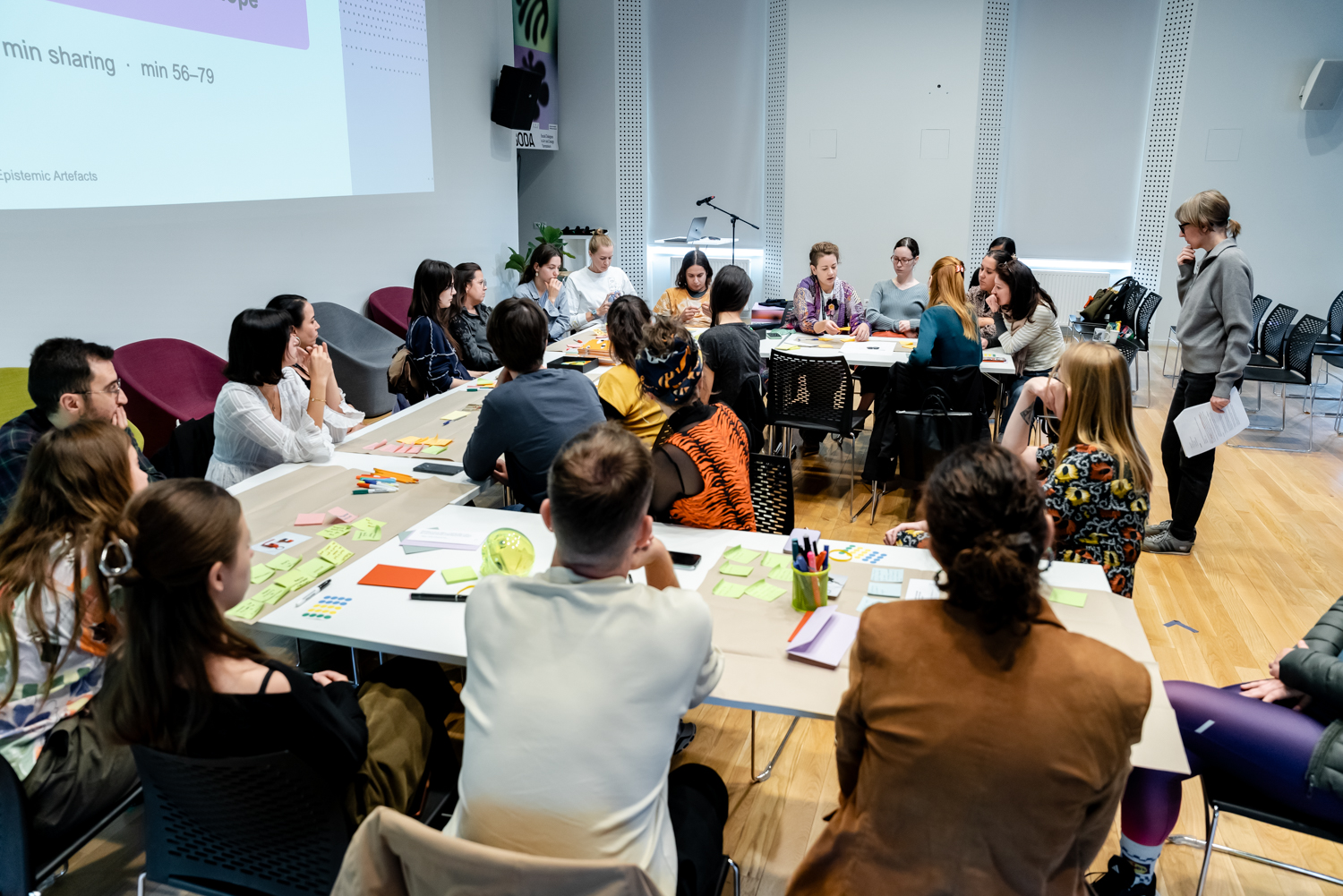
The “Reading Disability Through Epistemic Artefacts” workshop led by Shilpa Das and Beáta Sosity at MOME’s Social Dialogues in Art and Design (SODA) Symposion, 2026. // Photo: Zsuzsa Darab
If disability is not simply a subject to be included in design education, but a source of knowledge capable of transforming design itself, how would we need to rethink design education? What would we need to unlearn as educators, researchers and practising designers?
Shilpa Das: Disability Studies cannot be an elective add-on; it must be our pedagogical core. R[DB1] ethinking design education means discarding our reliance on standard anthropometry and the myth of the “average” user. We must unlearn the paternalism we use to train students to be “problem-solvers” sent to fix “special needs”. Disability isn’t a problem to solve; it is an epistemic force – a way of knowing the world forged through adaptation and lived friction. We must also throw out simulation exercises that reduce lived reality to brief clumsiness and pity.
Transforming design education means centring crip epistemologies – recognising disabled people not as passive subjects, but as primary authors and epistemic authorities.
At the end of our conversation in 2023, you posed a challenge:
Shilpa Das (2023): Ableism cannot be addressed in a single day because it is so deeply embedded in our social system. […] If we wish to engage with ableism, we need to realise that “able-bodiedness” as a cultural concept is deeply aligned with structures and hierarchies of power and privilege, and therefore, deeply problematic. My plea is: let’s change the status quo!
Looking back three years later, how do you see this call for change today? What, if anything, has changed since then, and what still needs to change – particularly within design?
Shilpa Das: Three years later, the conversation has expanded, but real structural shift is agonisingly slow. We see more inclusive design buzzwords and token panels, yet institutional ableism remains deeply entrenched across design schools and industries. We need to cede actual power – redirecting funding, leadership and curricular authority directly to disabled makers and scholars. Challenging “able-bodiedness” isn’t a one-time pledge; it’s an unrelenting daily practice of dismantling privilege in every studio, policy and built environment.
// /
Shilpa Das is Professor of Interdisciplinary Design Studies at the National Institute of Design (NID), India. She is Vice-Chairperson of the Indian Disability Studies Collective and a board member of the international Social Design Network. Her work spans disability studies, inclusive design, comparative aesthetics, Indian narrative traditions, translation and public health. She is co-editor of Narrative Universes of Disability: Global Perspectives (Springer, 2025).
Beáta Sosity is a designer, researcher, university lecturer and disability rights activist. She is a lecturer at Moholy-Nagy University of Art and Design (MOME), a research assistant at the Future Care Lab and a doctoral candidate at the university’s Doctoral School. Her research and design practice lie at the intersection of design, disability studies, healthcare and social justice.
[1] Das, Shilpa, and Jonathan Ventura. 2025. “Somaesthetic Socio-Cultural Design for Disability: Rethinking Body Marginality.” The Journal of Somaesthetics 11 (1): 92–111.
[2] Das, Shilpa, Jonathan Ventura, and Nijoo Dubey. 2025. “Not Only Physical: The Socio-cultural Elements of Disability Reflected Through Pedagogical Case Studies from India and Israel.” In Narrative Universes of Disability: Global Perspectives, edited by Someshwar Sati, Shilpa Das, and Banibrata Mahanta, 157–181. Singapore: Springer Nature. https://doi.org/10.1007/978-981-96-3384-5_9